





.jpg)
Frontier produced 2,857 project submissions in five weeks, a record for the Colosseum series. We ran a Sidetrack on Superteam Earn alongside it, gave teams free dedicated RPC during the build, and rewarded the strongest projects after demo day. We run a dedicated Solana RPC for HFT bots, DeFi protocols, and AI agents.
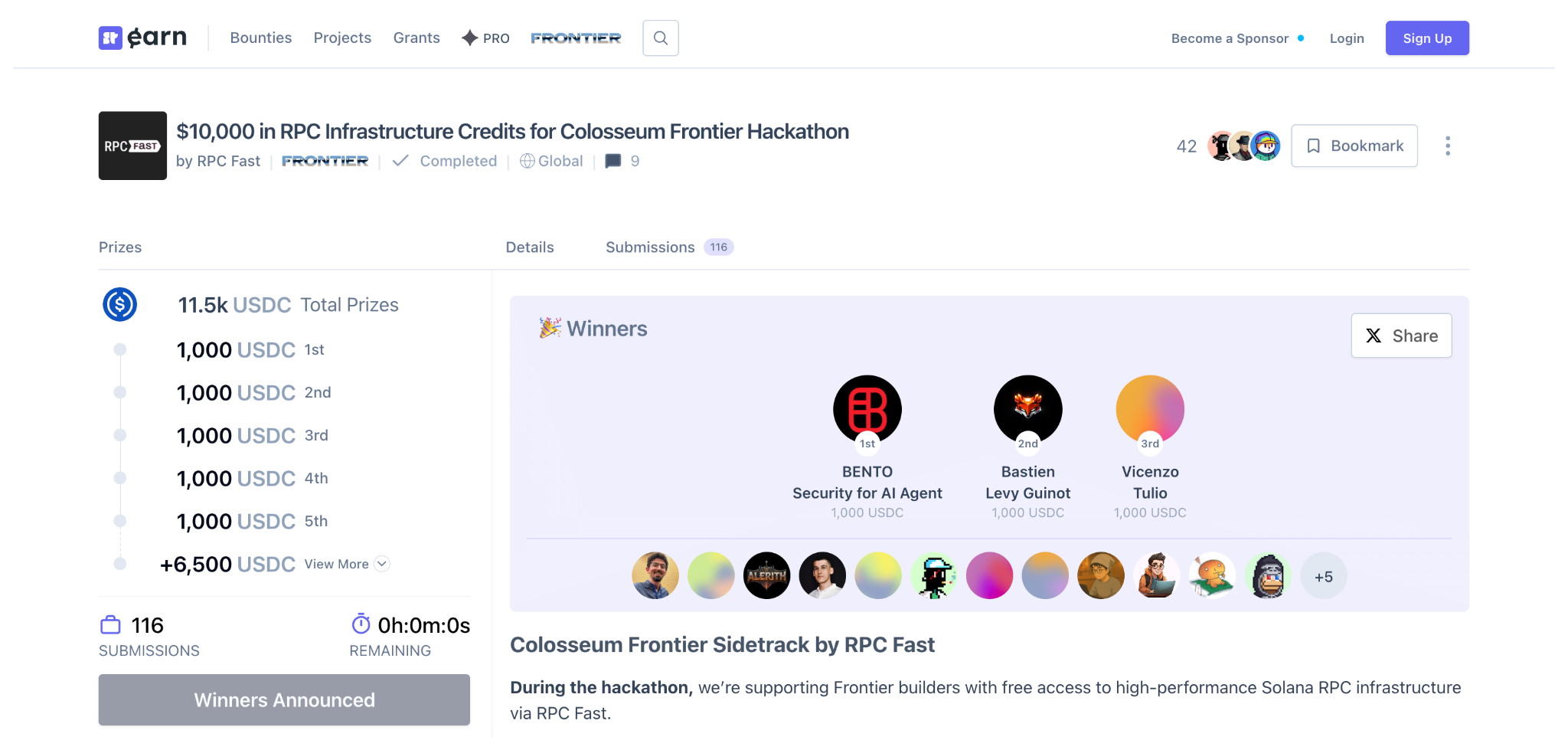
This post names all 20 winners, shows what they shipped, and explains why infra choices decide who survives the hackathon-to-mainnet jump.
Why a record submission count makes infra the bottleneck
SOL traded in the mid-$80 range during the event, so this build energy came with a quiet token price rather than hype.
When that many teams ship at once, shared endpoints buckle. The teams building latency-sensitive products, AI-powered trading terminals, DeFi pipelines, GameFi projects, and on-chain data tools hit rate limits and stale blockhashes first. That is the exact stage where bad infrastructure costs builders time they do not have.
Our Sidetrack offering splits into two parts:
- Free dedicated Hackathon plan during the build, no shared-endpoint throttling;
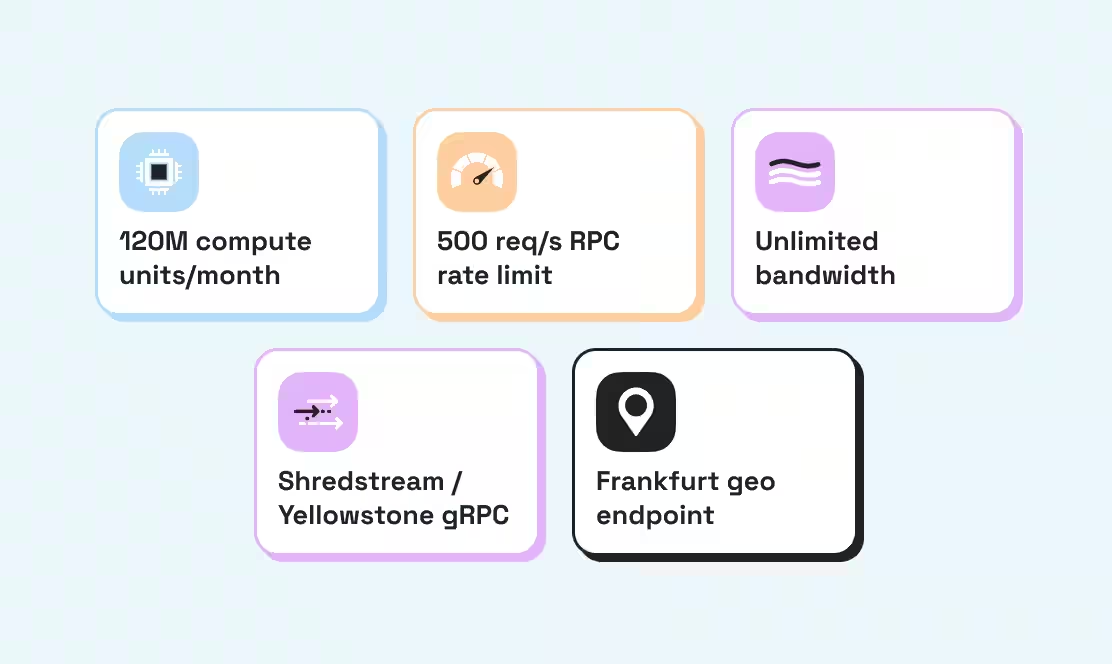
- Post-hackathon RPC credits for the strongest projects.
The Sidetrack prize pool
We planned 17 awards. The submissions were strong enough that we added 3 more, pushing the pool to roughly $11.5k in RPC credits.
The Bonus Track rewarded teams that actively used the RPC Fast infrastructure during the hackathon and provided us with real load and feedback. Read the original sidetrack terms from the Frontier announcement.
The strongest projects we backed
We picked projects that benefit most from low-latency infra and push Solana in new directions. Here are the standouts.
Bento (@bento_guard)—AI agent security
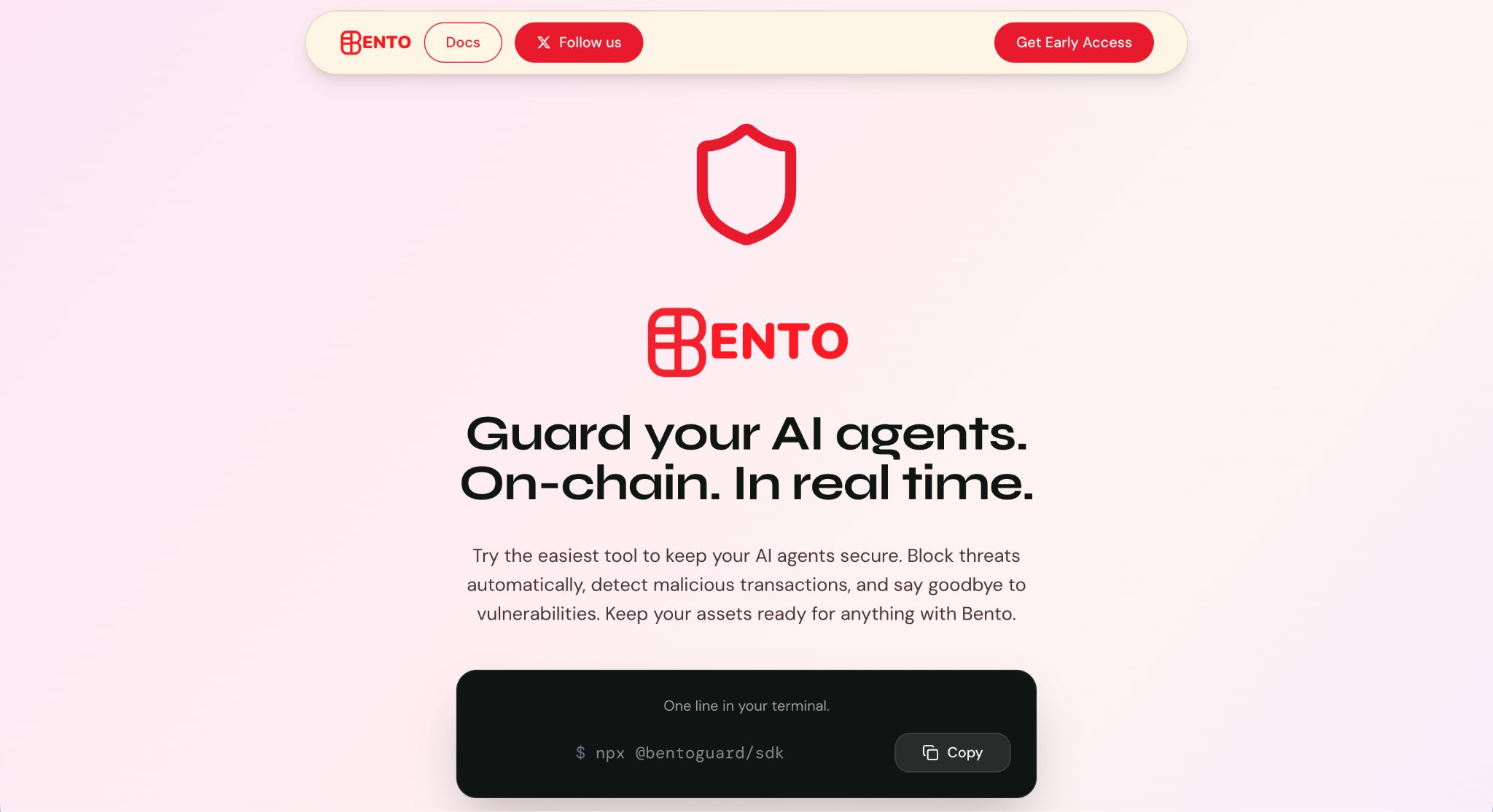
Bento blocks uncontrolled agent actions by requiring user approval for sensitive operations. As agents get write access to wallets and APIs, an approval layer stops the "my agent launched a memecoin" failure mode. Security focus in the AI category is rare and overdue.
Hashfox (@hashfoxlabs)—Trading sandbox
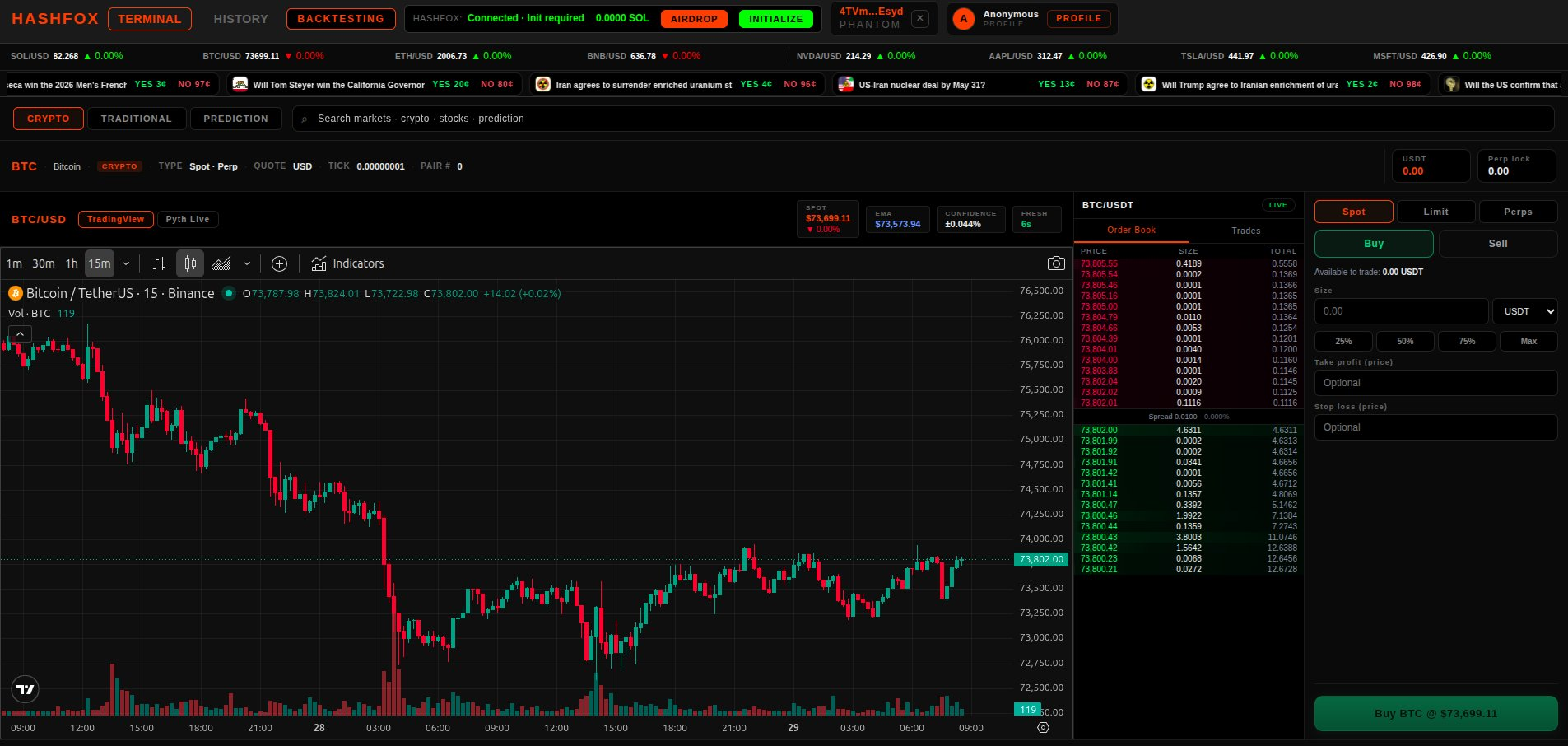
A live trading sandbox to test strategies and earn a trading score before risking capital, with a real trading platform and live competition coming. Trading simulators need accurate, low-latency market data to feel real.
FatCat (@FatCatTrading)—trading inside Telegram
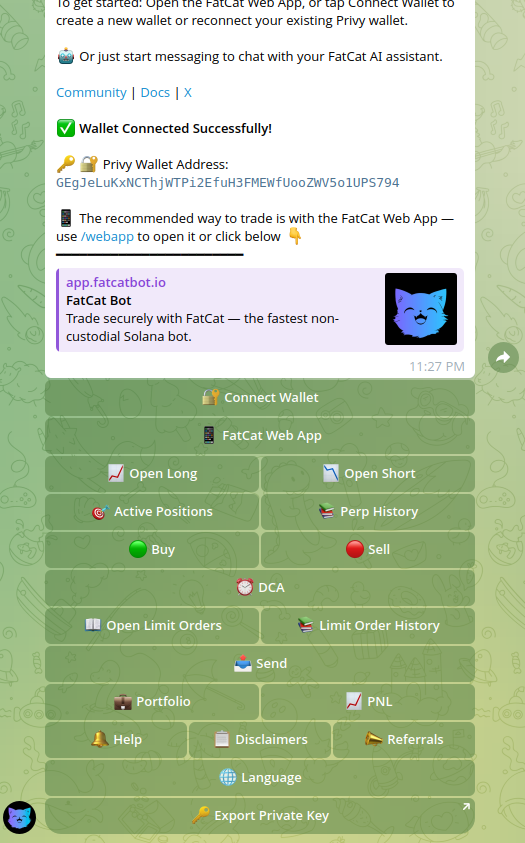
A full trading interface plus AI inside Telegram, with LINE planned next. Messenger-native trading meets users where they already are.
PlayAlerit (@PlayAlerit)—3D MMORPG
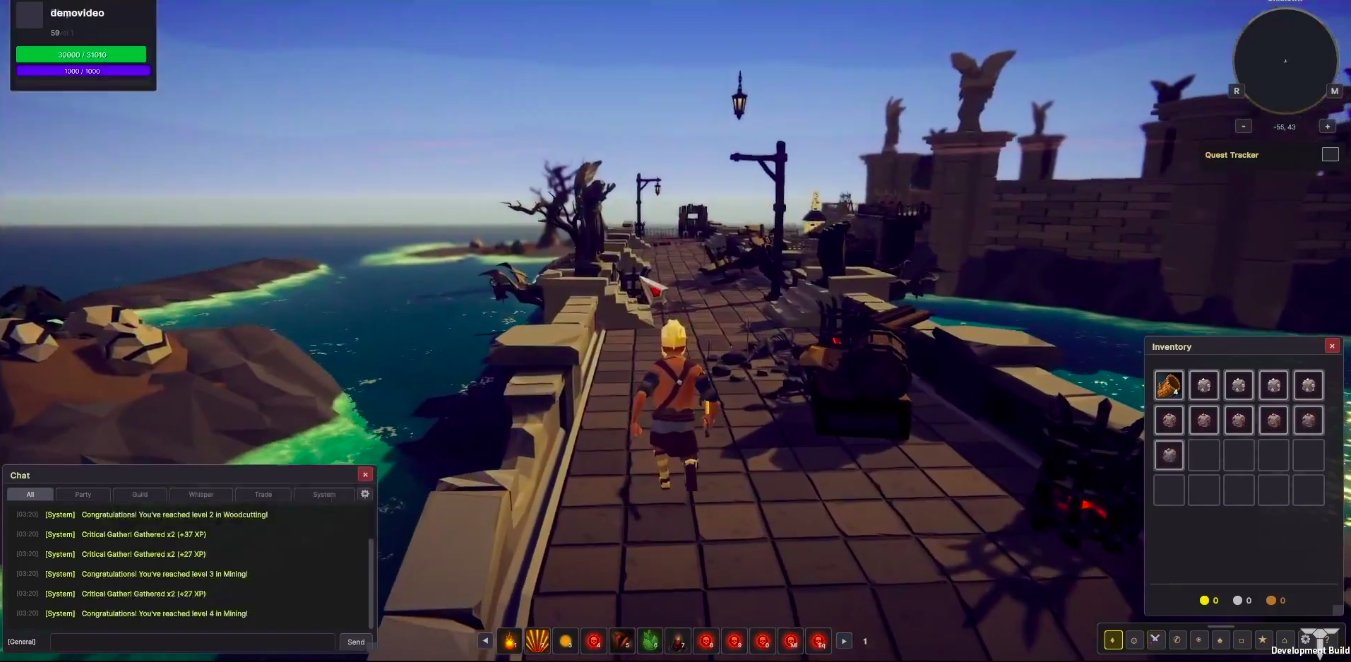
A fantasy MMORPG in development for three years, with an active playtest. Serious game depth, not a weekend demo.
backyard.fi (@backyard_fi)—multi-protocol yield
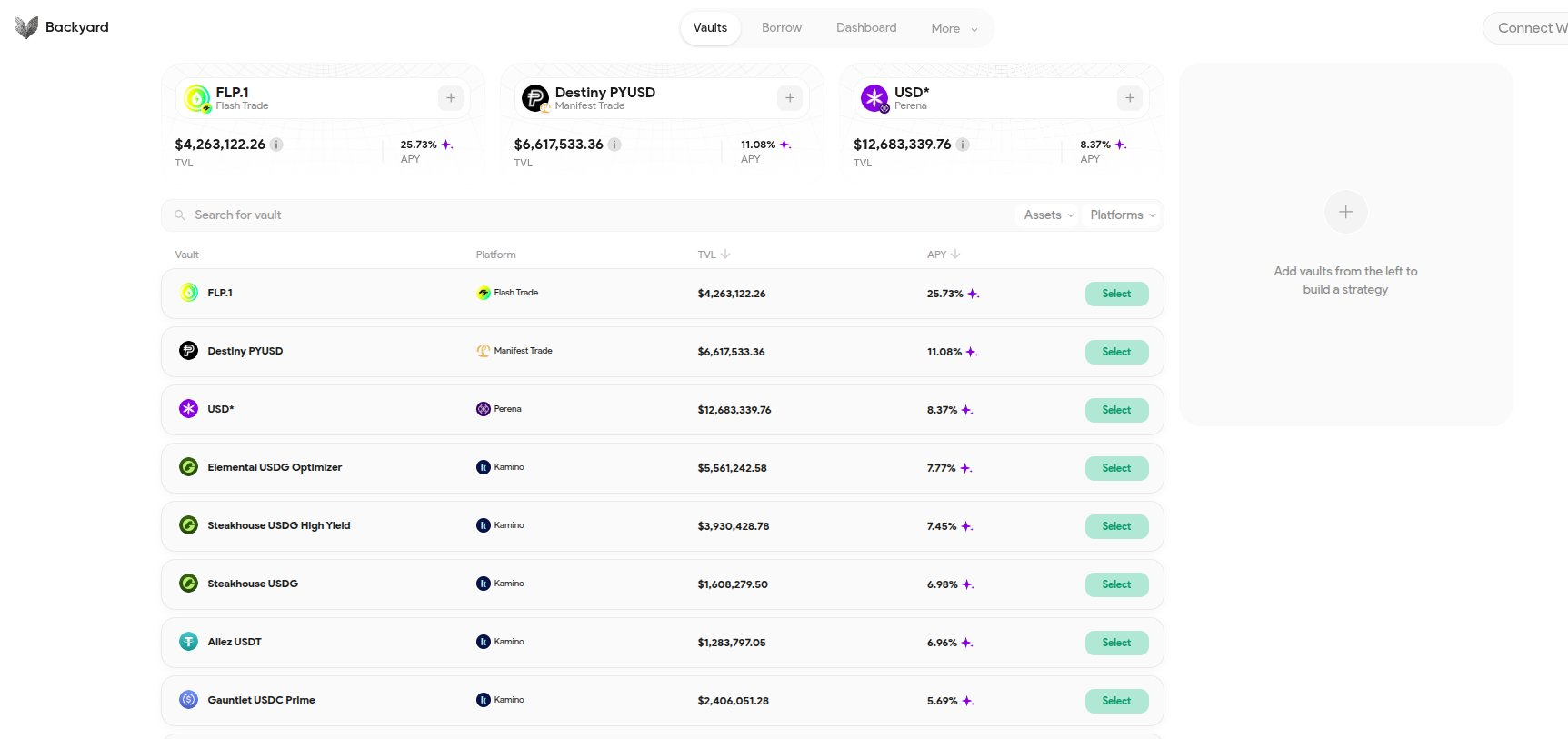
Diversified yield strategies across protocols, with a native stablecoin BYD to hold liquidity. Backed by Superteam Ukraine and prior grant winners.
Bundie (@BundieDefi)—AI agent prediction market
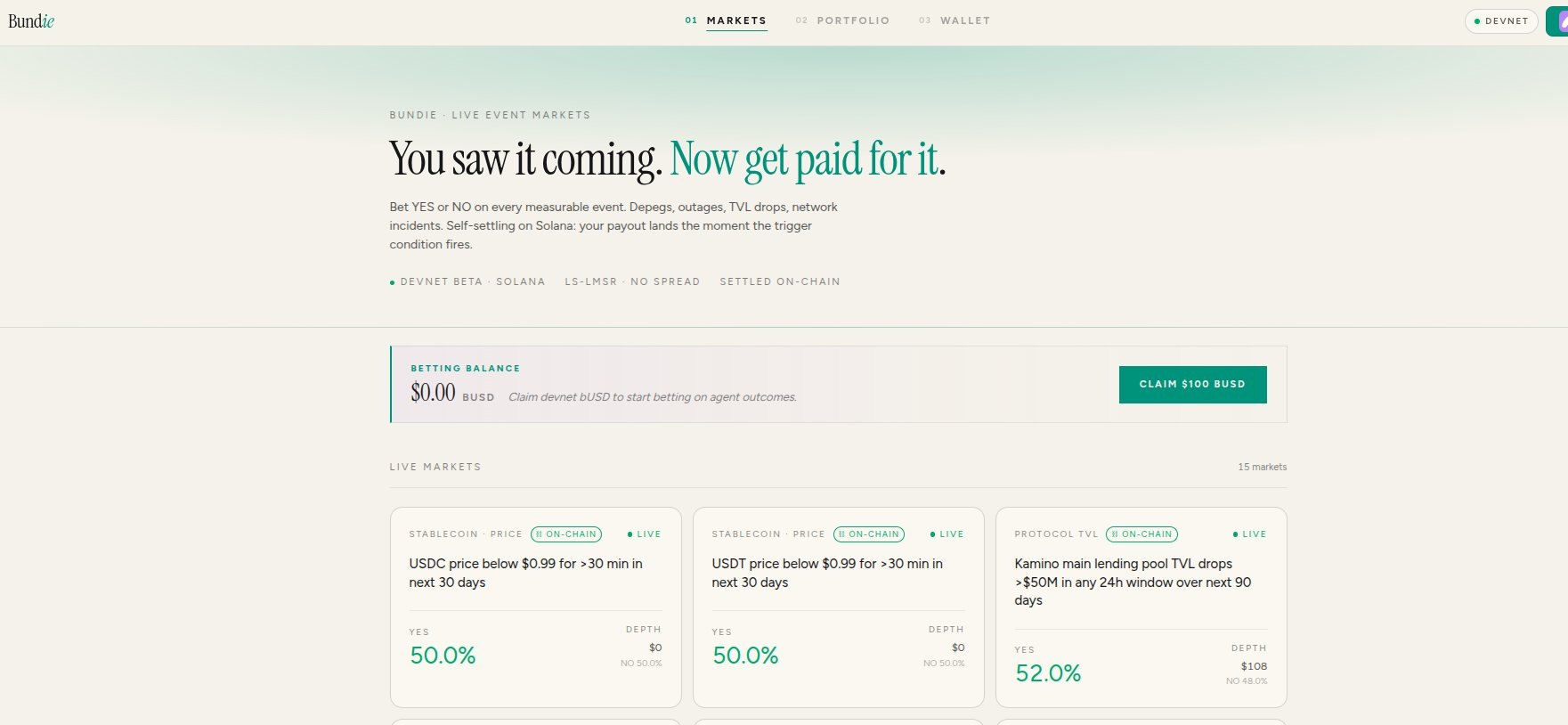
Bet on which AI agent performs better. Real-time betting on agent performance is one of the more original takes in the field. Real-time markets live or die on data freshness.
SentinelGuard (@0xRudraSol)—DeFi exploit response
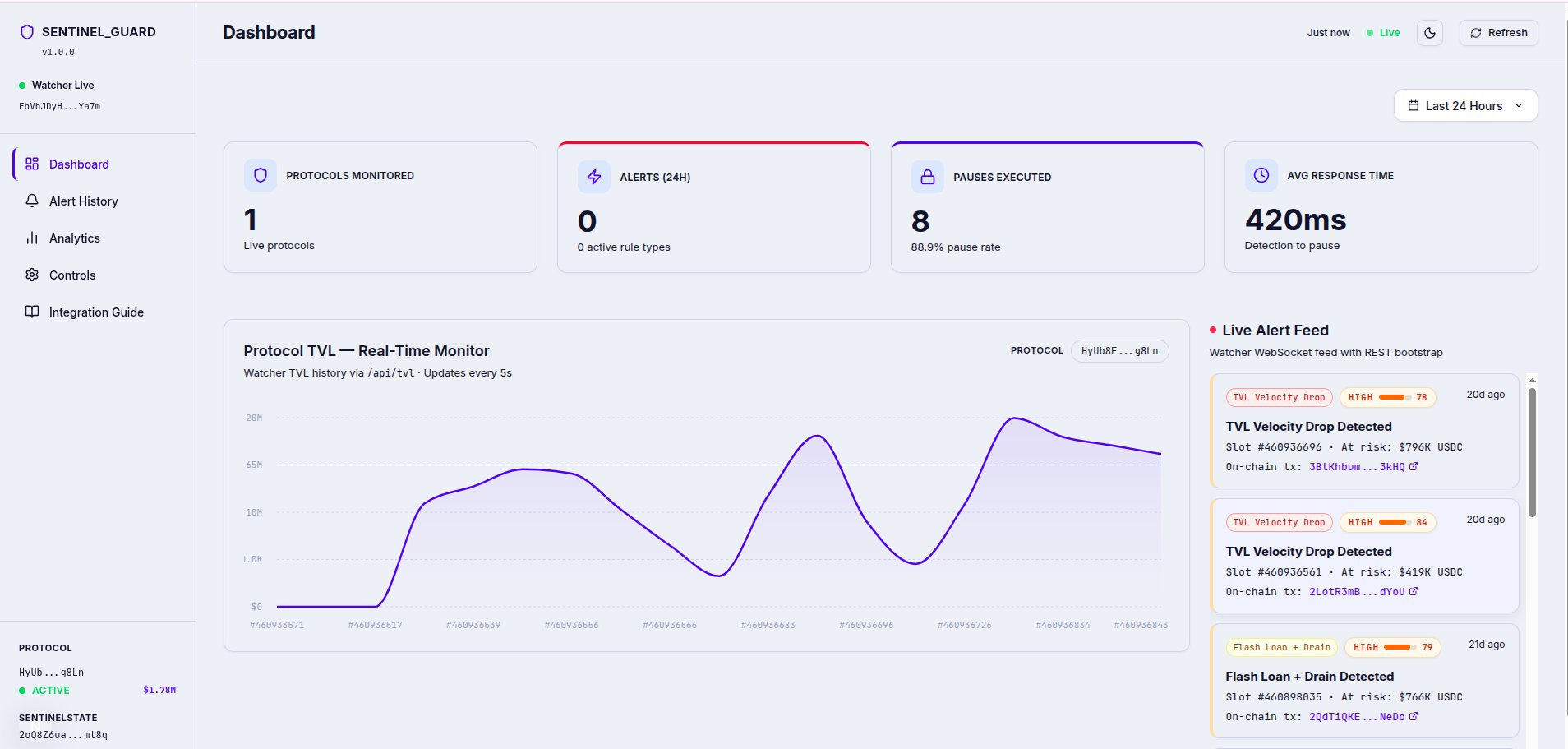
A security and exploit-response layer for Solana DeFi protocols. Faster attack detection has direct revenue and risk impact. Exploit detection depends on a fresh state, so it needs RPC that does not lag the chain.
Сomplian.cc (@compliancc)—Compliance oracle
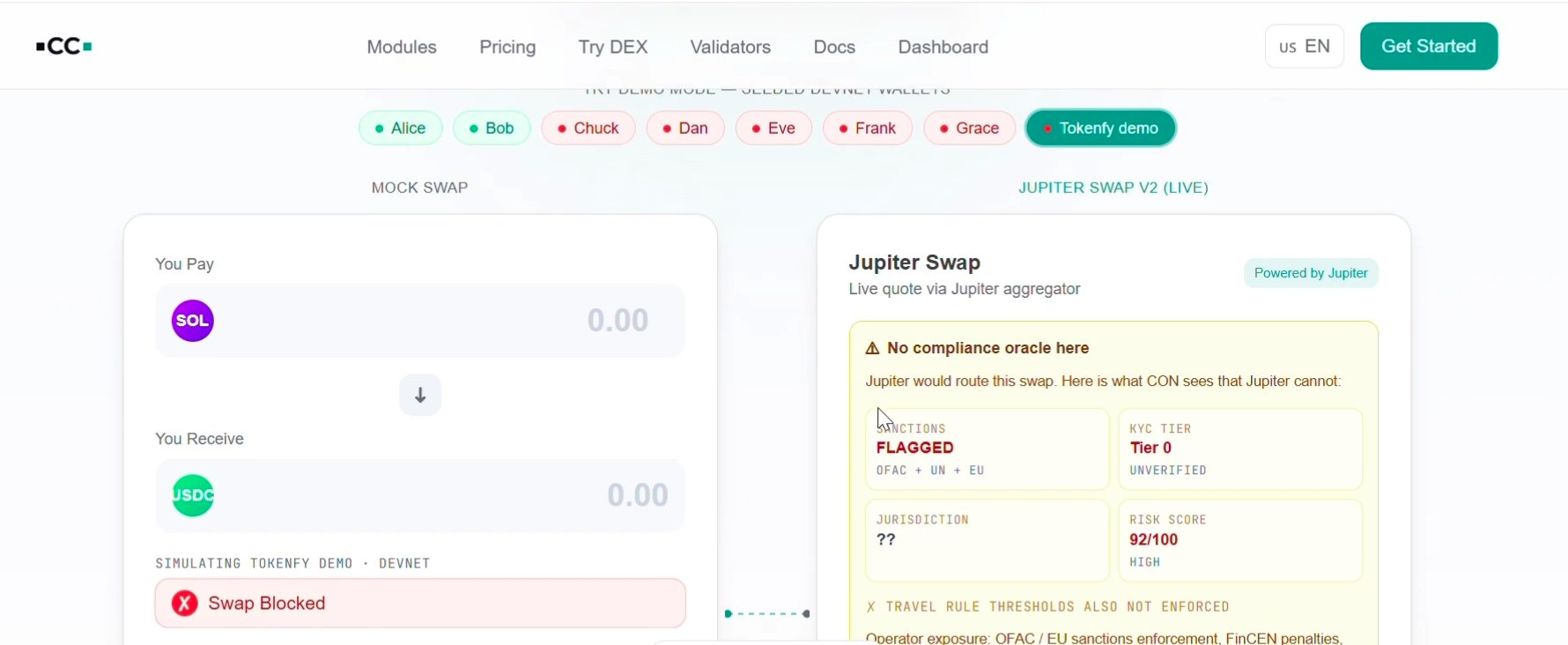
Five Anchor programs on devnet, a drop-in SDK, and a first integration validated end-to-end with Tokenfy.me. We powered them on the Hackathon plan during devnet work and plan to back them on mainnet with Aperture. This is the cleanest example of the devnet-to-mainnet path the Sidetrack was built for.
fdn labs (@fdn_labs)—RWA yield
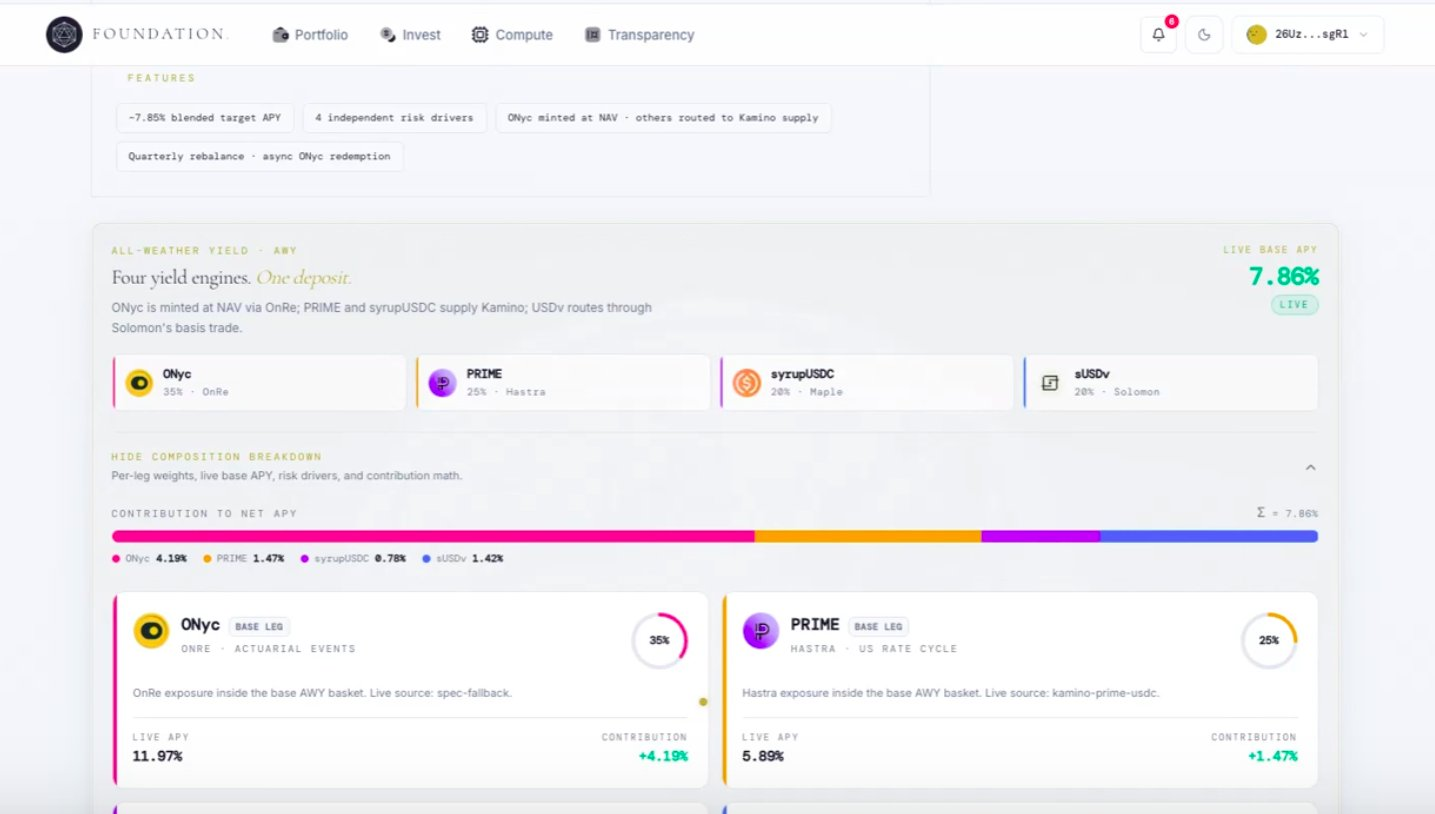
Wraps real-world credit assets into a USDC vault on Solana. Deposit USDC, get a receipt token, yield accrues automatically. RWA on Solana keeps maturing quietly.
All 20 winners by category
Instead of reading Frontier as one long winners list, it makes more sense to read it as a map of where Solana demand is moving. The 20 teams we backed cluster around AI, trading, DeFi, gaming, security, infra, healthcare, consumer apps, and science. That spread matters: it shows Solana is not growing around one narrative. It is growing around products with live state, user-facing execution, and data-heavy backends.
AI agents, agent tooling, and agent markets
AI was one of the clearest themes in the Sidetrack, but the best projects were not generic wrappers around chat. They focused on execution, control, and measurable outcomes.
Bento stood out because it treats agent security as the product, not an afterthought. Bundie took a different route and turned agent performance into a market primitive.
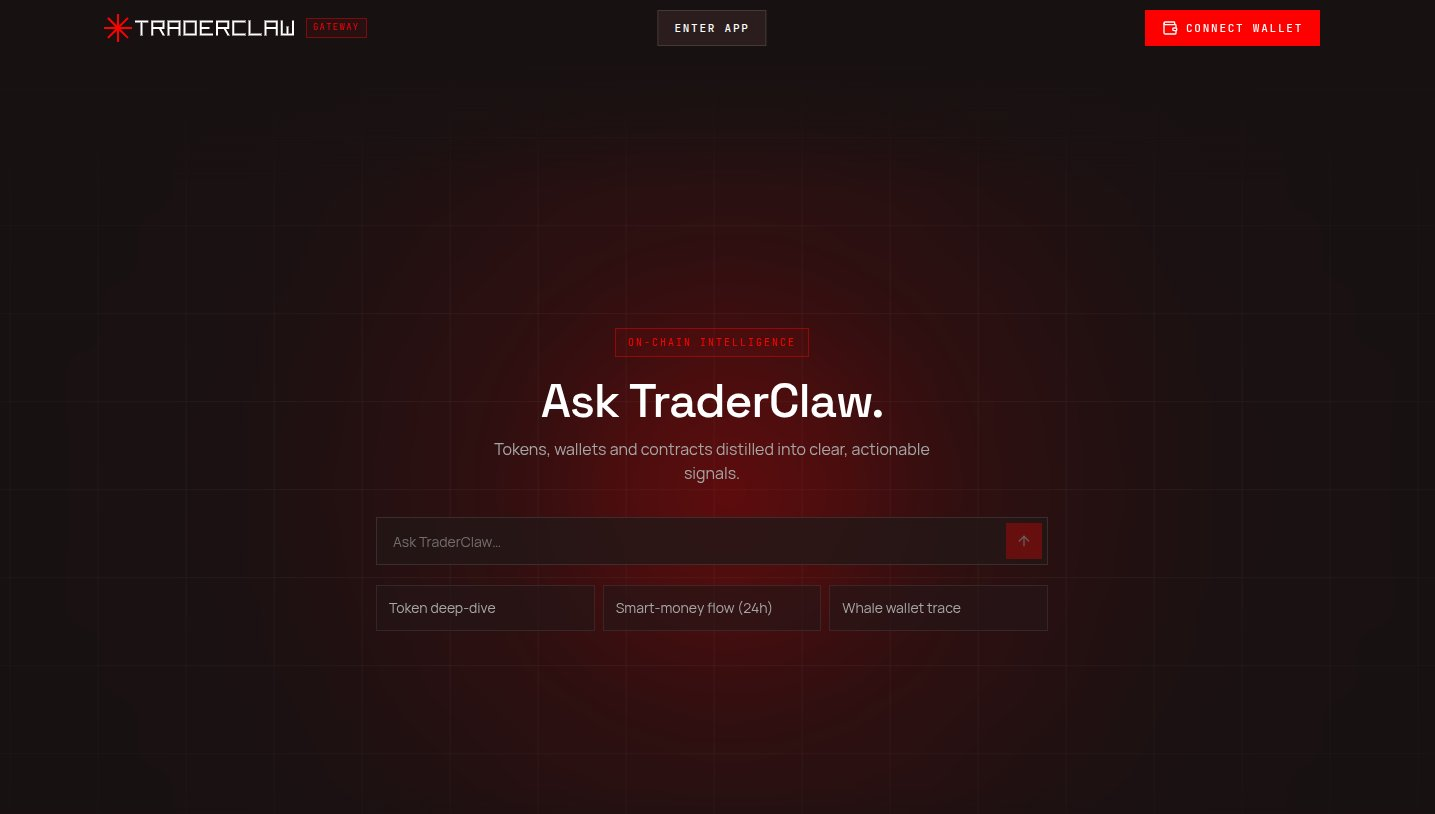
TraderClaw and TrenchersAI went after execution speed and usability from different angles.
Trading interfaces and execution-first products
Trading remains one of the hardest Solana workloads. These teams are building products where stale data, poor landing, or slow state updates break the user experience fast.
Hashfox lowers the cost of learning by letting users test strategies before risking capital. FatCatTrading moves execution into Telegram, which says a lot about where users want to interact with markets now: fewer dashboards, faster actions, lower friction.
DeFi, yield, and real-world asset design
DeFi in Frontier was not limited to another swap UI or vault fork. The stronger teams explored yield packaging, capital efficiency, and new asset rails.
Seedling is simple on the surface and smart underneath: one yearly deposit, recurring monthly distribution, and yield capture in the background. backyard.fi and Foundation show two different DeFi directions on Solana in 2026: structured strategy products and tokenized real-world credit.
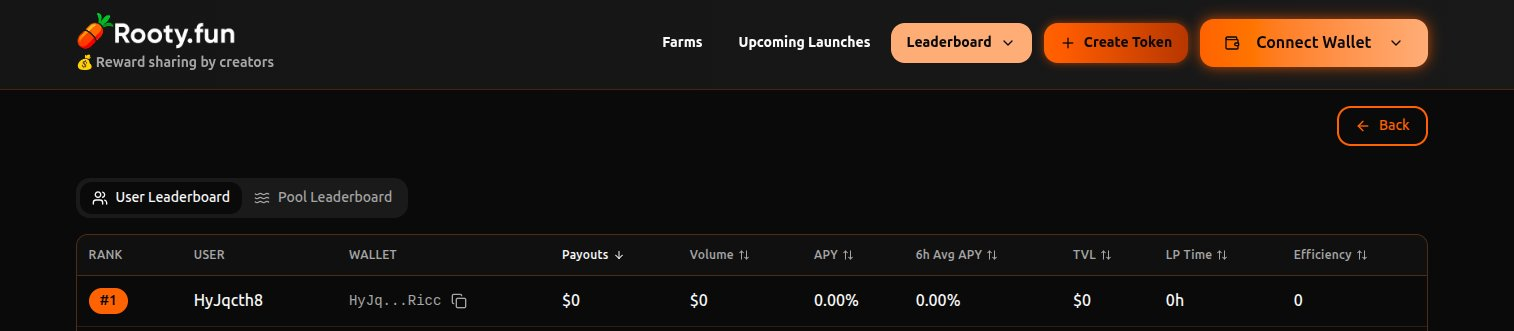
Rooty adds a more consumer-facing angle by tying yield mechanics to creator incentives.
Security, compliance, and failure handling
As Solana products get more automated, security infrastructure stops being a support function and starts becoming a product category of its own.
SentinelGuard addresses a clear operational need for DeFi teams: detect attacks faster and respond before losses spread. Сomplian.cc stood out for execution discipline, with a devnet footprint, SDK, and validated integration already in place.
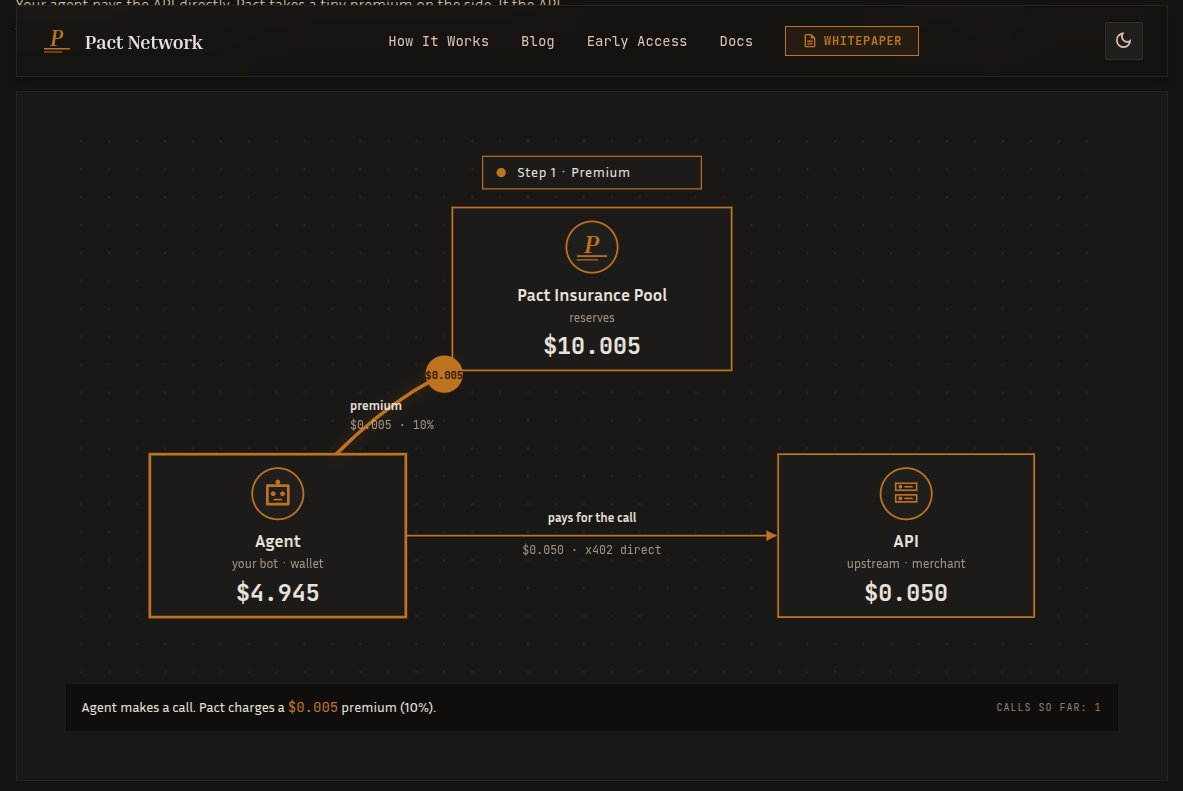
Pact turns failed agent calls into an insurable event, which is a practical model for machine-to-machine systems.
Gaming and creator tooling
Gaming teams usually expose whether an ecosystem can support longer product cycles, richer state, and more demanding users. These were not quick demos.
Alerith already has depth, team history, and a live playtest, which puts it in a different class from concept-stage entries.
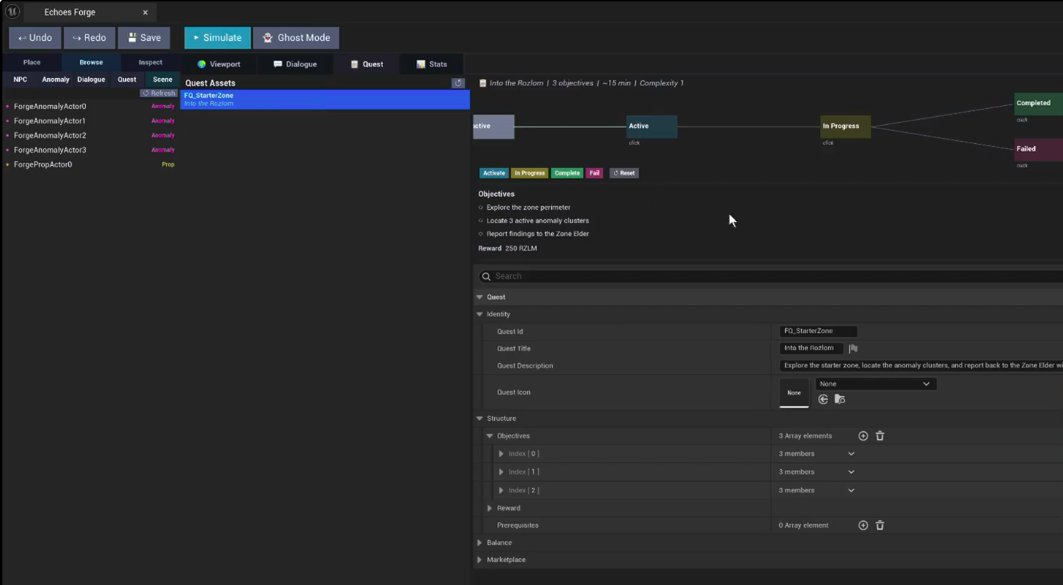
Echoes of Rozlom is interesting for another reason: it targets the game production layer, where small studios need faster workflows and lower toolchain friction.
Healthcare, payments, consumer apps, and new category bets
Some of the most interesting teams did not fit neatly into one standard crypto bucket. Those are often the projects worth watching twice.
HealthLog tackles data consent and access control in a domain where auditability matters. Rift ATM goes after crypto cash access, with all the regulatory weight that comes with it. tendr.bid applies on-chain logic to freelance coordination.
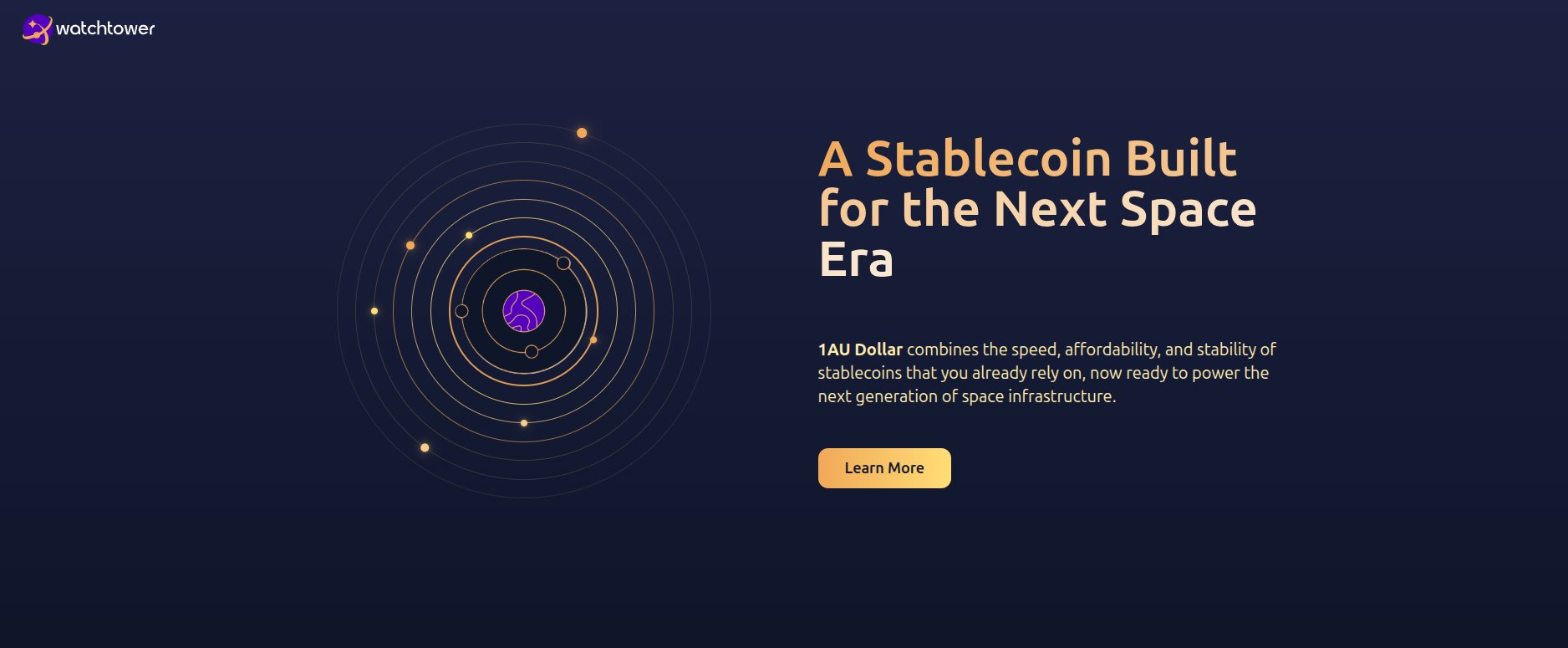
Watchtower and Hapticon both lean ambitious: one ties stablecoin yield to space infrastructure, the other applies agent and crypto-economic design to science funding and coordination.
What the winners reveal about Solana infra demand in 2026
Three signals stood out across submissions.
- AI agents need guardrails, not just speed. Bento, SentinelGuard, and Pact all treat agent risk as a first-class problem.
- Real-time products dominate. Trading sandboxes, prediction markets, and agent frameworks all break under stale data, so freshness beats raw throughput.
- Devnet-to-mainnet is the real test. Сomplian.cc validating five Anchor programs on devnet before a mainnet plan shows where infra continuity matters.
This tracks with Frontier as a whole, where DeFi, AI, and infrastructure were the most densely clustered submission areas.
Tradeoffs: when dedicated RPC is worth it, and when it is not
Shared RPC is enough for an early prototype with low traffic and no strict execution requirements. Once you are running a trading terminal or a platform, a live DeFi backend, or an agent workflow where stale state and failed landing cost money, dedicated RPC stops being an optimization and becomes part of the product stack.
What we run
Aperture gRPC (beta)
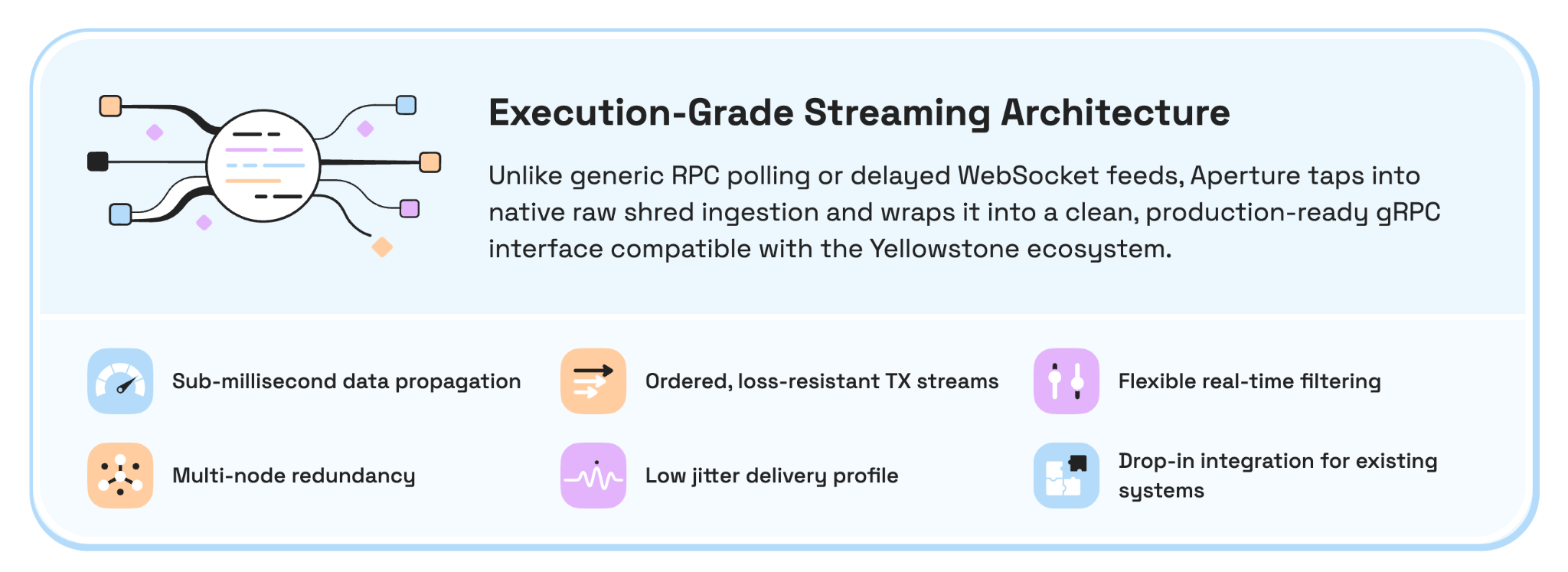
A gRPC access layer for teams building real-time systems on Solana. This is relevant for operators who need lower-latency state delivery, cleaner integration into event-driven backends, and better support for high-frequency reads than standard request-response RPC patterns.
See setup details in the RPC Fast docs
Dedicated Solana RPC
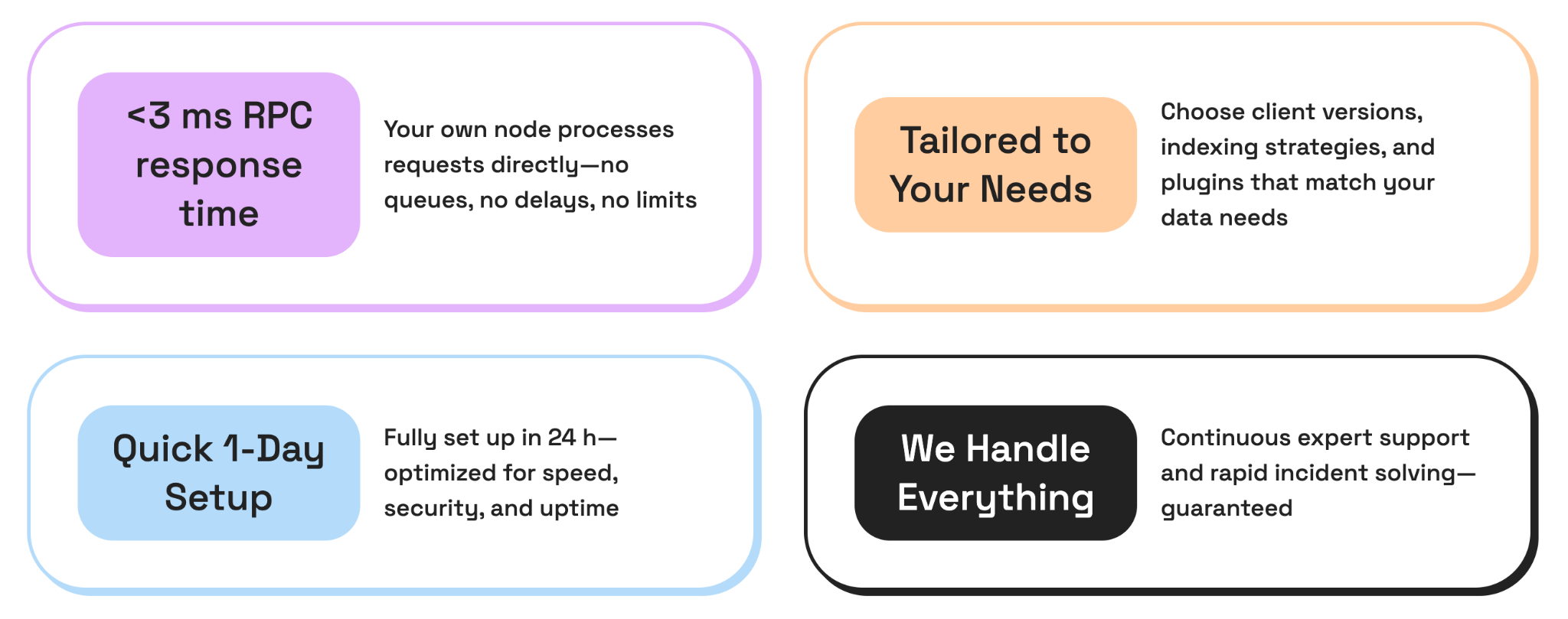
Private Solana infrastructure for teams that need predictable latency, stable throughput, and fewer moving parts during congestion. This fits HFT bots, DeFi backends, execution-heavy apps, and any workload where public endpoint variance turns into missed trades or broken UX.
Solana Data Streaming
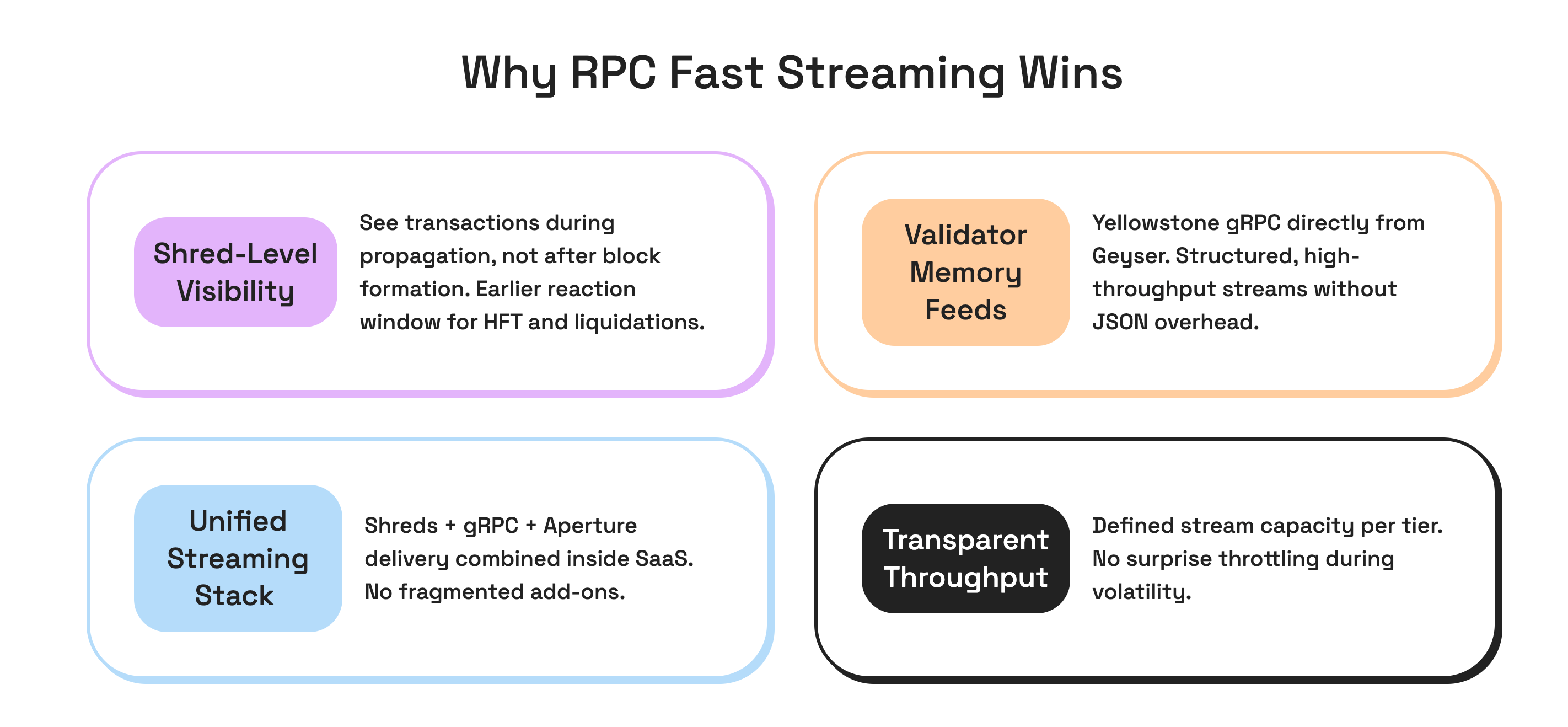
Streaming access for teams processing live on-chain data instead of polling for it. This helps indexers, market data pipelines, alerting systems, trading engines, and internal analytics services that need fresher event delivery and lower ingestion lag.
Start building, keep shipping
Thanks to every team that applied, used our infra, stress-tested our systems, and kept building. Winners were notified through Superteam Earn, and we reached out using the contacts each team provided.
And if you build something latency-sensitive on Solana, you do not need to wait for the next hackathon.
.jpg)


.jpg)


