





.jpeg)
Scaling tens of successful setups for HFT trading on Solana inspired us to make those infrastructure bits available right on kick-off. That’s how our idea of SaaS appeared.
Now, we’re pleased to announce that RPC Fast launches Solana RPC SaaS — a managed, subscription-based RPC service built on the same infrastructure stack we run for dedicated node clients. It is available now, starting at $0.

This is not a generic shared endpoint with a dashboard bolted on. It is a full streaming stack—JSON-RPC, WebSocket, Yellowstone gRPC, Shredstream, and our in-house Aperture gRPC layer—packaged into tiered plans designed around the actual needs of HFT bots, DeFi backends, and latency-sensitive trading systems.
What RPC Fast Solana SaaS includes
The service is built on four layers that work together.
JSON-RPC and WebSocket
Full access to Solana's standard RPC interface over HTTPS and WebSocket. All standard methods are included across paid plans, including heavy methods like getProgramAccounts — which costs 10 CU versus 1 CU for standard calls — available from the Focus plan upward. Rate limits scale with your plan tier, from 15 req/s on Start to 500 req/s on Aperture. Bandwidth is not metered on any paid plan. You are not billed per GB of data transferred through RPC, WebSocket, or gRPC streams.
Yellowstone gRPC
Available from the Stream plan. Geyser-based structured streaming — accounts, transactions, slots, blocks — delivered over gRPC with Protocol Buffers. Lower overhead than JSON, advanced filtering, stable throughput under burst load. Up to 10 concurrent streams on Stream, up to 25 on Aperture.

Shredstream gRPC
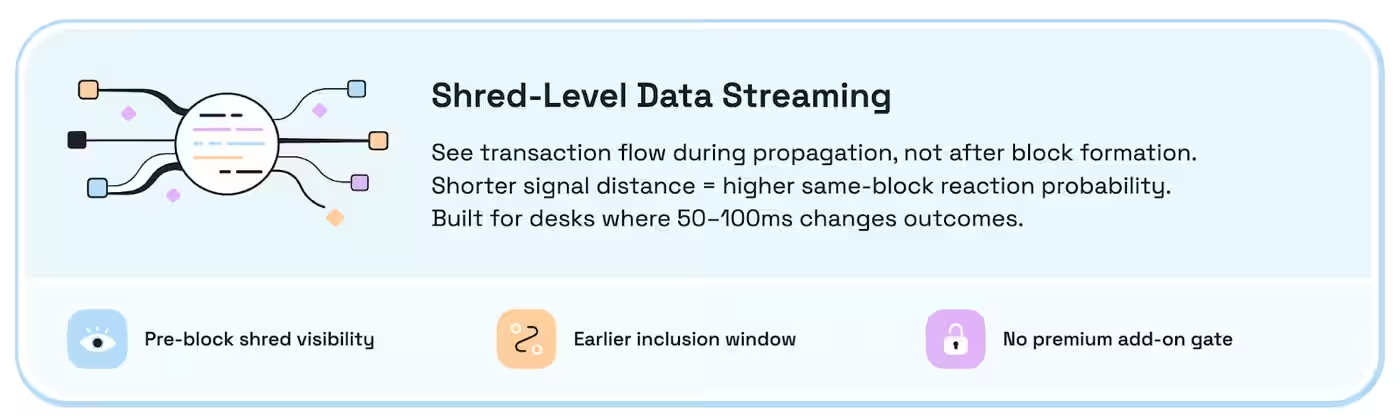
Available on the Aperture plan. Shred-level visibility means your system sees transaction flow during propagation, not after block formation. For same-slot execution strategies, that earlier signal window is the difference between reacting in time and reacting one slot too late.
Aperture gRPC (Beta)
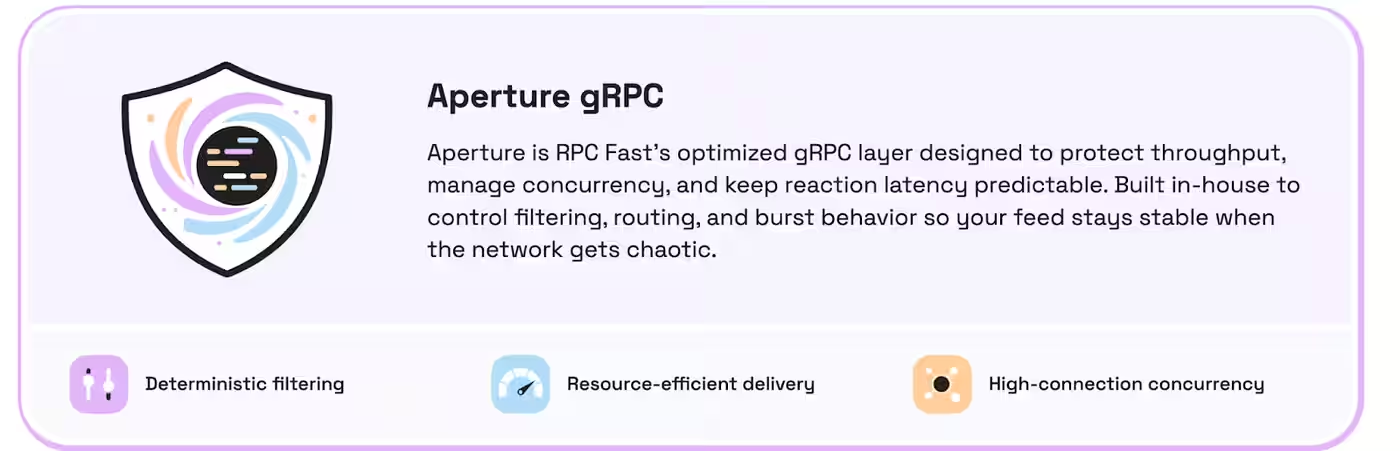
RPC Fast's own gRPC delivery layer, available on request within the Aperture plan. Built in-house to manage filtering, routing, and burst behavior — designed to keep your feed stable when the network gets chaotic.
DoubleZero integration
RPC Fast is connected to DoubleZero — a high-throughput dedicated internet layer built for high-performance blockchains. The goal is more predictable performance and more consistent execution quality under heavy network load.
SWQoS: Delivery probability comes before priority fees
One thing that gets missed in most RPC discussions: priority fees only matter if your transaction reaches the leader in the first place.
Stake-Weighted Quality of Service (SWQoS) is Solana's mechanism for prioritizing transaction delivery based on validator stake. During congestion, stake-backed traffic gets preferential access to the leader's TPU. Unstaked traffic gets rate-limited. An RPC node cannot stake directly — but it can peer with a staked validator, which then forwards transactions on its behalf, effectively inheriting priority access.
SWQoS does not replace priority fees. It operates at a different layer:
| Layer | What it controls |
|---|---|
| SWQoS | Whether your transaction reaches the leader under congestion |
| Priority fees | Ordering of transactions once inside the leader queue |
You can pay maximum priority fees and still lose the race if your packets never reach the leader. For HFT and DeFi systems, delivery probability comes first.
RPC Fast has partnered with bloXroute to bring SWQoS access to SaaS clients. bloXroute's Solana Trading API handles fast transaction propagation and includes MEV protection. To use it alongside your RPC Fast plan, you purchase a Professional or higher tier from bloXroute directly. RPC Fast clients are eligible for a 10% discount on bloXroute Enterprise or higher tiers — contact support to apply it.
How the plans are structured
Four tiers, each mapped to a real workload profile:
- Start—Free. No credit card required. For onboarding, testing, and lightweight apps. Heavy RPC methods not included.
- Focus—Early production workloads. Heavy methods included. Email support with 24h SLA.
- Stream—Scaling production apps. Yellowstone gRPC included. Unlimited bandwidth. Email support with 12h SLA.
- Aperture—HFT, MEV, heavy indexing, trading infrastructure. Shredstream, Aperture gRPC (Beta), 500 req/s rate limit, priority infrastructure, priority chat support with 8h SLA.
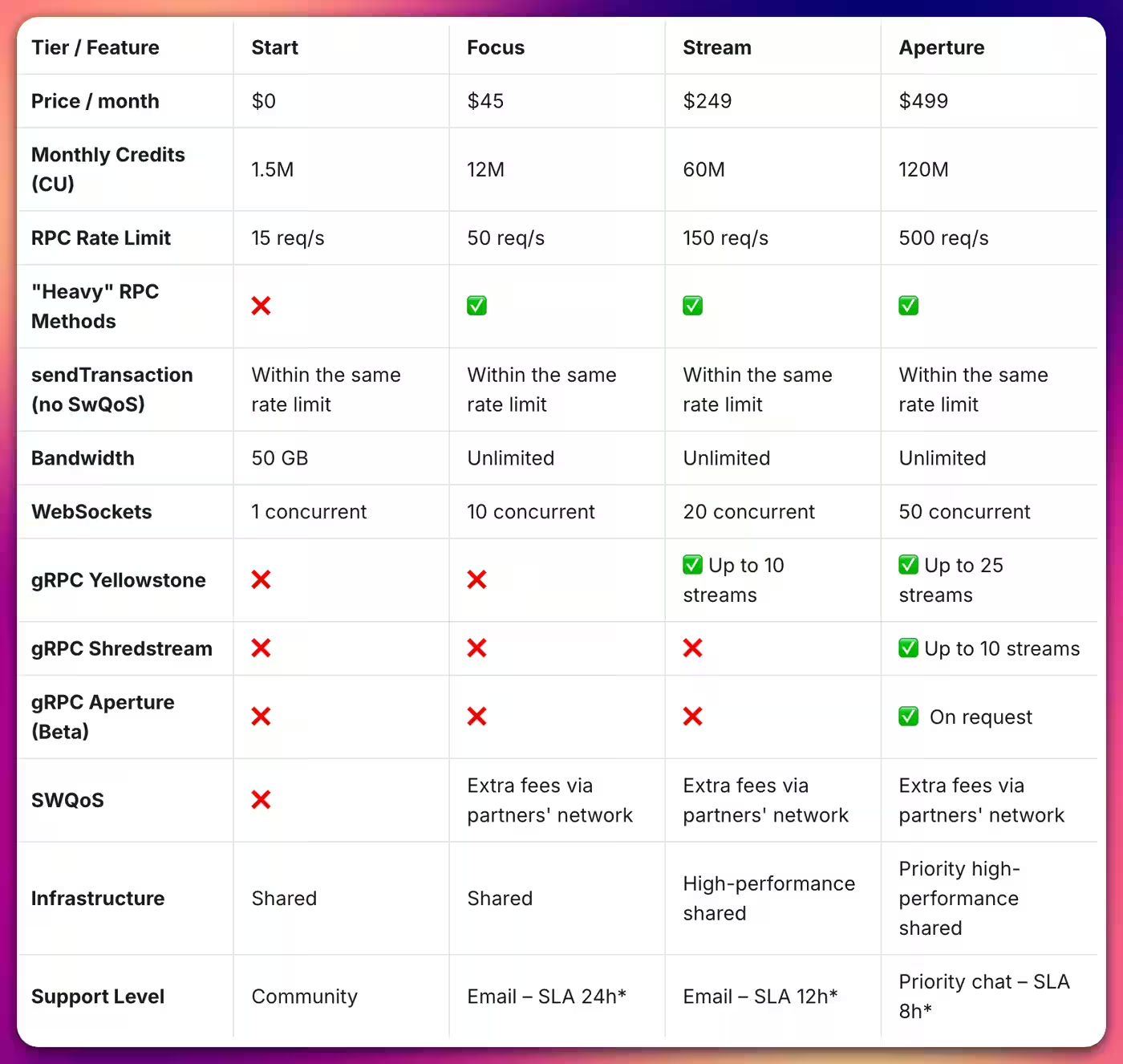
Usage is measured in Compute Units. Standard RPC methods cost 1 CU each. getProgramAccounts costs 10 CU. Unused CUs do not roll over. Overage is billed at $5 per 1M CU. You can monitor CU consumption, active gRPC streams, and request statistics in real time from the dashboard.
For teams that have outgrown SaaS—mid-to-large operations running dedicated trading infrastructure—RPC Fast also offers dedicated Solana nodes and HA clusters with custom SLAs, geo-distribution, and HFT-focused tooling.
How RPC Fast compares to other providers
The table below is a direct snapshot from our streaming comparison page.
The pattern across most providers: gRPC is locked behind the most expensive tier, Shredstream is either absent or a separate purchase, and bandwidth charges add unpredictable cost at scale. RPC Fast includes gRPC from the Stream plan ($249/mo) and Shredstream in Aperture ($499/mo), with no bandwidth metering on any paid plan.
Things we’ve done differently from other providers
The standard shared RPC experience on Solana has a predictable failure mode. It works fine at low load. Under congestion — during a hot mint, a liquidation cascade, or a volatile market open — latency spikes, streams drop, and rate limits kick in at the worst possible moment.
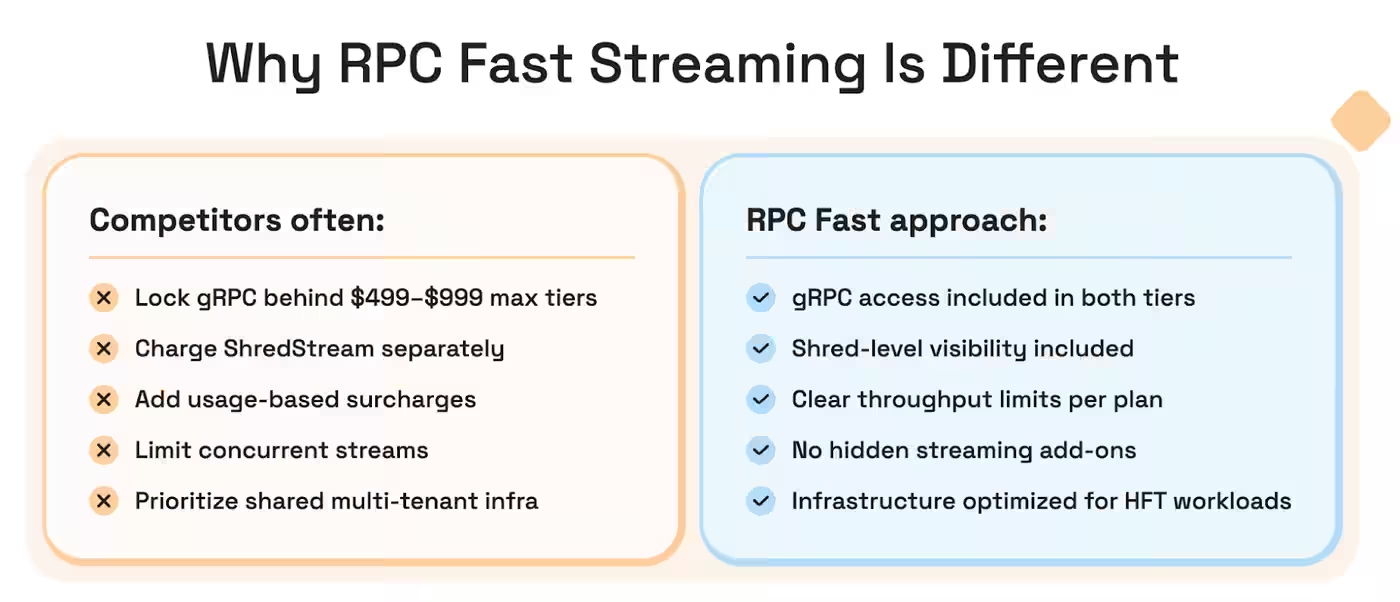
The deeper issue is structural. Most providers treat gRPC as a premium add-on, lock Shredstream behind their highest tier, and charge separately for bandwidth. You end up stitching together multiple services to get what should be a single coherent stack.
For HFT and latency-sensitive DeFi, that fragmentation has a direct cost. Shredstream gives you transaction visibility during propagation, before block formation. Yellowstone gRPC gives you structured, low-overhead account and transaction streams. SWQoS determines whether your transaction reaches the leader at all under congestion. These are not optional extras — they are the baseline for competitive execution on Solana.
How to start working with Solana RPC SaaS
Sign up at solana.rpcfast.com. Your first Solana Mainnet RPC app is created automatically. No credit card required on the Start plan.
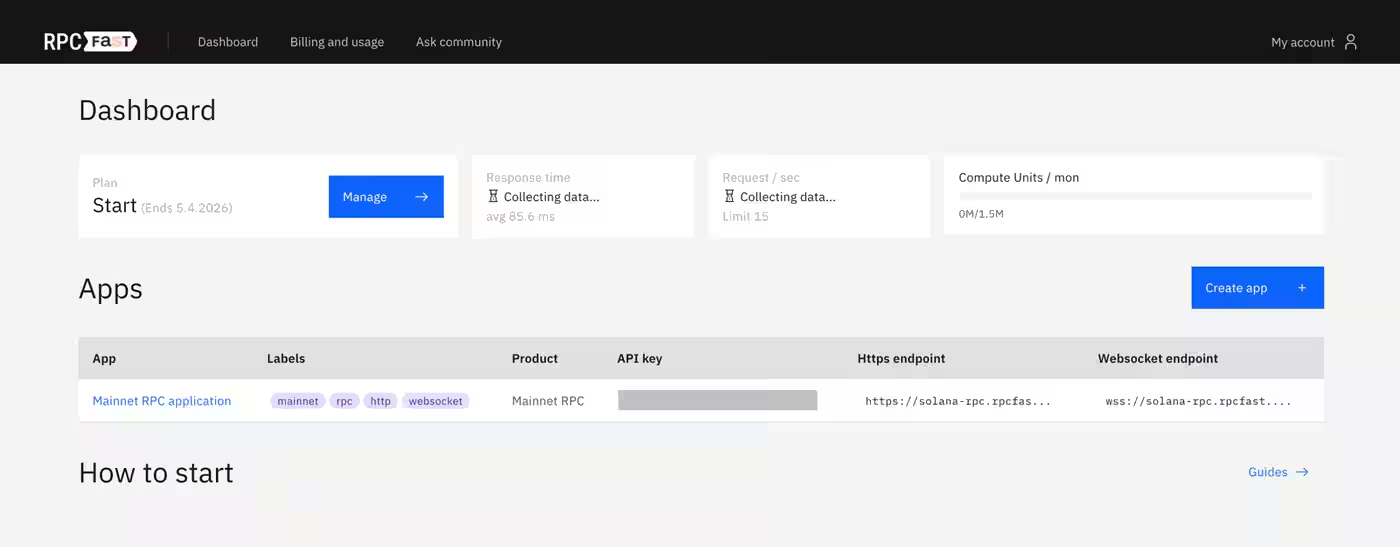
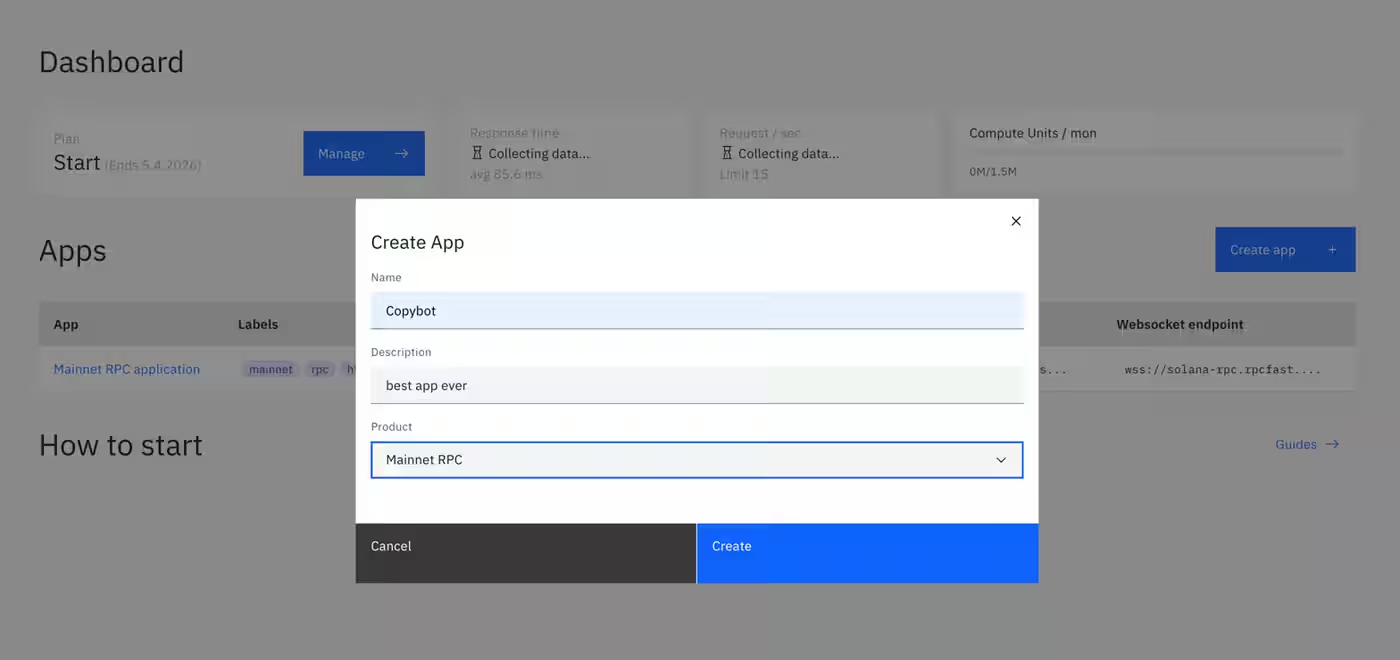
From the dashboard, you get your API key, HTTPS and WebSocket endpoints, and real-time stats on RPC traffic, methods used, and response time per app. Upgrading or downgrading is available at any time — upgrades take effect immediately.
If you are evaluating the Aperture plan for an HFT or MEV setup, or want to discuss a dedicated node configuration, reach out to the RPC Fast team on Telegram.
The full documentation covers every method, streaming option, billing detail, and integration guide.
Start for free. Scale when the strategy demands it.
Login to dashboard.jpg)


.jpg)


