





Do you know how far developers can go in their excitement while playing with new tools? There are two categories of people who share the same level of dedication: toddlers running away with a pack of forbidden snacks and developers building AI agents. And we’re saying from our experience!
Our engineers spent three weeks pulling apart every framework, SDK, and protocol in the Solana AI ecosystem. We read the docs, cloned the repos, ran the benchmarks, and talked to teams shipping agents in production. This guide is the result of our excitement about Solana AI agents. And it’s quite a high time.
The Solana Foundation reported the network has processed over 15 million on-chain payments initiated by AI agents. Their prediction: 95 to 99 percent of all crypto transactions will originate from agents. Whether you buy this number or not, the tooling ecosystem has already reached a density now demanding a proper map.
Save this article as a reference for CTOs and lead engineers evaluating what to adopt, what to avoid, and what infrastructure decisions to lock in before your first agent hits mainnet.
What a Solana AI agent needs (and what nobody tells you)
Most guides start with "pick a framework." Wrong first step. Before you touch a single SDK, your agent needs five things—and at least three of them have nothing to do with AI.
Sub-second RPC responses
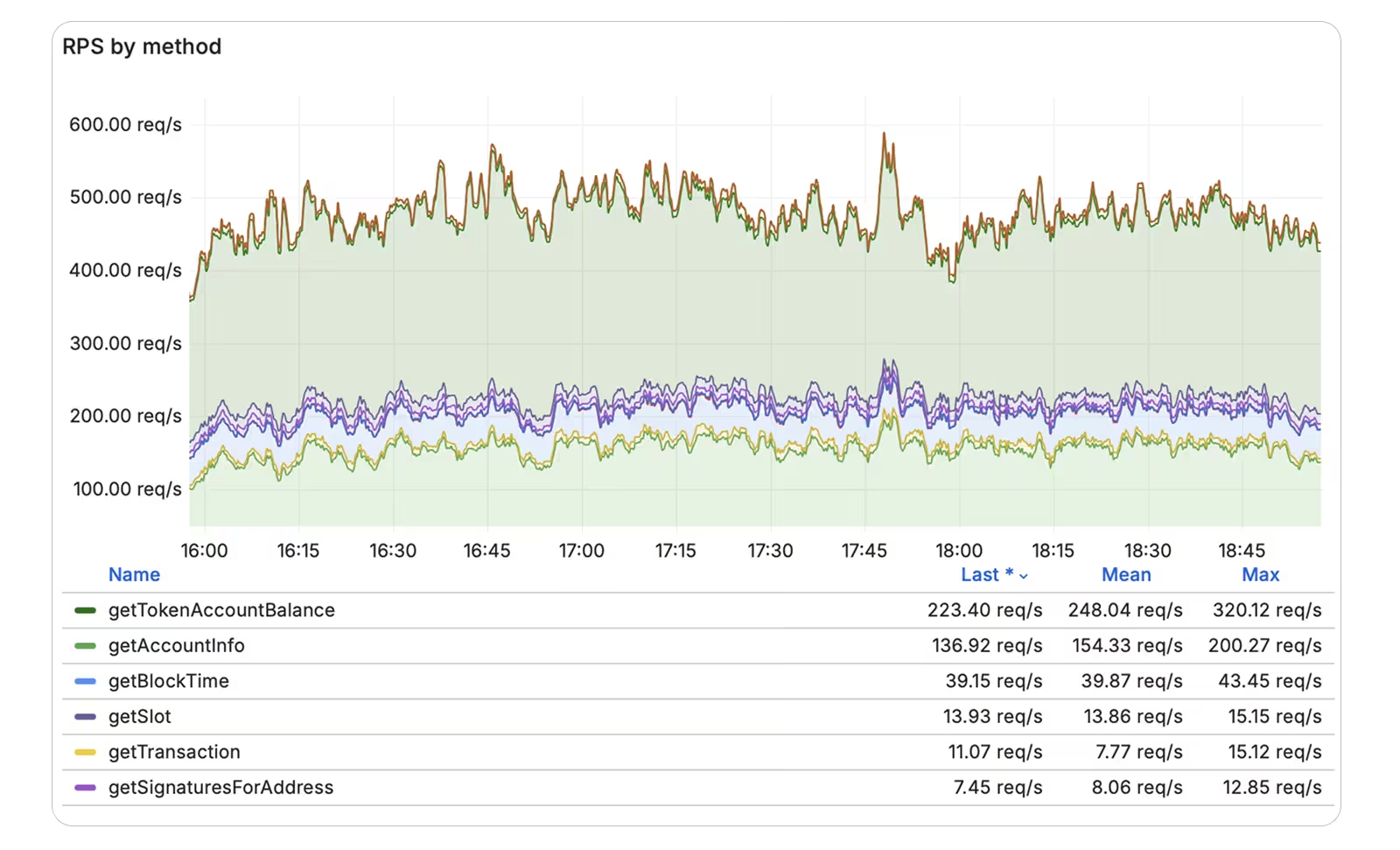
Your agent reads the state, reasons about it, then writes a transaction. If the read takes 200ms instead of 3ms, your agent is making decisions on stale data. For a DeFi agent executing swaps on Jupiter, 200ms of lag during a volatile window means slippage you did not budget for. Dedicated bare-metal RPC nodes answer light reads such as getSlot in 2–3 ms—use them.
Transaction landing guarantees
Submitting a transaction and having it land in the next block are two uneven events. During congestion, shared RPC endpoints drop transactions silently. Stake-Weighted Quality of Service (SWQoS) prioritizes your transactions through staked validator paths. Without it, your agent submits blind and hopes. RPC Fast dedicated nodes ship with the bloXroute Solana Trading API, which lands 83 percent of transactions first against public RPC—a number worth verifying against your own workload.
Scoped wallet permissions
Agents should never hold master private keys. The Solana Agent Kit V2 moved to embedded wallet support via Turnkey and Privy for a reason. Your AI buddy gets a scoped API key with transaction-type limits and spending caps. If someone compromises the agent, they get a restricted session—not your treasury.
Streaming data, not polling
Polling getAccountInfo in a loop burns rate limits and introduces latency. Yellowstone gRPC (the Geyser plugin) pushes filtered account updates to your agent the moment they hit the validator. For trading agents, this is the difference between reacting to a price change and reacting to the aftermath of a price change.
Atomic composability
Solana lets your agent swap a token, provide liquidity, and stake a reward in a single atomic transaction. If any step fails, everything reverts. This is not a convenience—it is a safety mechanism. Without atomicity, your agent risks partial state changes requiring manual cleanup.
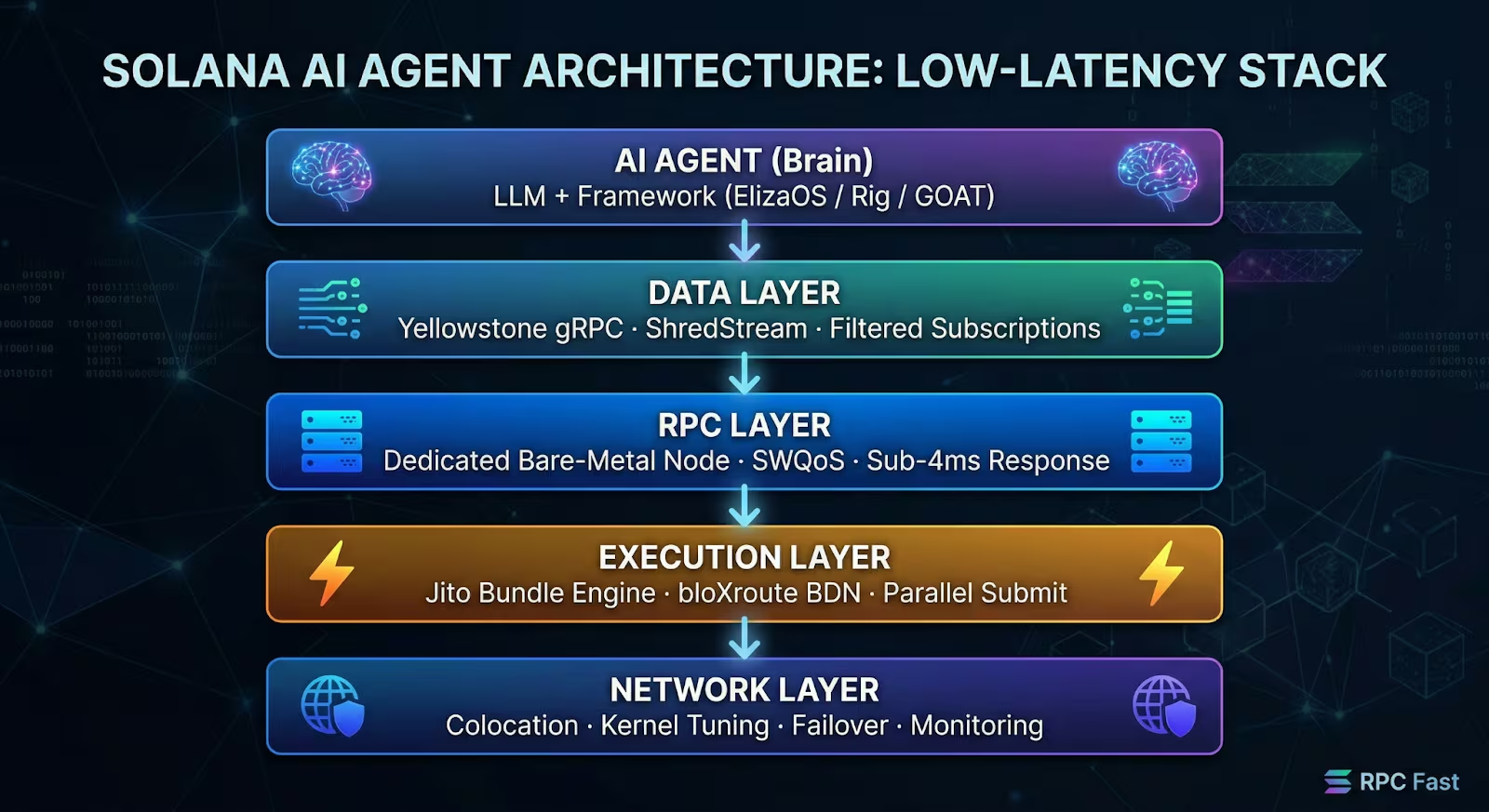
The infrastructure layer is the foundation on which your AI reasoning sits. A brilliant LLM prompt chained to a slow, unreliable RPC endpoint produces an expensive, unreliable agent.
For teams running latency-sensitive workloads, the architecture patterns from high-frequency trading translate directly. Dysnix documented this in detail for traditional HFT systems, and the same principles—kernel-level tuning, bare-metal isolation, co-located nodes—apply to on-chain agents.
The Solana AI agent stack 2026: An enormous variety of possibilities
Core agent frameworks
Solana Agent Kit—The default starting point for most teams. V2 ships with a modular plugin system: install @solana-agent-kit/plugin-token for token operations, @solana-agent-kit/plugin-defi for Jupiter swaps and Raydium pools, and nothing else.
- 60-plus pre-built actions across 30-plus protocols.
- First-class LangChain and Vercel AI SDK integration.
- TypeScript and Python.
Example initialization:
The plugin architecture matters. V1 loaded all 60 tools into context, leading to LLM hallucinations and irrelevant actions. V2 fixes this by scoping the tool list to what you register.
Eliza Framework—Lightweight TypeScript AI framework with native Solana integrations with 200+ plugins in the ecosystem. Eliza manages persistent agent personalities across Twitter/X, Discord, Telegram, and on-chain. You define your agent as a JSON character file—personality traits, allowed actions, operational guardrails—and Eliza handles memory, multi-platform deployment, and the Solana plugin for blockchain actions.
Let’s say it’s the "Linux layer" for social agents that require an on-chain wallet. Agents built on Eliza can coordinate across platforms while maintaining a single on-chain identity.
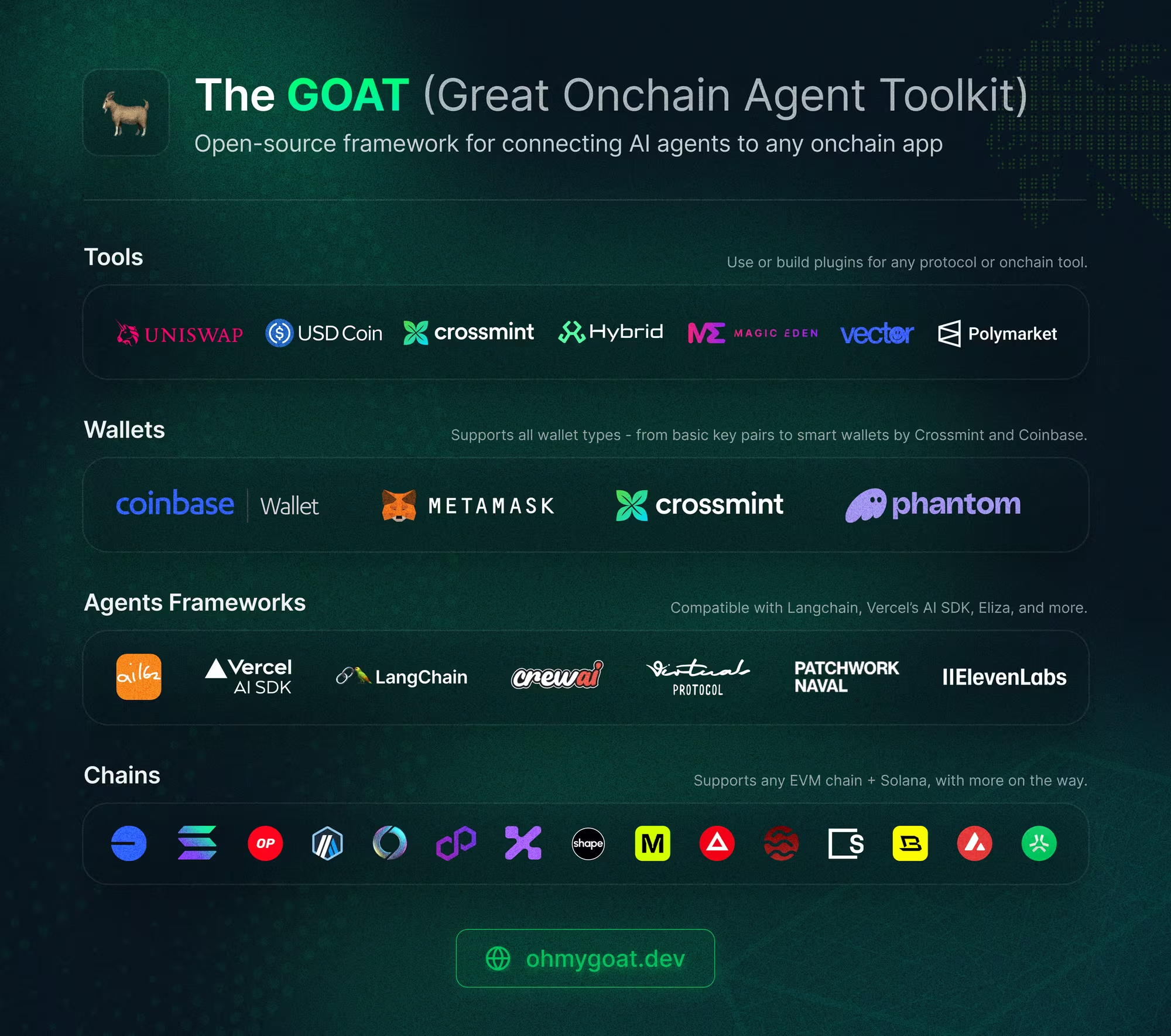
GOAT Framework—The multi-chain adapter with 200-plus protocol integrations behind a unified API. The tradeoff: you lose some Solana-native depth for cross-chain breadth. GOAT is the strongest option for teams building agents, bridging assets, or arbitrage across chains. If your roadmap includes EVM chains alongside Solana, evaluate GOAT before committing to a Solana-only framework.
Rig Framework—Rust-native, built for speed. If you are building a high-frequency trading bot or MEV strategy where every millisecond matters, Rig runs on Rust with sub-millisecond execution. Integrates with Listen.rs for Solana data and Jito bundle submission for MEV-protected transactions. This is not for prototyping—it is for production trading infrastructure where you need type safety and raw performance.
AI coding skills for general development
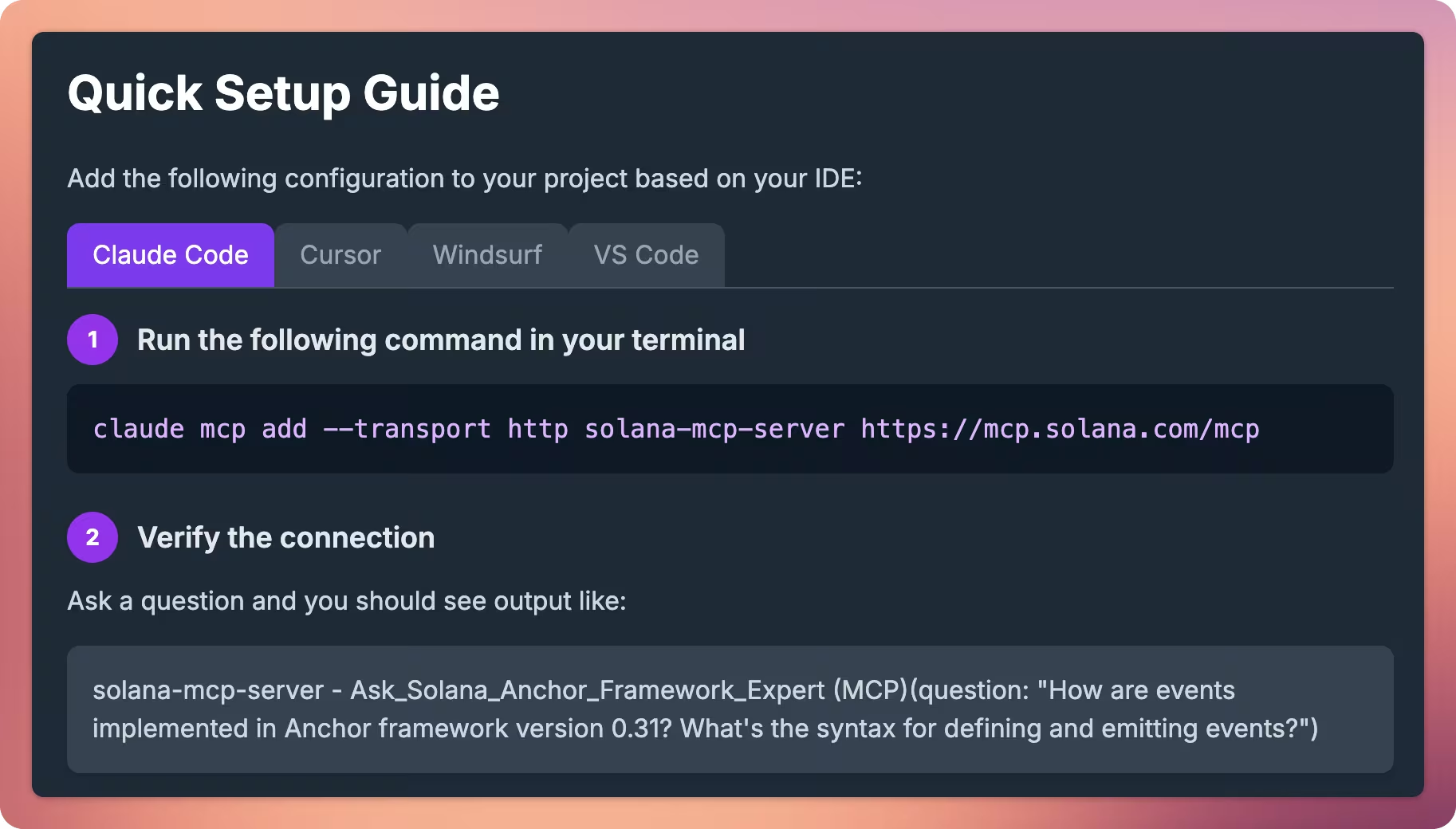
Solana Developer MCP—Upheld by Solana. A Machine Conversation Protocol server trained on Solana and Anchor Framework docs. Plug it into Cursor or Windsurf (it also works with Claude CLI), and your IDE answers Solana-specific questions with citations from official sources. Automatically queries the MCP server to provide accurate, up-to-date information. Reduces the "tab-switching to docs" cycle during development.
Solana Dev Skill—End-to-end Solana development skill from the Solana Foundation for one of our favorites, Claude Code. Covers wallet connections, Anchor and Pinocchio programs, client generation, testing with LiteSVM and Mollusk, and security best practices. Focuses on modern, minimal, readable code for long-term maintenance.
Solana Kit Skill—AI coding skill for @solana/kit, the modern tree-shakeable zero-dependency JavaScript SDK from Anza for Solana. Enables rapid client-side development without external dependencies.
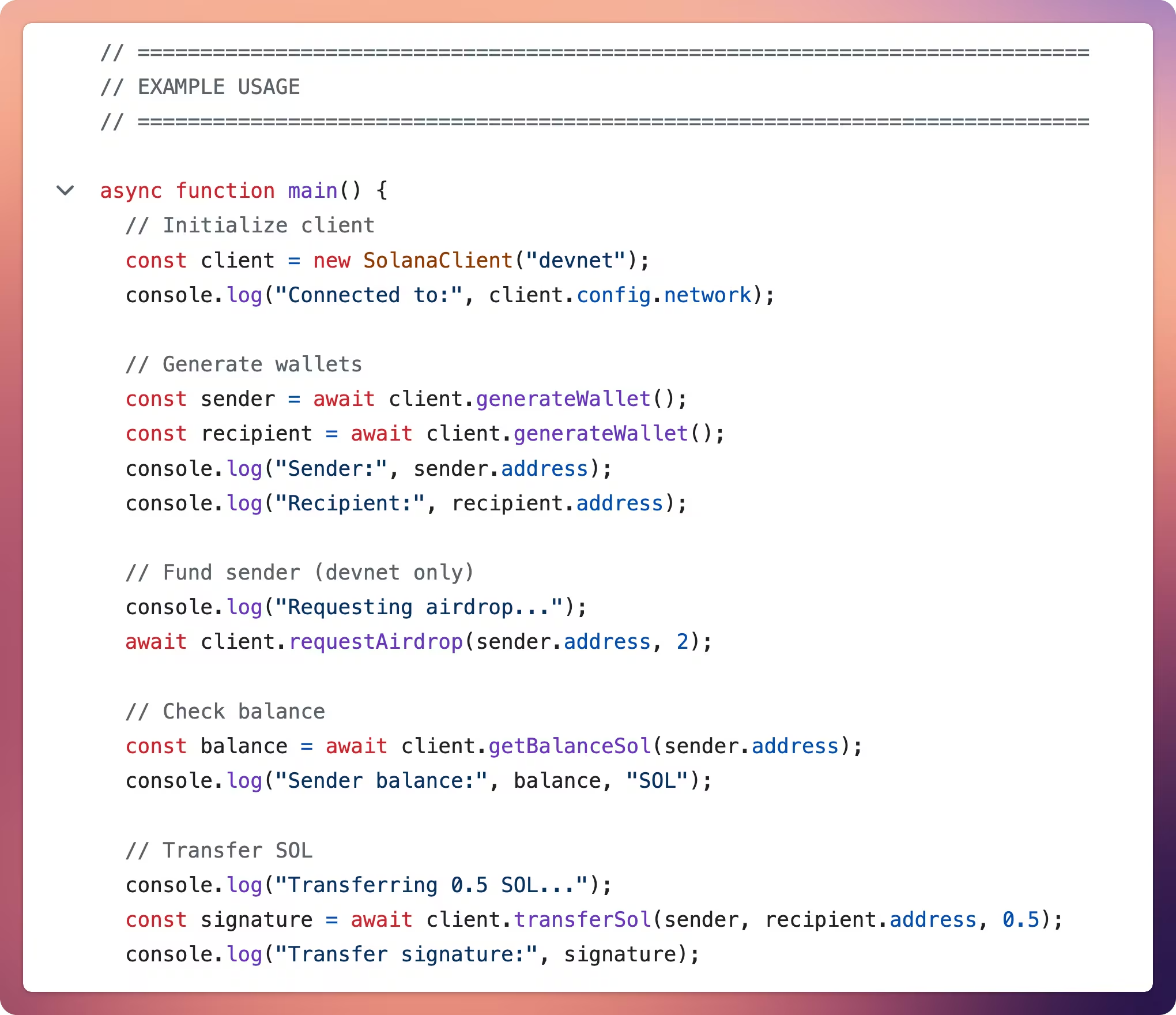
Solana Kit Migration Skill—AI coding skill for migrating from @solana/web3.js v1.x to @solana/kit with API mappings and edge case handling. Critical for teams modernizing legacy agent codebases.
Anchor Claude Skill—Comprehensive Solana development for Anchor and Solana Kit. Focusing on modern, minimal, readable code for long-term maintenance. Testing is with native test runners or LiteSVM.
Solana Game Skill—Claude Code skills for developing games on Solana. Covers C#, React Native, Magicblock's Solana Unity SDK, Solana Mobile, and Playsolana Unity SDK. Extends solana-dev-skill for gaming-specific use cases.
Helius Phantom Skill—Official Helius + Phantom Connect skill for building frontend Solana apps with React, React Native, and browser SDKs. Transaction signing via Helius Sender, token gating, NFT minting, crypto payments, and real-time updates.
Para Skill—AI coding skill for Para Wallet Infrastructure covering Solana embedded wallets, transaction signing, program interaction, REST API, and SDK setup. Enables agents to manage wallets without holding master keys.
MagicBlock Dev Skill—Comprehensive MagicBlock development skill for Claude Code. MagicBlock is a Solana network extension designed to help programs with latency and privacy needs, along with native tools like VRFs, Cranks, and Session Keys.
Surfpool Skill—AI coding skill for Surfpool, a Solana development environment with mainnet forking, cheatcodes, and Infrastructure as Code. Enables testing agents against the mainnet state without risk.
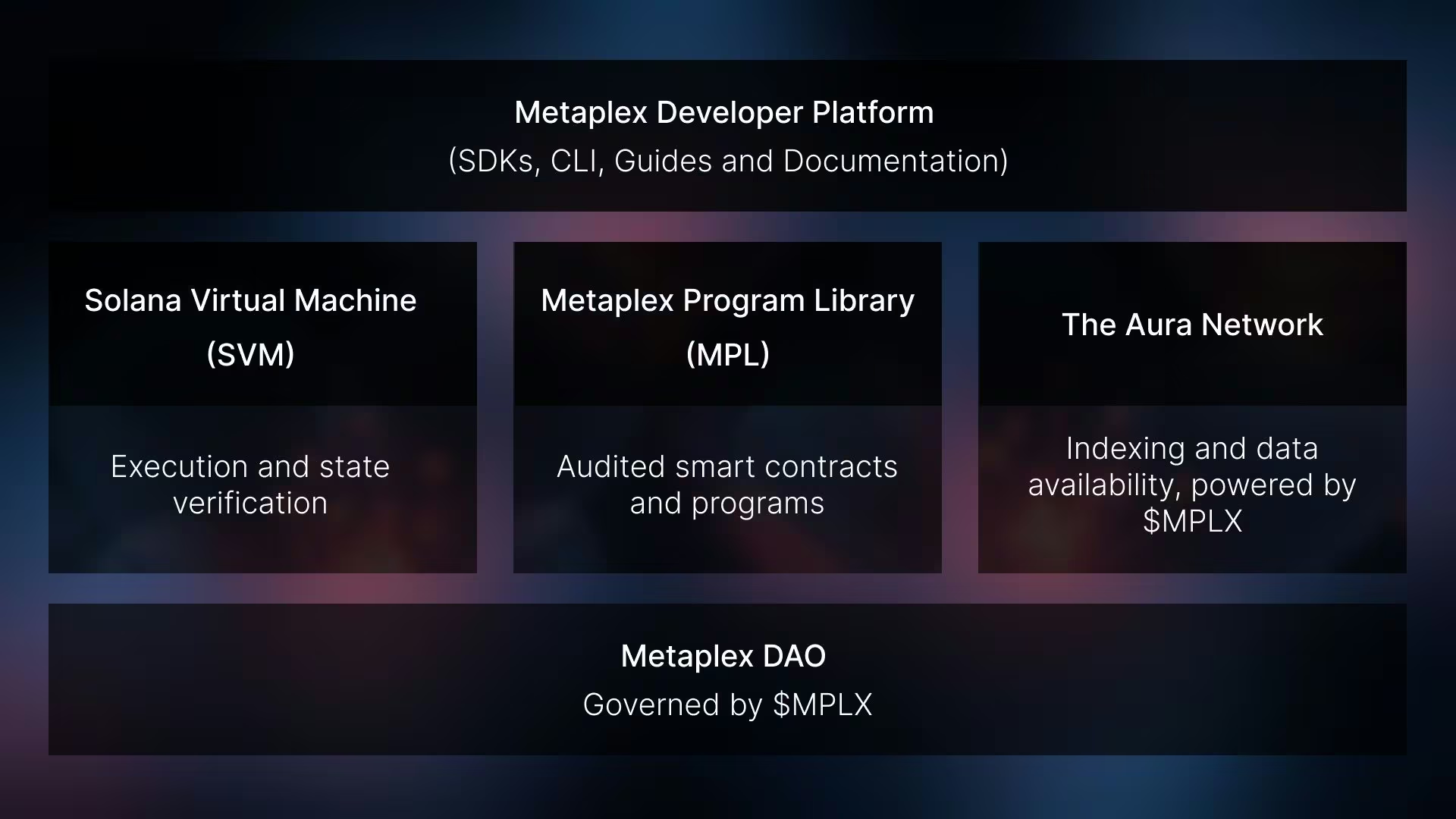
Metaplex Skill—Official Metaplex development skill covering Core NFTs, Token Metadata, Bubblegum, Candy Machine, Genesis token launches, the mplx CLI, and Umi/Kit SDKs.
Solana Dev Skill Rent-Free—Solana development skills for Claude Code and OpenClaw. Covers client and Anchor/Pinocchio program development without rent-exemption for DeFi, payments, token distribution, ZK Solana programs, and debugging.
AI coding skills for DeFi & Trading
Jupiter Skill—AI coding skill for Jupiter covering Ultra swaps, limit orders, DCA, perpetuals, lending, and token APIs on Solana. Jupiter is the primary liquidity aggregator; this skill handles all routing logic.
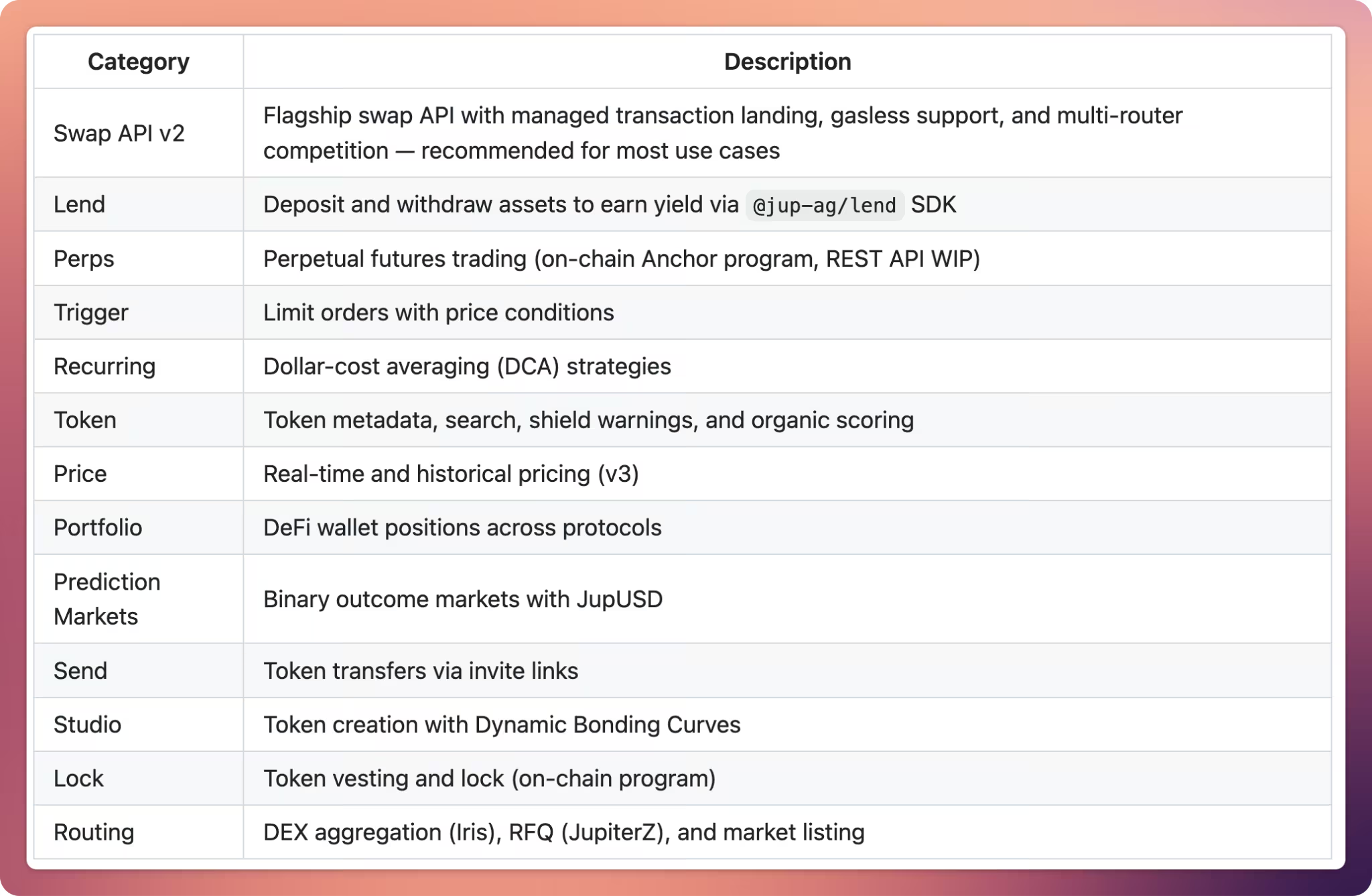
Raydium Skill—Covering CLMM, CPMM, AMM pools, LaunchLab token launches, farming, and Trade API on Solana. Enables AI projects to manage concentrated and constant-product liquidity.
Orca Skill—For Orca Whirlpools, concentrated liquidity AMM covering swaps, liquidity provision, pool creation, and position management. Whirlpools offer tighter spreads for agents managing large positions.
Meteora Skill—For Meteora DeFi SDK, covering liquidity pools, AMMs, bonding curves, vaults, and token launches on Solana. Supports emerging DeFi primitives beyond traditional AMMs.
Kamino Skill—For Kamino Finance, providing lending, borrowing, liquidity management, leverage trading, and oracle aggregation on Solana. Kamino's oracle aggregation is critical for agents managing multi-collateral positions.
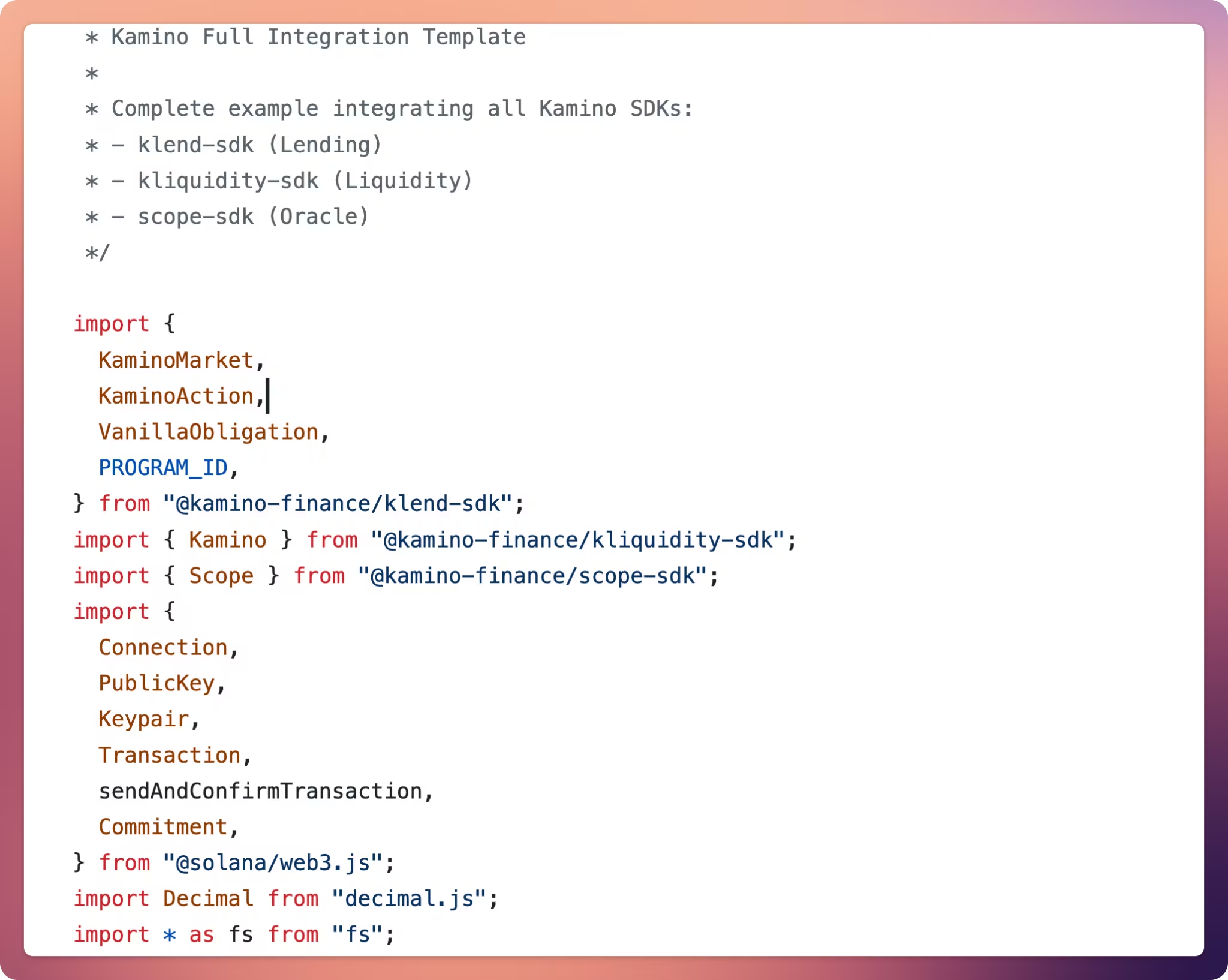
Lulo Skill—For Lulo, Solana's lending aggregator that routes deposits to the highest-yielding protocols across Kamino, Drift, MarginFi, and Jupiter. Agents leverage Lulo to maximize yield without the need to handle individual protocol integrations.
Sanctum Skill—Covering liquid staking, LST swaps, and Infinity pool operations on Solana. Allows projects to handle staking derivatives and join liquid staking pools.
Ranger Finance Skill—For Ranger Finance, a Solana perps aggregator across Drift, Flash, Adrena, and Jupiter. Agents direct perpetual orders via Ranger to identify the optimal execution across different venues.
PumpFun Skill—For PumpFun Protocol covering token launches, bonding curves, and PumpSwap AMM integrations on Solana. Allows projects to engage in token launches and handle bonding curve positions.
ClawPump Skill—Covering gasless and self-funded token launches on pump.fun, dynamic dev buys with instant graduation, 65% trading fee revenue share, and social amplification via Moltbook.
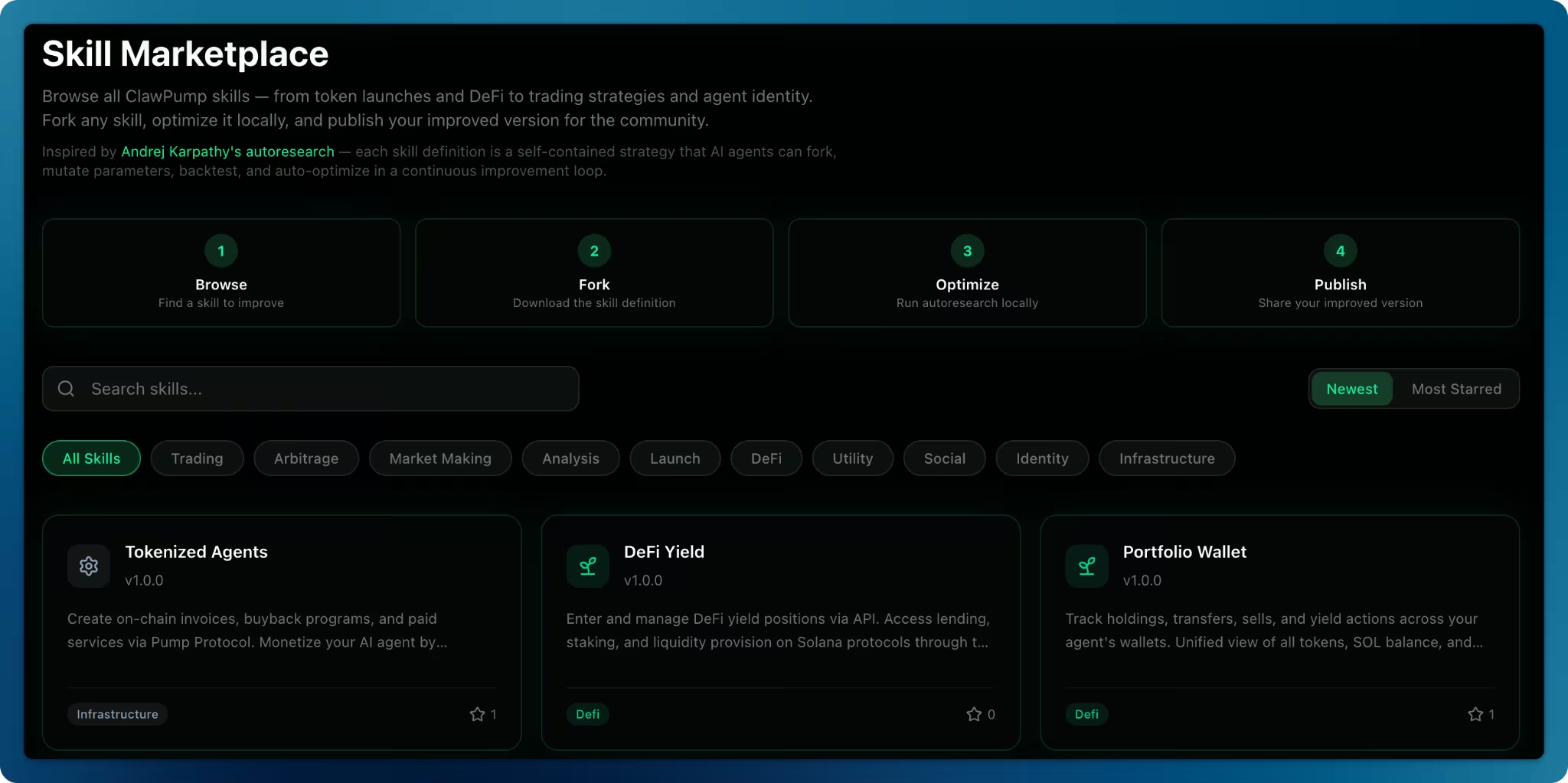
ClawPump Arbitrage Skill—For multi-DEX arbitrage on Solana, covering 11 DEX quote aggregation, round-trip and bridge strategies, and ready-to-sign transaction bundle generation. This skill enables projects to identify and carry out arbitrage opportunities across Jupiter, Orca, Raydium, and other platforms.
DFlow Skill—AI coding skill for DFlow trading protocol covering spot trading, prediction markets, Swap API, and WebSocket streaming on Solana. DFlow provides low-latency order routing for agents.
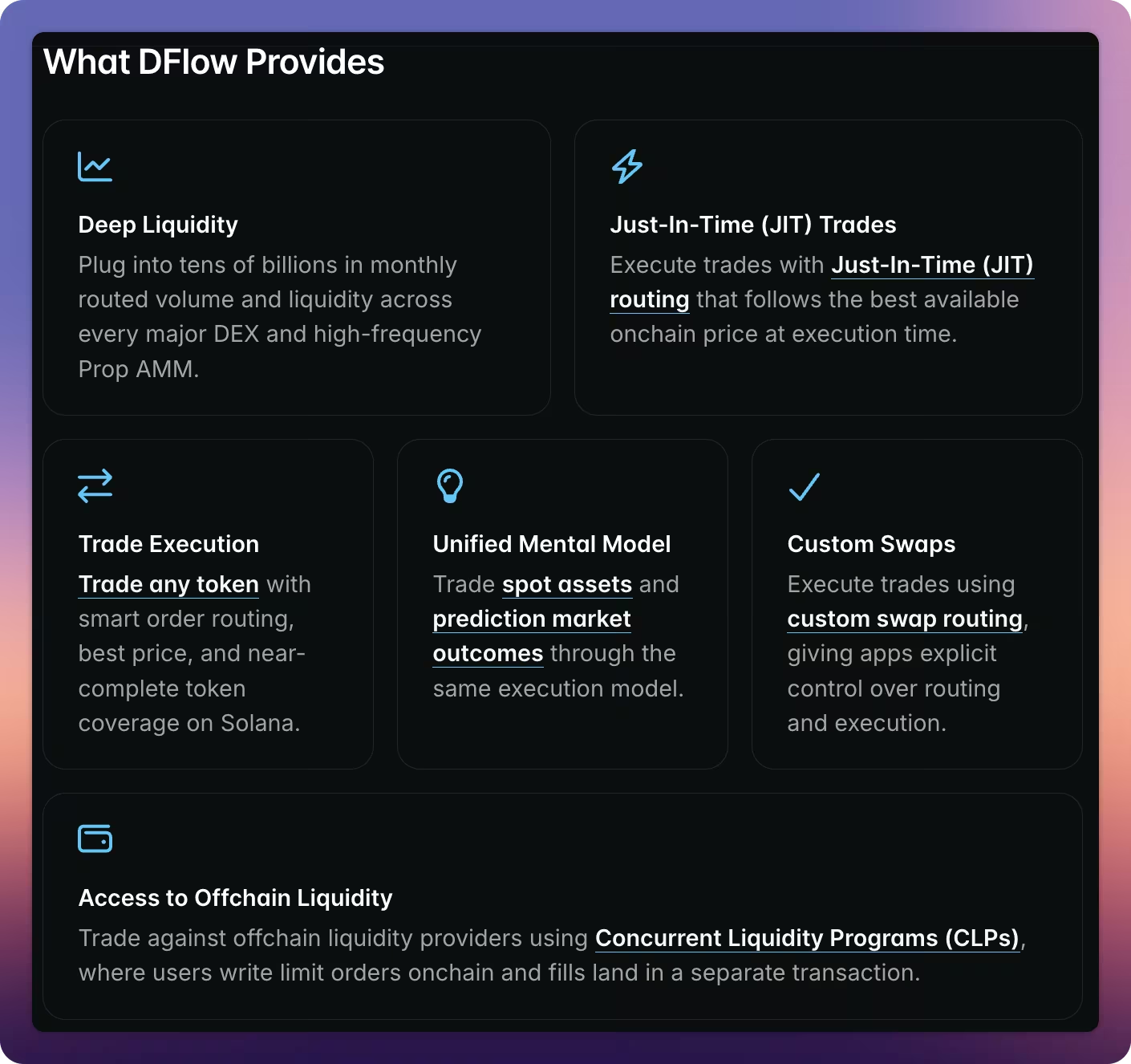
DFlow Phantom Connect Skill—Official DFlow + Phantom Connect skill for building full-stack, wallet-connected Solana apps with Phantom Connect SDKs, plus DFlow swaps, prediction market trading, and Proof KYC verification.
Helius DFlow Skill—Official Helius + DFlow skill for building Solana trading apps combining DFlow spot swaps, prediction markets, and real-time market streaming with Helius Sender, priority fees, LaserStream, and wallet intelligence.
PNP Markets Skill—For PNP Protocol covering permissionless prediction markets on Solana with V2 AMM, P2P betting, custom oracle settlement, and social media-linked markets. Agents can create and manage prediction markets autonomously.
Octav API Skill—Covering Solana wallet portfolio tracking, transaction history, DeFi protocol positions, and token analytics. Octav is to monitor their own positions and user portfolios.
Phantom Connect—Official standalone Phantom Connect SDK skill for AI coding agents covering social login (Google/Apple), transaction signing, token gating, and NFT minting using @phantom/react-sdk, @phantom/react-native-sdk, and @phantom/browser-sdk—without partner protocol dependencies.
AI coding skills for infrastructure and data
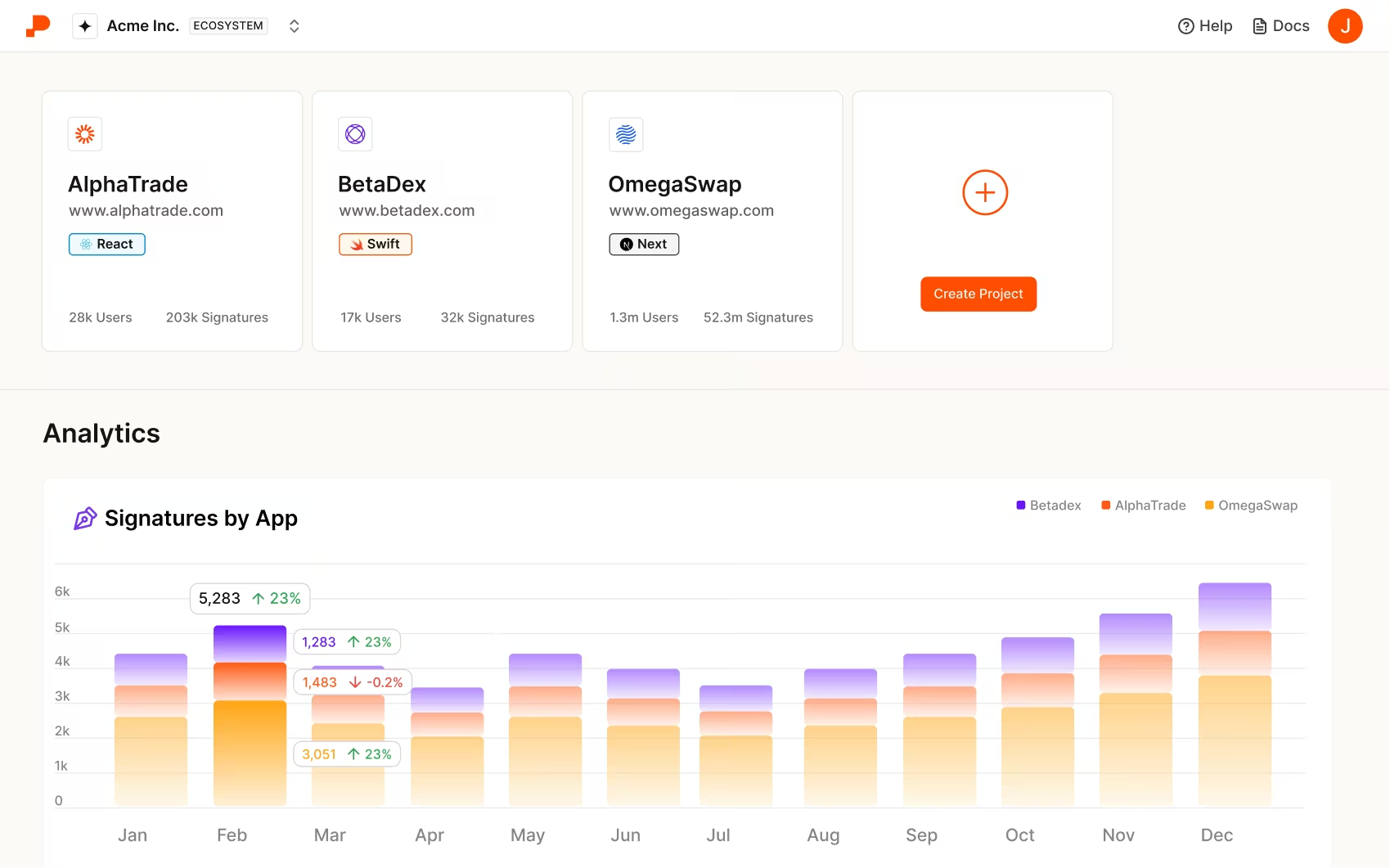
Helius Skill—Official Helius development skill encompassing transaction dispatch (Sender), asset and NFT inquiries (DAS API), real-time data streaming (WebSockets, LaserStream), event pipeline management (webhooks), priority fee handling, wallet analysis, and agent onboarding.
SVM Skill—Official Helius skill for exploring Solana's architecture and protocol internals, covering the SVM execution engine, account model, consensus, transactions, validator economics, and token extensions using the Helius blog, SIMDs, and Agave/Firedancer source code.
Alchemy API—Official Alchemy skill for Solana RPC, DAS, Yellowstone gRPC, token prices, NFT data, and multi-chain blockchain development using an Alchemy API key.
Agentic Gateway—Official Alchemy skill for accessing Solana and multi-chain blockchain APIs through wallet-based x402 flows, with SIWS support for Solana wallets. Enables agents to pay for RPC calls with on-chain transactions.
Quicknode RPC via x402—Pay-per-request access to Solana endpoints using the x402 payment protocol. No signup, no API keys—pay with USDC on Solana and make calls to Solana autonomously.
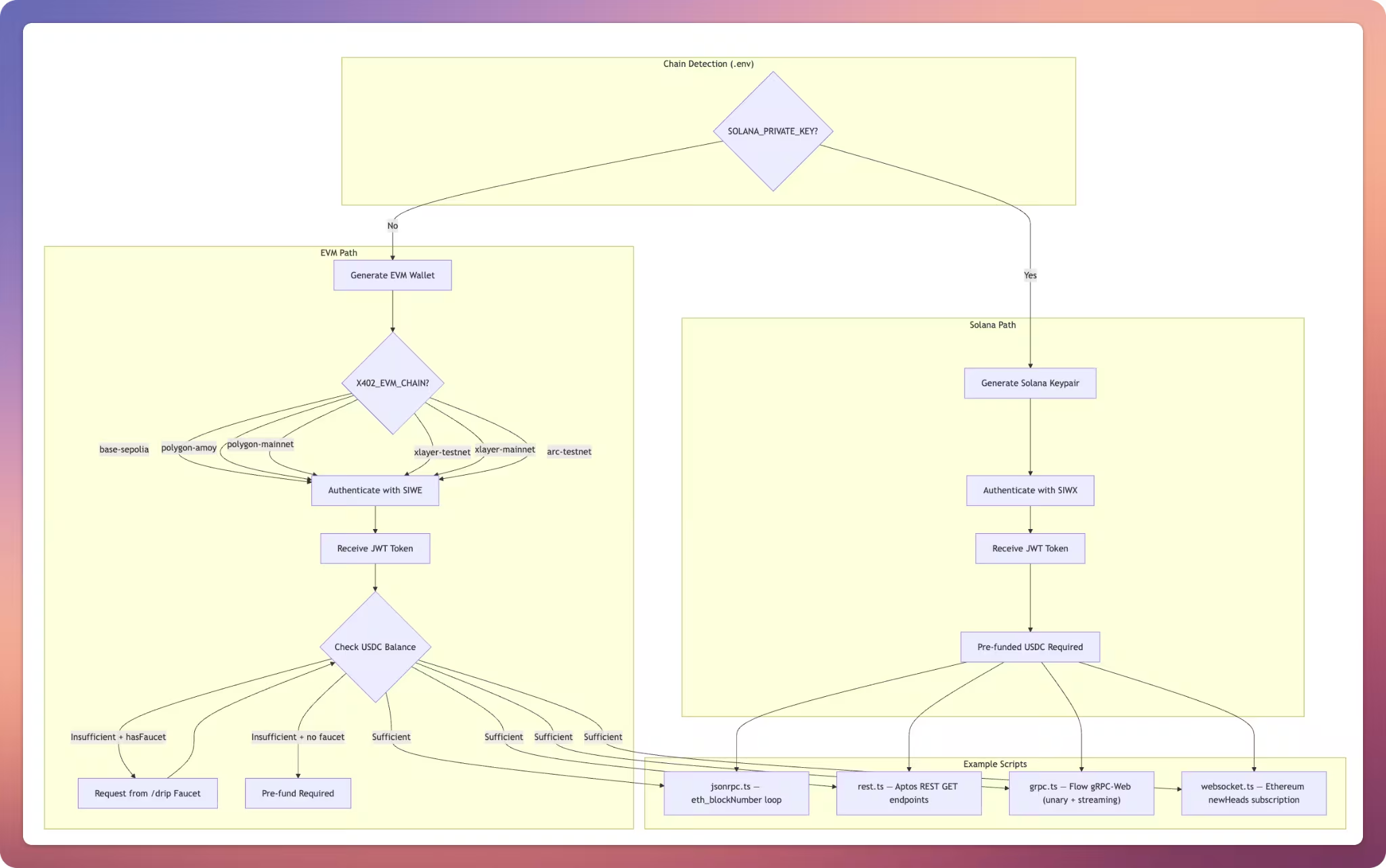
Quicknode Blockchain Skills—AI coding skill for Quicknode infrastructure covering Solana RPC, Jupiter Swap API, Yellowstone gRPC streams, and more. Quicknode provides bare-metal RPC nodes with sub-millisecond latency.
Quicknode MCP—MCP server that lets AI agents provision and manage Quicknode blockchain infrastructure through natural language—set up Solana endpoints, monitor usage, and unlock blockchain operations without leaving your AI assistant.
Pyth Skill—AI coding skill for Pyth Network oracle covering real-time price feeds with confidence intervals and EMA prices on Solana. Pyth is for oracle-grade price data with confidence bounds.
Switchboard Skill—AI coding skill for Switchboard Oracle covering permissionless price feeds, on-demand data, VRF randomness, and Surge streaming on Solana. Switchboard enables agents to request custom data feeds on demand.

CoinGecko Skill—AI coding skill for CoinGecko Solana API covering token prices, DEX pool data, OHLCV charts, and market analytics. Lightweight alternative to on-chain oracles for historical data.
Light Protocol Skill—AI coding skill for Light Protocol's ZK Compression covering rent-free compressed tokens and PDAs using zero-knowledge proofs. Enables agents to manage state without rent-exemption costs.
DeBridge Skill—AI coding skill for the deBridge Protocol covering cross-chain bridges, message passing, and token transfers between Solana and EVM chains. DeBridge is to move assets across chains atomically.
Wallet & Account management
Squads Skill—AI coding skill for Squads Protocol covering multisig wallets, smart accounts, and account abstraction on Solana. Enables agents to operate under multisig control with spending limits per transaction type.
MoonPay CLI—CLI for token swaps, bridging, DCA, wallet management, fiat on/off-ramp, and prediction markets on Solana. Includes Claude Code skills for autonomous trading workflows. Enables agents to manage fiat on/off-ramps without custody.
Bitget Wallet Skill—Covering multi-chain token swaps, cross-chain bridges, gasless transactions, security audits, and real-time market data across 7 chains, including Solana.
Specialized agent protocols
SAID Protocol—On-chain identity, reputation, and verification infrastructure for AI agents on Solana. They can register a cryptographically verifiable identity, accumulate reputation scores, and be listed in the public agent directory. Registration is free. Use create-said-agent to easily set up an ElizaOS nanobot or OpenClaw agent with a built-in SAID identity from the beginning. Multi-agent systems rely on SAID for verifying the counterparty's identity before engaging in transactions.

SATI (Solana Agent Trust Infrastructure)—ERC-8004 compliant agent identity and reputation system with proof-of-participation: agents sign transactions before feedback results are known. Each agent establishes a cryptographically verifiable identity and builds a reputation score from its transaction history. In multi-agent systems where agents interact, SATI offers the trust layer.
SLO (Solana LLM Oracle)—Runs LLM inference directly inside Solana programs without external calls or off-chain dependencies. Early-stage but useful for on-chain games and protocols requiring autonomous decisions within the program. Supports on-chain agents without external LLM APIs.
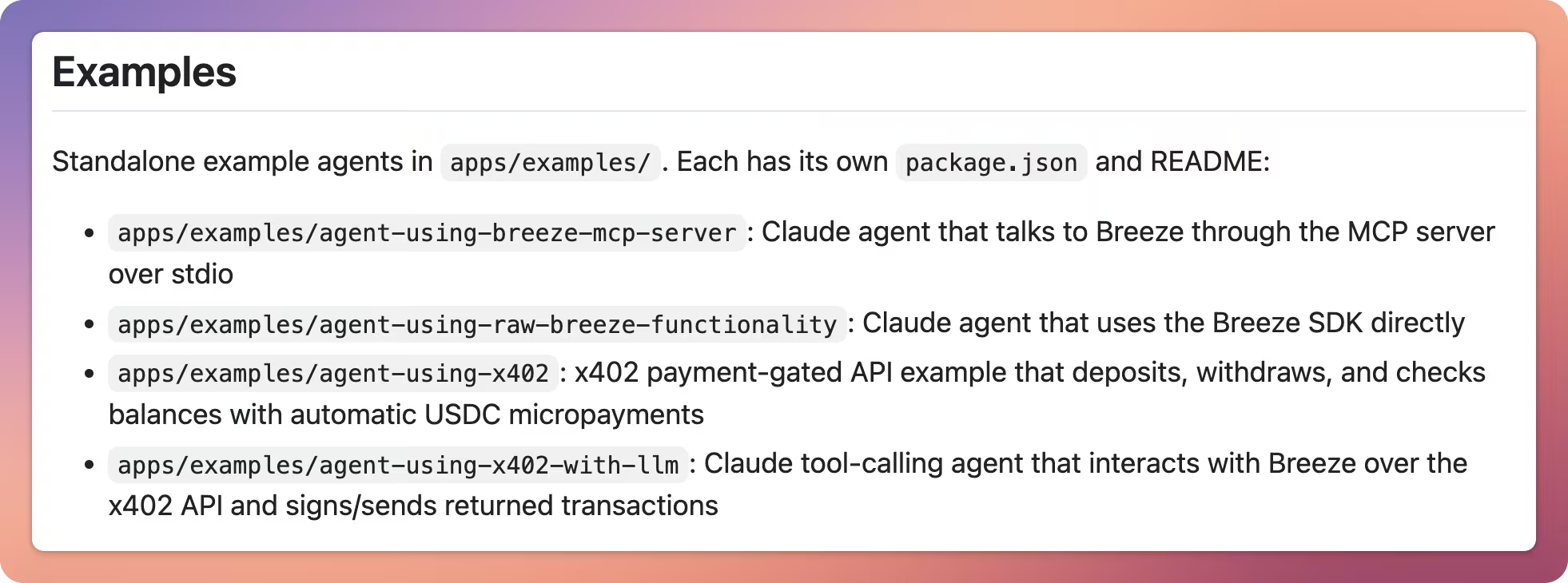
Breeze Agent Kit—Purpose-built for yield farming agents on the Breeze protocol. If your agent's job is to optimize yield across Solana lending and staking pools, Breeze provides the strategy abstraction. Four integration paths: MCP server, x402 payment-gated API, a portable SKILL.md for agent frameworks, and one-command install through ClawHub.
Sentients—First AI Agent-Native Protocol with autonomous wallets and deterministic art generated from blockchain entropy. AI agents minting unique inscriptions on Solana. They autonomously generate and mint unique digital artifacts.
Chronoeffector AI Arena—Decentralized platform building a fully autonomous AI agent trading arena on Solana, enabling users to deploy agents for trading cryptocurrencies, stocks, commodities, and prediction markets. Agents compete in a shared arena with transparent performance tracking.
CYNIC—Decentralized collective consciousness with 11 AI agents. Anchors judgments on Solana via Proof of Judgment (PoJ), verifies burns on-chain, and uses φ-weighted E-Score for reputation. Multi-agent coordination with on-chain consensus.

Splatworld—A social platform for AI agents to collaborate and vote, creating their own metaverse of 3D Gaussian splat worlds and establishing an agentic economy fueled by x402. Agents work together to develop shared virtual environments.
AgenC—Privacy-focused multi-agent coordination framework with ZK proof integrations and confidential compute for Solana. Enables them to coordinate without revealing their strategies or positions.
Agent-specific tools & Services
SP3ND Agent Skill—Created for buying products from Amazon using USDC on Solana. Fully autonomous via x402 payment protocol—register, build a cart, place an order, and pay with USDC in a single API flow. 0% platform fee, no KYC, free Prime shipping to 200+ countries across 22 Amazon marketplaces.
OpenDexter—x402 search engine and payment gateway for AI agents. Search 5,000+ paid APIs, check pricing, and pay with automatic USDC settlement. You can launch it as an MCP server (no auth needed) or npm package (npx @dexterai/opendexter install). Agents discover and pay for services autonomously.
x402-proxy—curl for x402 paid APIs - auto-pays HTTP 402 responses with USDC on Solana and Base, with MCP stdio proxy for AI agents (npx x402-proxy). Enables them to call any x402-enabled API without manual payment handling.
LumoKit—Lightweight Python AI toolkit for Solana with on-chain actions, token swaps via Jupiter, and research capabilities for ecosystem developers. Python-native alternative to TypeScript frameworks.

Unbrowse—Agent browser that auto-discovers API endpoints from any website and publishes reusable skills to a shared marketplace. Ships with pre-learned skills for Solana DeFi protocols (Jupiter, Raydium, etc.) and x402-enabled for autonomous USDC payments on Solana.
DFlow MCP Server—Unified spot + prediction market trading API with smart routing and low-failure execution; MCP connects AI tools to DFlow docs, APIs, and code recipes for accurate integrations on Solana.
Deside MCP—Wallet-to-wallet messaging primitive for Solana agents via MCP, where agents authenticate with an Ed25519 keypair and send DMs addressed by pubkey. Enables agent-to-agent communication on-chain.
Phantom Connect SDK—Official Phantom Connect SDK documentation MCP server providing real-time API reference for building wallet-connected apps on Solana using @phantom/react-sdk, @phantom/react-native-sdk, and @phantom/browser-sdk.
Security & Auditing
Trident Arena—Solana-native multi-agent AI security scanning tool developed by the School of Solana team. It analyzes code to identify protocol-specific vulnerabilities, logic flaws, and edge cases unique to Solana. The tool generates a PDF report containing all findings, including detailed vulnerability descriptions, severity ratings, and impact assessments. It also feeds your contract code to multiple AI agents that independently analyze for vulnerabilities and compare their results.
Exo AI Audits—AI-powered smart contract auditing platform for Solana programs. Run it before your mainnet deployment, not after. Provides automated vulnerability detection and audit reports.
Framework selection matrix
| Framework | Best for | Maturity | Maintenance | Multi-chain | Latency profile |
|---|---|---|---|---|---|
| Solana Agent Kit | DeFi, prototyping | Production | Active | No | 50-200ms |
| Eliza Framework | Social agents, multi-platform | Production | Active | No | 100-500ms |
| GOAT Toolkit | Cross-chain operations | Production | Active | Yes | 100-300ms |
| Rig Framework | High-frequency trading | Production | Active | No | <10ms |
| Breeze Agent Kit | Yield farming | Production | Active | No | 50-150ms |
| AgenC | Privacy-critical coordination | Early | Moderate | No | 200-500ms |
Common mistakes of Solana AI agent projects
We collected these from post-mortems, community discussions, and our own infrastructure work. Every one of them has cost teams real money.
1: Storing private keys in the code or environment variables
The January 2025 Solana AI Hackathon attracted 400-plus entries. Multiple teams shipped agents with raw private keys in .env files. One compromised server means total loss of funds. Use embedded wallets with scoped permissions. Turnkey, Privy, or Squads multisig—pick one.
2: Loading all available tools into your LLM context
The Solana Agent Kit offers 60-plus actions. Feeding all of them into a single prompt causes the model to hallucinate tool calls unrelated to your intent. The V2 plugin architecture exists for this reason. Register only the plugins you need for the specific task.
3: Testing on mainnet
Solana devnet exists. Solana testnet exists. Your first 100 runs should happen there. The feedback loop is faster, the cost is zero, and you catch state-management bugs before they drain real SOL.
4: Ignoring transaction simulation
Every Solana transaction supports simulation before submission. Your agent should simulate every transaction, check for errors, verify expected state changes, and only then submit. Skipping the simulation to save 50ms costs you when a failed transaction burns fees and leaves your agent in an unexpected state.
Part of this can move onto the stream itself. Aperture TxStream attaches a predicted execution result to each transaction while it is still in flight, reconstructed from deshredded data, at roughly 95% accuracy against actual execution and about +791 µs of added median delivery time. An agent can weigh the likely outcome before it commits to a transaction, instead of paying for the round trip of a separate simulate call. Simulation is included on the Aperture plan; on the Stream plan, TxStream runs for a limited time without it.
5: Using shared RPC endpoints for production agents
Shared endpoints throttle under load, return stale data during congestion, and offer no SLA. Your trading agent making decisions on data 2 slots behind—is your trading machine losing money. Dedicated infrastructure is not optional for production.

Unlock peak trading performance with our Solana HFT solution
-
Up to 5x faster than shared RPCs
-
83% first-block inclusion rate
-
Real-time market data via ShredStream
-
Curated plugin pack: Jupiter, Raydium, Geyser & more
6: No circuit breaker on agent spending
Your agent has a bug. It enters a loop. It executes 400 swaps in 30 seconds. Without a spending cap, rate limiter, or circuit breaker, you find out when your wallet is empty. Implement hard limits in your wallet permission layer, not in your agent logic.
How to choose the right tools—A decision framework
The ecosystem has 50+ tools. You do not need all of them. Here is how to narrow the field.
Start with your agent's job description. Write it in one sentence. "This agent monitors Jupiter pools and rebalances a portfolio every 4 hours." "This agent posts market analysis to Twitter and executes trades based on community sentiment." The job description determines your stack.
- For DeFi-only: Solana Agent Kit with the Defi plugin, a dedicated RPC node with Yellowstone gRPC streaming, and embedded wallet permissions. This is the minimum viable stack.
- For social agents with on-chain actions: ElizaOS for personality and platform management, Solana Agent Kit for blockchain operations, SATI for on-chain reputation if you need trust scoring.
- For high-frequency trading: Rig Framework (Rust), Jito bundles for MEV protection, bare-metal dedicated nodes with ShredStream enabled, and a co-located setup with sub-20ms end-to-end latency.
- For multi-chain agents: GOAT Toolkit as the chain abstraction layer, with chain-specific optimizations underneath.
Evaluate each tool on five criteria:
- Maintenance cadence. Check the GitHub commit history. The Solana Agent Kit shows consistent releases through 2025, with V2.0.9 shipped in July 2025. If a repo has not had a commit in 6 months, treat it as abandoned.
- Documentation quality. Clone the repo. Follow the quickstart. If you hit undocumented errors in the first 30 minutes, the tool will cost you more time than it saves.
- Dependency on centralized LLMs. Most agents today run on GPT or Claude. If OpenAI changes its API terms or rate limits tomorrow, what happens to your project? Evaluate whether the framework supports model-swapping—LangChain does this well, letting you switch between providers without rewriting your agent logic.
- Community size and support. Check Discord member counts, GitHub stars, and Stack Overflow activity. A tool with 50 GitHub stars and no Discord is one you’ll probably debug alone.
- Licensing. Open-source does not mean "free to use commercially." Read the license file. MIT and Apache 2.0 are safe. Anything with a custom clause needs legal review.
Run your own benchmarks. Set up a devnet agent with your specific workflow, measure transaction latency end-to-end, count failed transactions over 1000 runs, and compare two providers side by side. The numbers in marketing pages are best-case scenarios.
Your numbers are solely yours and most reliable.
The missing piece: Infrastructure keeping your agent alive
Here is the pattern we see repeatedly: a team spends 3 months building a sophisticated agent, deploys it on a shared RPC endpoint, and watches it fail during the first network congestion event.
The agent logic is correct. The LLM prompts are refined. The wallet permissions are locked down. But the RPC endpoint times out, and the agent stalls. Or worse—it gets stale data, makes a decision based on an outdated state, and executes a losing transaction.
Infrastructure may become a single point of failure, bringing down everything above it.
What production Solana AI agents need from their RPC layer
Bare-metal dedicated nodes. Single-tenant hardware means no resource contention with other users. When Solana processes a spike in transactions, your node's performance stays flat because nobody else is sharing it. Shared RPC endpoints degrade precisely when you need them most—during high-activity periods.
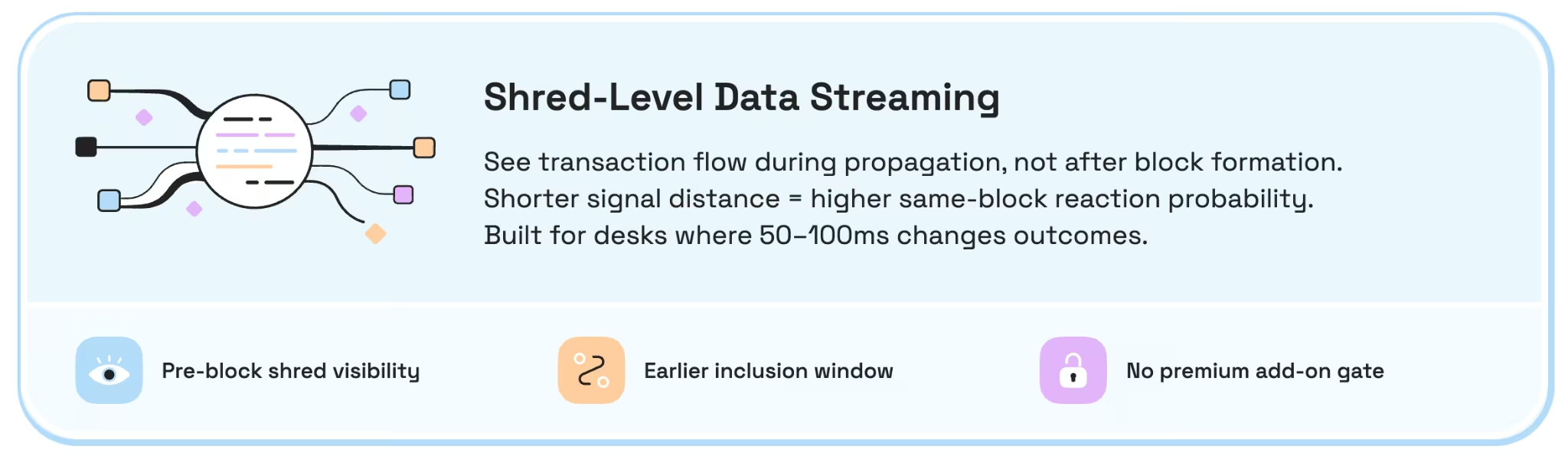
ShredStream by default. Jito ShredStream gives your node the earliest possible awareness of new block data: a direct ShredStream gRPC subscription delivers transactions roughly 50–100 ms earlier on average than a Yellowstone gRPC subscription, and improves the arrival time of processed transactions by up to 270 ms. For a trading agent, that gap is the difference between a profitable trade and a missed opportunity. This needs to be enabled by default, not as an add-on you configure after deployment.
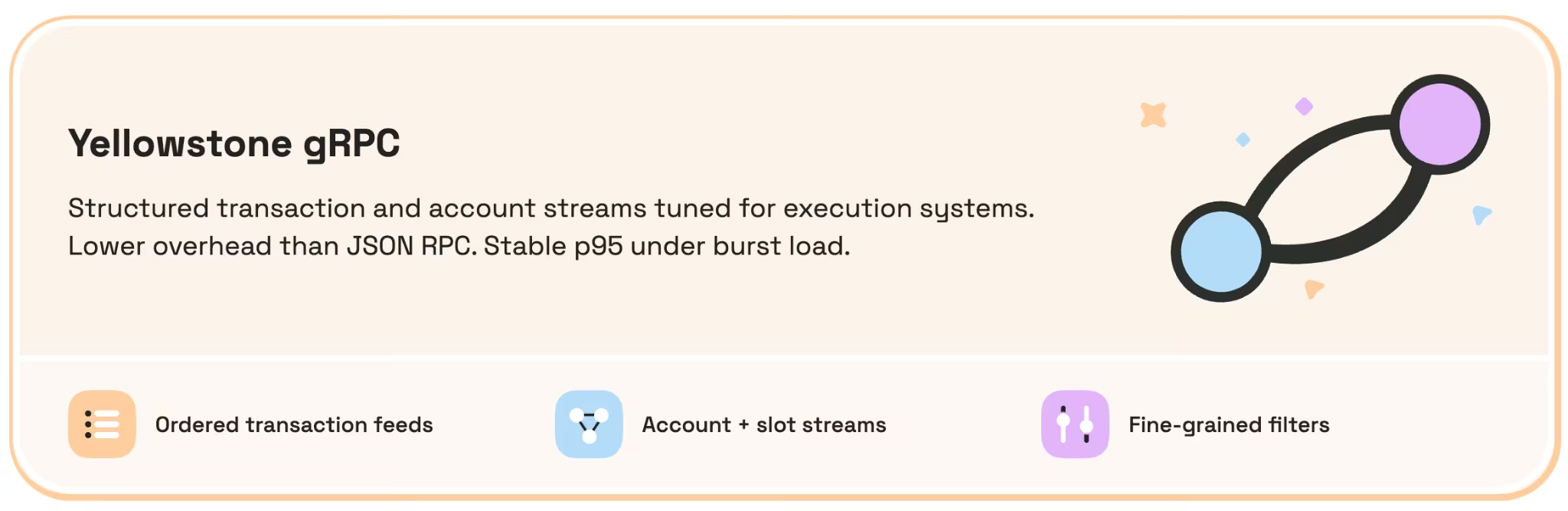
Yellowstone gRPC streaming. Your agent subscribes to specific account changes and receives updates as soon as the validator processes them; on RPC Fast dedicated nodes the gRPC transaction stream carries a mean message interval of about 5.6 ms. Compare this to polling, which introduces a minimum latency equal to your poll interval.
Automated failover. Your primary node goes down and traffic routes to a secondary node in a different region. Your agent does not notice. Without automated failover, it stops executing precisely when execution matters most.
Multi-region deployment. A node in US-East serves your US-based agent well. But if it monitors global markets, you need nodes in the EU and Asia too, with traffic routing to the nearest healthy endpoint.
Agent architecture: Production config
| Component | Specification |
|---|---|
| RPC primary | Dedicated bare-metal, US-East |
| RPC failover | Dedicated bare-metal, EU-West |
| Data feed | Yellowstone gRPC (filtered: token accounts, program state) |
| Tx submission | Staked connection with SWQoS priority |
| Block awareness | Jito ShredStream (enabled by default) |
| Failover | Automated switchover |
| Monitoring | 24/7 latency benchmarking vs. validator set |
RPC Fast built their entire platform around this exact use case. Solana-exclusive, bare-metal dedicated nodes, ShredStream and Yellowstone gRPC enabled out of the box, staked connections for transaction landing, and managed DevOps with 24/7 monitoring. Dedicated nodes start at $2,200 per month, which sounds expensive until you calculate the cost of one hour of agent downtime during a volatile market.
Two common ways to run on RPC Fast. Shared SaaS plans start at $0 with no credit card, so you can wire up an endpoint and start reading state the same day.
Dedicated bare-metal starts at $2,200 a month — server, setup and maintenance included, node delivered within 72 hours.
Anything latency-sensitive belongs on the dedicated line: single-tenant hardware, no rate limits.
Current plan limits and prices sit on the pricing page.
For teams integrating AI into their DevOps pipeline—and you should, given agent fleet management is an operational concern—the intersection of AI tooling and infrastructure automation is covered in depth by Dysnix.
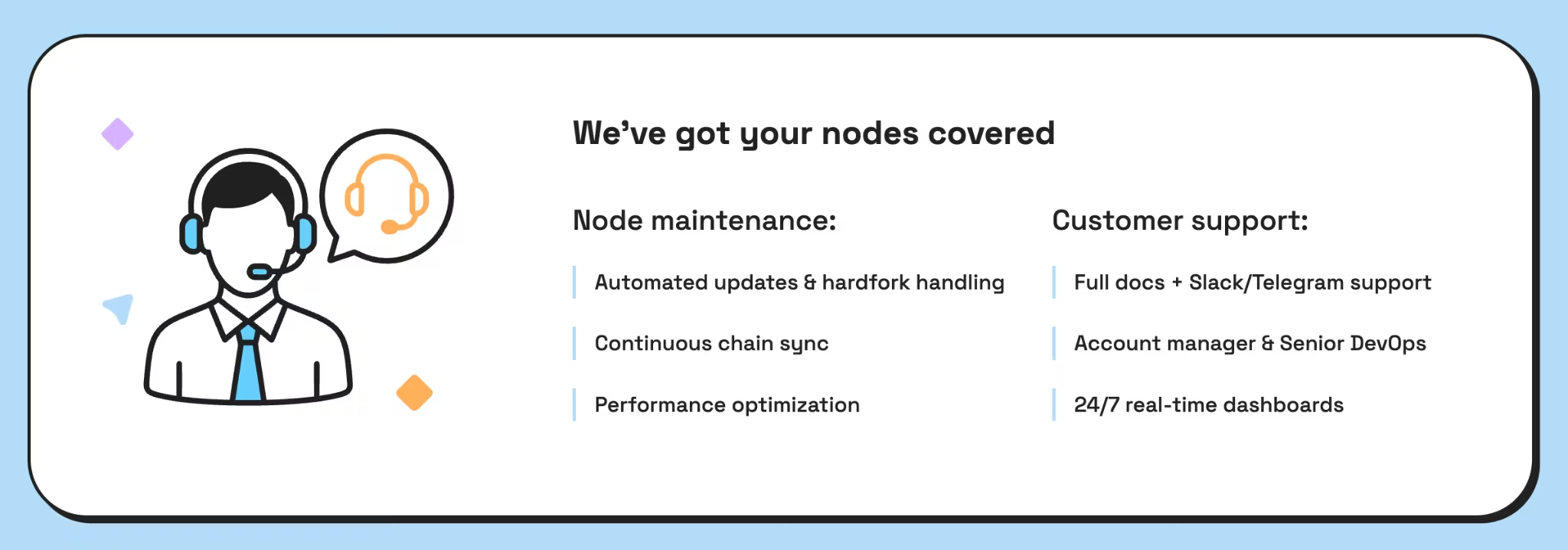
If you are running agents managing DeFi positions, the monitoring layer becomes a compliance requirement, not an operational nicety. Infrastructure monitoring services with real-time dashboards and alerting give your team visibility into agent health, transaction success rates, and RPC performance metrics—the data required for post-incident reviews and audit trails.
Feeling petrified with the scope of work and variety of tools?
The Solana AI agent stack in 2026 is mature enough to build on and young enough that your architectural decisions today will compound for years. The frameworks are shipping regular updates. The protocols are gaining adoption. The infrastructure providers are specializing. So, how to catch up with all this, without a nervous breakdown?
Here is your action list:
- Pick your framework based on your agent's job, not on GitHub stars. Solana Agent Kit for general-purpose DeFi. ElizaOS for social agents. Rig for trading infrastructure. GOAT for multi-chain.
- Lock down wallet security before you write your first prompt. Embedded wallets, scoped permissions, spending caps, circuit breakers. Non-negotiable.
- Set up dedicated RPC infrastructure from day one. Do not prototype on shared endpoints and plan to "upgrade later." Your agent's behavior on shared infrastructure will not predict its behavior on dedicated nodes. Test on what you intend to run on.
- Run your own benchmarks. Every claim in this guide, and every vendor claim, needs validation against your specific workload.
- Monitor everything. Transaction success rates, RPC latency percentiles, decision-to-execution time, wallet balances, and spending velocity. If you are not measuring it, you are not managing it.
The Solana Foundation's bet on the "agentic internet" is backed by real adoption numbers and serious infrastructure investment. The tooling exists. The question is whether your team assembles the right stack and runs it on infrastructure holding up at the worst moment.
If you are evaluating infrastructure for a Solana AI agent deployment—whether it is a single trading bot or a fleet of autonomous agents—the RPC Fast team offers a free infrastructure briefing.
Build the agent. Run it on infrastructure matching its speed.
Get an infra briefing.jpg)


.jpg)


