

RPC Fast has selected 21 winning teams from 11 countries in the Colosseum Crypto World’s Fair Infrastructure Sidetrack, awarding ~$12,500 in Solana infrastructure subscriptions to support their next development stages.
The winners span transaction diagnostics, DeFi, prediction markets, AI agents, payments, validator infrastructure, and consumer applications. Several projects already operate on RPC Fast mainnet endpoints, while others are preparing integrations or planning more demanding infrastructure workloads.
Here are the teams we selected, what they built, how some of them incorporated RPC Fast into their architecture, and how winners receive their upgraded subscriptions.
TL;DR
- Winners must claim and have their subscriptions assigned by November 25, 2026. Prizes cover Solana Mainnet infrastructure only.
- The sidetrack prize pool increased from approximately $10,500 to approximately $12,500 in subscription value after October’s update.
- Each winner chooses two months of Stream ($598 value) or one month of Aperture ($549 value).
- Participating teams reported production integrations involving Solana transaction simulation, historical reads, WebSocket subscriptions, RPC failover, and workload-aware provider routing.
From hackathon infrastructure to 21 winning projects
The Colosseum Crypto World’s Fair Hackathon ran from September 14 to October 12, 2026, bringing together teams building across multiple blockchain ecosystems.
For Solana participants, RPC Fast provided an infrastructure support program with free Focus plan access during the development period. In total, 32 projects used RPC Fast during the hackathon—11 teams were given Aperture plan access upon request; the rest used Focus. The separate Infrastructure Sidetrack on Superteam Earn offered additional subscriptions for selected teams continuing their projects after the competition.
The sidetrack evaluated project execution, meaningful infrastructure usage, community engagement, and broader ecosystem impact.
The resulting projects reflect considerably different operational requirements. Some need occasional account reads and transaction submission. Others process continuous streams of transactions, maintain historical state, or depend on consistent access to mainnet during critical payment operations.
The more useful distinction is what infrastructure failure would mean for the product.
Meet the 21 RPC Fast Sidetrack winners
Solana infrastructure, transaction reliability, and developer tooling
These projects address infrastructure problems directly: diagnosing transaction failures, verifying on-chain information, and improving access to validator execution.
- TxWhy—A Solana transaction diagnosis and repair engine that identifies failed instructions, simulates potential corrections, and returns unsigned transactions that have passed simulation.
- SolSentry—A distributed verification network using Solana Seeker phones to independently check public blockchain data.
- CatScope—Validator infrastructure combining an execution plugin and an on-chain marketplace for validator capacity, aiming to broaden access to low-latency execution and validator revenue.
TxWhy: 450 ms median transaction repair latency
TxWhy provides one of the sidetrack's more detailed examples of a measurable Solana RPC workload.
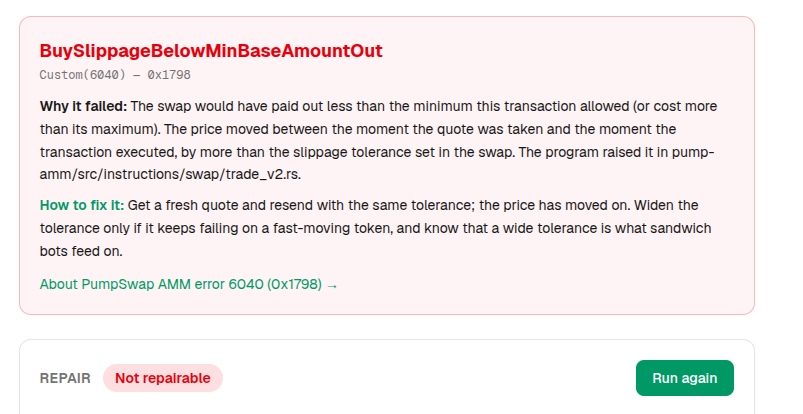
Its repair engine takes a failed transaction, analyzes the failed instruction, checks the relevant state, and simulates a modified transaction. Depending on the error, it supports corrections involving compute budgets, blockhashes, priority fees, and swap-specific failures.
The project's always-on worker uses RPC Fast Frankfurt endpoints to query busy Solana programs and replay real failed transactions.
According to the team:
- 77,625 real failed transactions were replayed through the engine.
- 6,605 resulted in transactions that passed the engine's repair simulation.
- The production repair process recorded approximately 450 ms p50 latency in a 224-repair soak test, compared with a previously reported 1.1 seconds before moving the application closer to RPC Fast's Frankfurt infrastructure.
- The team reported zero engine errors during its cited replay workload.
These are team-reported application measurements, not an independent RPC provider benchmark. The latency comparison also includes application relocation and does not isolate RPC performance from other factors. Passing simulation does not guarantee transaction inclusion.
The operational lesson is relevant beyond transaction repair: when each user operation requires multiple sequential RPC calls, the application's total latency depends on the entire request chain, not a single endpoint response.
SolSentry: Splitting current-state and historical RPC workloads
SolSentry uses RPC Fast as part of a multi-provider RPC pool.
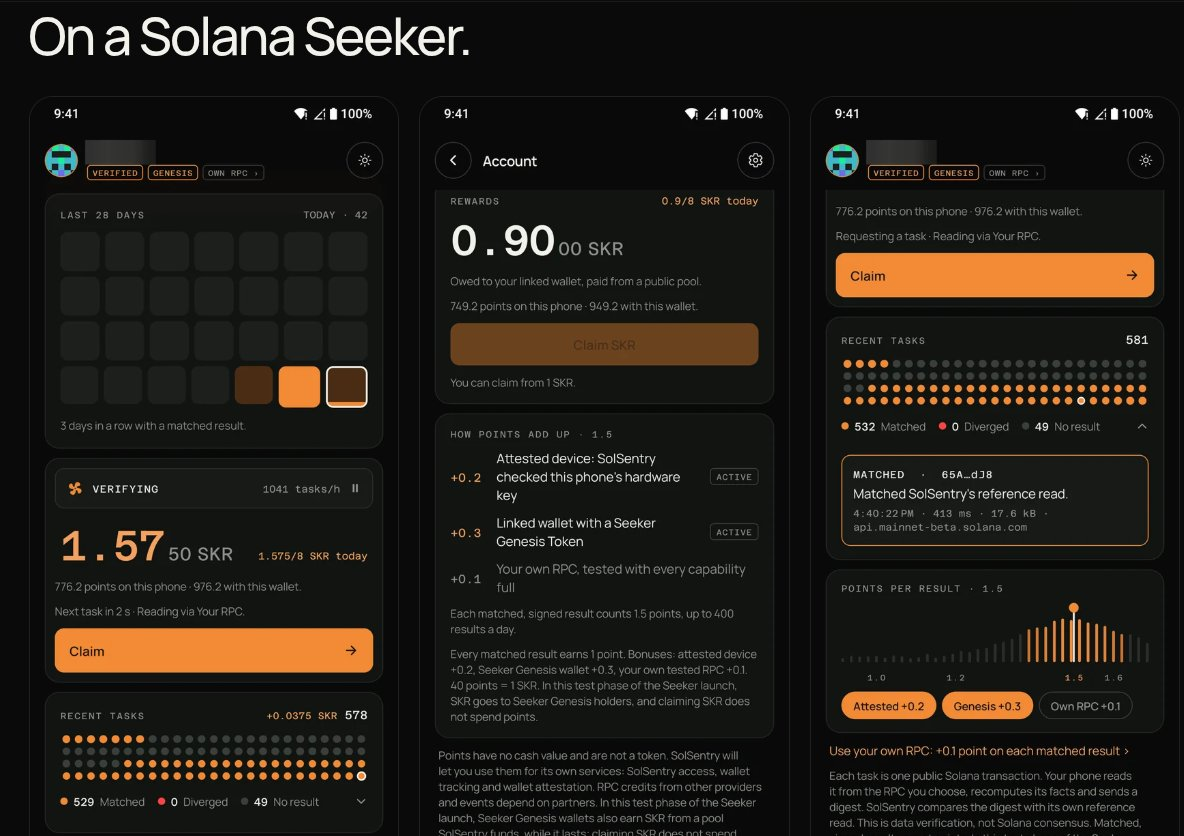
Its backend routes recent and current-state requests through RPC Fast, while providers with full historical coverage handle archival requests. Seeker devices independently read public transactions and return signed verification results.
This architecture separates data requirements rather than forcing every provider to handle identical workloads.
SolSentry reports benchmarking its provider options against the same mainnet transactions. The team is also considering Yellowstone gRPC for future streaming workflows.
DeFi, trading, and on-chain financial risk
The DeFi-oriented winners cover token launches, portfolio construction, insurance, wallet intelligence, and market exposure.
- Chroma—A Solana launchpad and trading terminal using Meteora Dynamic Bonding Curves, creator fee distribution, and privacy-oriented withdrawal mechanisms.
- Covantic—A parametric on-chain insurance project focused on covering trading losses incurred by autonomous AI agents.
- DepositScope—Wallet-based profile intelligence intended to support exchanges, prediction markets, and fintech onboarding before conventional KYC.
- Perpal—A privacy-oriented perpetual trading project on Solana.
- weavr—An agent-assisted portfolio platform that translates natural-language investment theses into on-chain portfolios with predefined rebalancing rules.
- HedgeYourFun—A personal hedging application combining xStocks and prediction-market exposure around users' interests and risk profiles.
Chroma: Why account-read patterns matter more than raw request counts
Chroma illustrates a different infrastructure challenge from transaction-repair systems.
Its launchpad combines trading charts, bonding-curve state, creator fee accounting, and privacy-related withdrawal flows. A single user action potentially triggers several account reads and transaction checks.
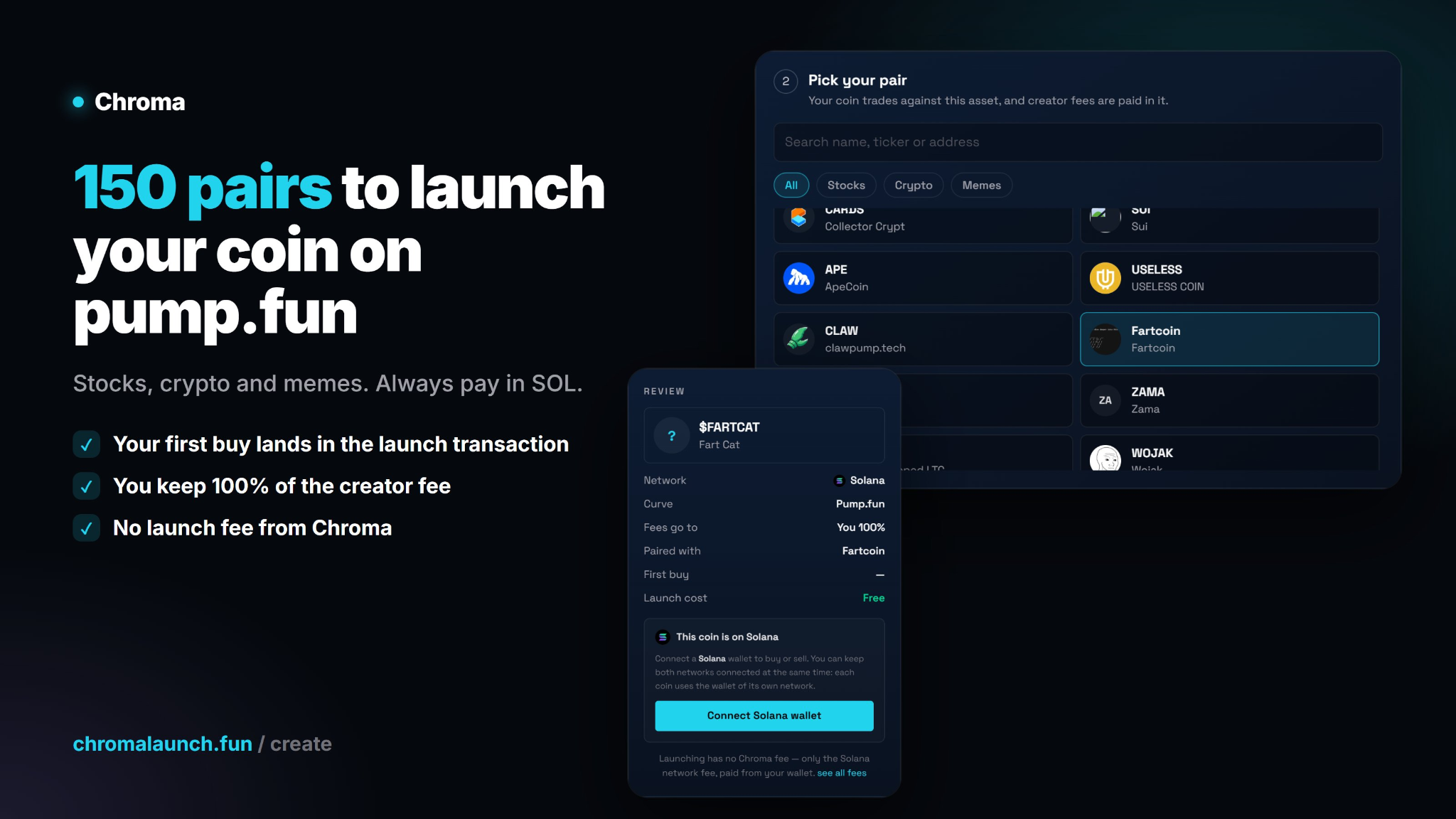
The team reported receiving HTTP 429 rate-limit errors from its existing free RPC provider during proof and fee-claim operations. Chroma subsequently applied for RPC Fast access and began preparing its mainnet migration.
Note: This is a reported migration use case, not a completed before-and-after performance test.
For DeFi products, sustained request volume is a constraint. Bursts, method cost, result size, and concurrent user operations determine whether an RPC plan accommodates the actual workload.
For a launchpad, the relevant test includes the complete flow from loading the curve and calculating fees to submitting and confirming a claim.
Prediction markets, competitive applications, and gaming
This category brings together applications where live market activity, outcomes, and settlement records become product-critical data.
- Sonar for Panta—A prediction-market intelligence and execution platform combining Panta on-chain activity, cross-market pricing, and autonomous agent signals.
- Mentioned—A consumer prediction-market platform built around words and phrases appearing in live speech and media.
- Pickside—A short-duration competitive market for humans and agents, featuring one-minute battles and on-chain rewards.
- ProLeague—An esports tournament platform using program-controlled prize vaults and on-chain winner payouts.
Sonar for Panta: Recovering historical trades while streaming new activity
Sonar for Panta combines two separate RPC Fast data paths.
The team reports that Panta's application API does not expose complete transaction histories for certain resolved and graduated markets. To reconstruct the underlying trade tape, Sonar queries the Solana program directly using getSignaturesForAddress and getTransaction.
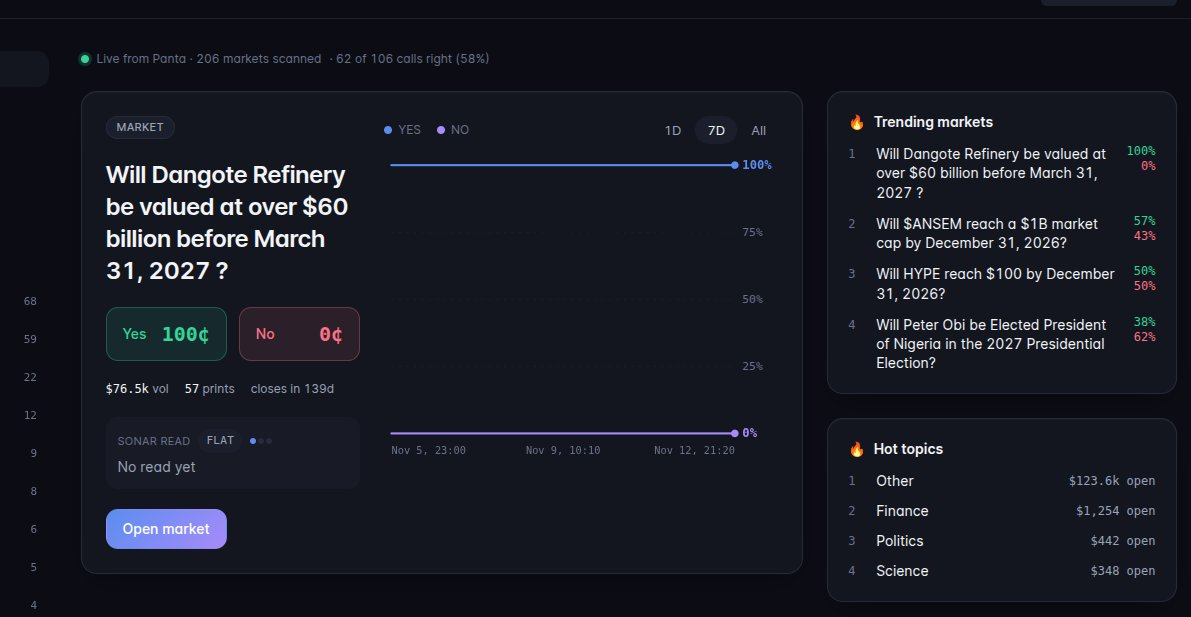
For live activity, it uses a WebSocket logsSubscribe subscription to monitor the program without repeatedly scanning historical transactions.
According to its submission, this lets Sonar process new trades within seconds of confirmation rather than waiting for the next scheduled 10-minute historical scan.
The integration also includes provider-health reporting and a fallback mechanism that temporarily switches affected traffic to a public RPC endpoint when the RPC Fast key is refused. The team reports 71 integration tests covering its application.
The architectural advantage is straightforward: historical reconstruction and live ingestion belong to different execution paths.
Polling supplies recovery and backfill. Subscriptions provide fresh observations. Combining both reduces the need to rescan large historical ranges merely to detect new activity.
ProLeague: Separating devnet validation from mainnet deployment
ProLeague demonstrates another common post-hackathon stage: validating payment logic before deployment.
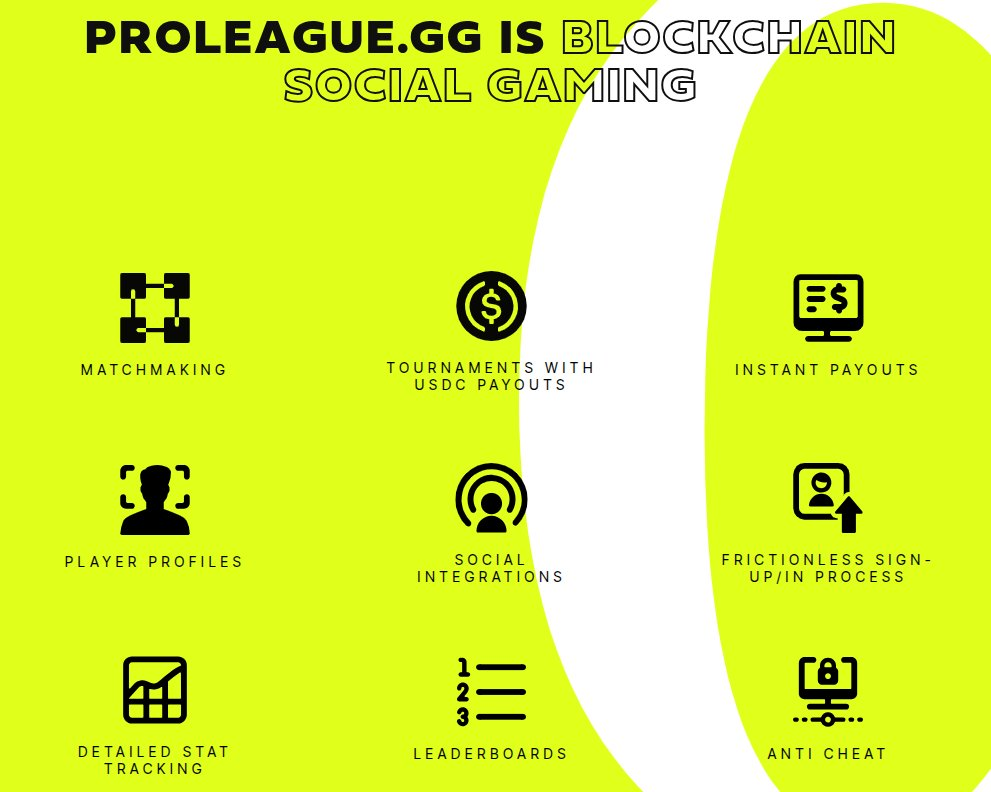
The team reports that an earlier mainnet version completed 48 prize payments totaling 1,969 USDC across 17 tournaments. Its revised hackathon implementation was subsequently tested on devnet with a 128-participant, seven-round bracket.
Note: Those figures describe ProLeague's application testing, not measured RPC Fast results.
Since RPC Fast's sidetrack rewards cover Mainnet rather than Devnet, the awarded subscription becomes relevant to ProLeague's next mainnet deployment, not its existing devnet testing environment.
AI agents, payments, and API infrastructure
These winners focus on automated payments, wallet access, identity protection, and services built around AI-driven workflows.
- Commish—A Solana payment infrastructure project introducing commission holdbacks and refund windows for x402 agent payments.
- Sela—A payment application combining USDC transfers, server-side RPC access, transaction delivery routes, and health monitoring.
- zkAPI on Solana—A zero-knowledge payment mechanism for API access, designed to verify USDC payment eligibility without exposing the payer's wallet identity to the API provider.
- Zero Mobile—A self-custody wallet project targeting cross-border transfers and digital payments.
- WheelsAi—A platform for creating, deploying, and monetizing AI agents, workflows, and language-model applications.
Commish: RPC failover as part of payment correctness
Commish introduces a holdback mechanism for machine-to-machine payments.
An agent pays an API tool using x402, while the commission owed to the referring router remains in an on-chain vault during a 600-second refund window.
The application needs to verify payment state before recording the commission. If its primary RPC endpoint fails, the payment verification process also risks interruption.
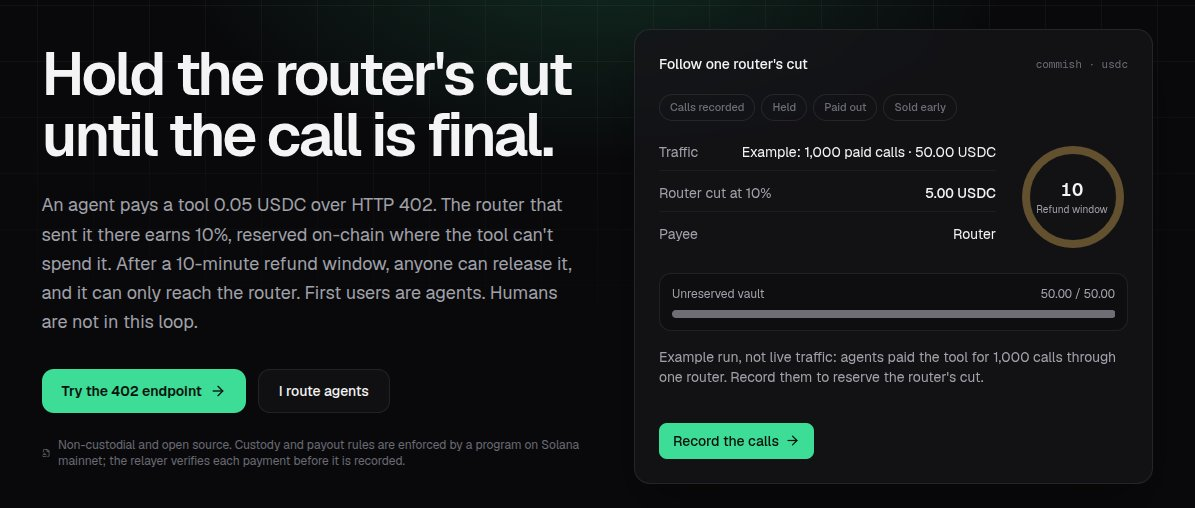
Commish integrated RPC Fast as a secondary mainnet provider. Following two configured retries, with delays of 400 ms and 1.2 seconds, its application switches eligible RPC calls to the fallback provider.
The team explicitly notes that its cited successful on-chain payment cycle occurred before RPC Fast was added. Those transactions validate the payment program, not the RPC fallback's performance.
This is an important distinction: a secondary endpoint reduces reliance on one provider, but end-to-end resilience still depends on failover detection, retry behavior, and correct handling of partially completed requests.
Sela: Keeping RPC credentials and payment logic on the server
Sela routes mainnet RPC requests through a server-side proxy instead of exposing the RPC Fast credential to browser clients.
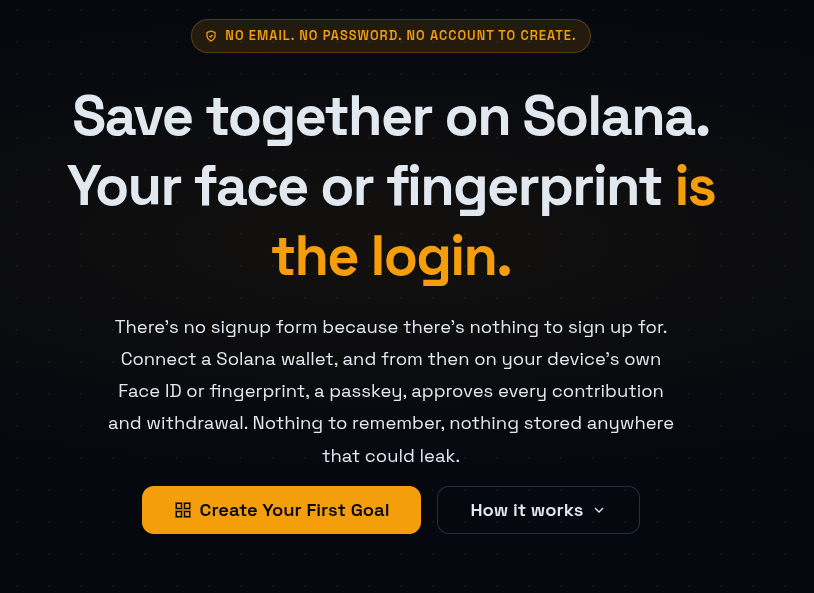
A dedicated health endpoint supplies live provider-status information to the frontend. The project also uses Jito bundles, an additional RPC sending route, and retry logic for USDC transfers.
These are separate parts of its transaction pipeline: RPC Fast handles configured mainnet access, while the Jito and retry components address transaction delivery.
The operational lesson concerns both security and reliability. A centralized server-side RPC layer gives application owners a place to manage provider credentials, request routing, failure handling, and monitoring without requiring each browser client to implement these controls independently.
AI training, creators, and education
The remaining winners explore applications where blockchain services support entirely different user experiences.
- ZONEM AI—A marketplace connecting AI teams with contributors completing data-labeling, coding, and human-feedback tasks, supported by submission review.
- Echoes Fans—A voice-first creator platform for recording, preserving, and tokenizing short audio content on Solana.
- Chronoa—A story-driven learning wallet for children and families, combining virtual-asset education with a parent-controlled vault for SOL and USDC.
Chronoa: Two different security models in one application
Chronoa separates its educational sandbox from real financial activity.
Children interact with simulated assets and AI-guided scenarios without risking real funds. Parents separately manage the Family Vault, where actual SOL and USDC transfers require approval through passkey-based controls.
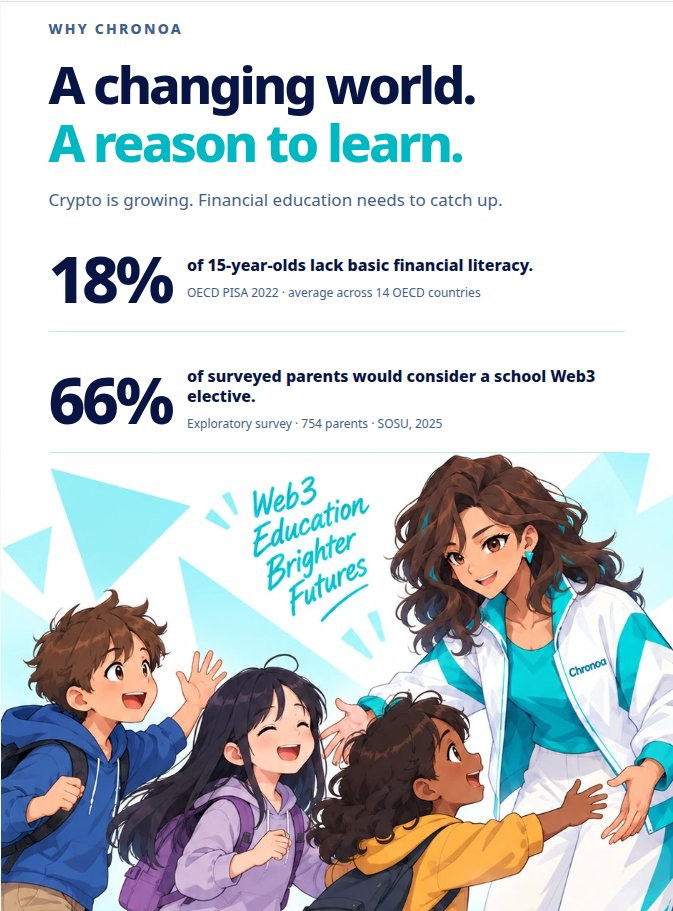
The team reports using RPC Fast for its on-chain operations.
The key infrastructure consideration is separating simulation from custody. Virtual learning actions do not require the same guarantees as signed asset transfers. Production wallet operations need current state, correct transaction construction, explicit authorization, and confirmation tracking.
That separation becomes particularly important when a consumer-facing product combines exploratory interactions with real money.
What these projects show about Solana infrastructure requirements
The submitted architectures illustrate three recurring patterns.
1. RPC reliability increasingly forms part of application correctness.
Commish requires payment-state verification before continuing a paid agent workflow. Sela places provider health and request handling behind its own backend. Both treat RPC failures as application events requiring an explicit response.
2. Real-time ingestion and historical queries serve different purposes.
Sonar separates transaction-history reconstruction from live WebSocket events. SolSentry routes current-state reads and archival requests across different provider capabilities. Neither gains much from treating all traffic as interchangeable JSON-RPC requests.
3. Infrastructure locality becomes measurable when RPC calls form a sequential workflow.
TxWhy's Frankfurt deployment and reported repair latency illustrate this, although its before-and-after measurements do not isolate the effect of proximity alone.
For teams advancing beyond the hackathon, the next step is to measure their own workloads: request latency by method, rate-limit errors, subscription continuity, stream lag, transaction confirmation latency, and provider failover behavior.
These measurements should guide infrastructure selection more than a project's industry label.
RPC Fast increases the total prize value to approximately $12,500
When the sidetrack launched, each award represented approximately $499 in RPC Fast subscription value. Following the October 2026 pricing update, we're increasing the value of the available subscriptions rather than keeping the original nominal award amount.
All 21 winners receive a choice between two updated prize packages.
These figures reflect the updated monthly plans. Unlimited Compute Units on Aperture do not remove its request-rate and streaming limits.
The updated sidetrack represents approximately $12,500 in total infrastructure subscription value, with the final amount depending on winners' selections.
The rewards are subscriptions rather than cash transfers or USDC payouts.
Review the full pricing, features, and rate limits in the RPC Fast docs.
Which prize should your team choose?
Choose two months of Stream if your priority is extending the development and testing period for a backend that depends on structured Yellowstone gRPC data, transaction history, or standard RPC operations.
Choose one month of Aperture if your next engineering milestone involves Shredstream, decoded TxStream data, real-time transaction simulation, or higher concurrent request capacity.
For example, a DeFi monitoring platform tracking live liquidity pool updates and transaction activity through Yellowstone gRPC would benefit from Stream’s two-month window to test subscription filters, reconnect handling, and data processing under sustained mainnet traffic.
A trading system evaluating earlier transaction visibility and execution-sensitive data paths has a stronger reason to select Aperture, even with the shorter award period.
The decision should follow the workload your team intends to run during the subscription period.
How to claim your RPC Fast Sidetrack prize

Winning teams must claim and have their subscriptions assigned by November 25, 2026, within two weeks of the official results announcement.
Follow these steps:
- Register at RPC Fast and create a Solana account if you haven't already.
- Reply to your winner-notification email with the email address associated with your RPC Fast account.
- Choose your prize: two months of Stream or one month of Aperture.
Our team will assign the selected subscription once we receive the required information.
Important conditions:
- The subscription begins immediately upon assignment, so plan your development and testing accordingly.
- Prizes apply to Solana Mainnet endpoints only. Devnet access is not included.
- The subscription covers Solana infrastructure and does not extend to RPC services for other blockchains.
- Late claims are not guaranteed to receive an allocation after November 25.
Review the full RPC Fast sidetrack terms and conditions.
Keep building after Crypto World’s Fair
Congratulations to the 21 selected teams, and thanks to everyone who participated, integrated RPC Fast, shared technical feedback, and demonstrated their projects.
The hackathon is over, but the more demanding engineering work comes next: validating transaction behavior, preparing mainnet deployments, establishing reliable data paths, and understanding infrastructure limits under real traffic.
We look forward to seeing how these projects progress with their new subscriptions.