





Every slot on Solana is a 400-millisecond auction. Validators sequence transactions. Price discrepancies open and close. Liquidation thresholds cross. Wallets move. The agents that see these events first and act fastest extract value. The ones that don't—pay for it.
That is MEV—Maximal Extractable Value—and on Solana, it is not a niche concern. Over a 16-month period ending May 2025, sandwich bots alone extracted between $370 million and $500 million from Solana users. Atomic arbitrage generated $142.8 million in profits across 90 million successful transactions, with the average profit per arb at just $1.58—a high-frequency, low-margin game where volume and speed are the only levers. The infrastructure behind the agents running these strategies is what this article is about.
AI MEV agent actually does this
An AI MEV agent is an autonomous software system that monitors on-chain state, identifies extractable value opportunities, evaluates them against a decision model, and executes transactions—all within a single Solana slot or faster.
The "AI" label covers a spectrum. At one end: rule-based heuristics with adaptive parameters tuned by reinforcement learning or gradient descent. At the other end: inference models that score opportunity quality in real time, weigh risk against expected profit, and adjust tip sizing dynamically based on competition signals. Most production systems sit somewhere in between—deterministic execution logic wrapped around learned models for opportunity scoring and fee optimization.
What separates an AI MEV agent from a simple bot is the decision layer. A bot fires when a condition is met. An agent evaluates whether firing is worth it, at what tip, via which path, and with what fallback—in microseconds.
Types of MEV strategies for AI bots on Solana
Solana's MEV landscape breaks into four primary strategy types. Each has different latency requirements, data dependencies, and infrastructure demands.
| Strategy | Mechanism | Latency requirement | Primary data source |
|---|---|---|---|
| Atomic Arbitrage | Buy low on DEX A, sell high on DEX B in one tx | Sub-slot | Account updates, price feeds |
| Copy-trading / Sniping | Mirror target wallet trades before others | Sub-slot | Shredstream, Yellowstone gRPC |
| Liquidation | Repay undercollateralized loans, claim collateral discount | Sub-slot | Account health monitors, oracle feeds |
| Sandwich Attack | Front-run and back-run a victim swap | Sub-slot + private mempool access | Private mempool or validator access |
Arbitrage and sniping are the strategies most relevant to what RPC Fast is offering. Both require the earliest possible transaction visibility and the fastest path to the leader. Liquidations require continuous account state monitoring and fast execution when a health threshold crosses. Sandwich attacks require private mempool access and are ethically and reputationally problematic—most serious trading teams avoid them.
Why does latency decide MEV profitability?
The average profit per arbitrage on Solana is $1.58. That number is not a ceiling—it is the result of competition. When 50 agents see the same opportunity, the one that lands first takes the profit. The other 49 pay priority fees and get nothing.
Jito's own data shows that before auction-based bundling, over 98% of arbitrage transactions on Solana failed—bots spamming the same opportunity, only one winning. The infrastructure cost of being second is not zero. It is the sum of every failed transaction fee, every missed slot, every stale signal acted on too late.
On a 400ms slot, a 120ms latency advantage is not a marginal edge. It is the difference between first and third in the block.
How AI agents detect opportunities in real time
Detection is the first stage of the MEV pipeline and the one most sensitive to infrastructure quality. An agent that sees an opportunity 150ms after its competitors has already lost.
SOL transactions are forwarded directly to the current leader via Gulf Stream. This means agents cannot passively monitor a pending transaction pool the way Ethereum bots do. Instead, they subscribe to data streams that expose transactions as early as possible in the validator pipeline.
The three primary detection mechanisms:
- Shredstream gRPC
Direct subscription to validator shreds before the RPC node has processed them. Transactions arrive 50–100ms earlier on average than via Yellowstone gRPC. This is the earliest signal available on Solana outside of running your own validator. RPC Fast's benchmark data shows that with Jito Shredstream enabled, nodes receive 99.71% of transactions faster, with an average advantage of 120ms and a 99th percentile advantage of 270ms. Full benchmark tooling is available here.
- Aperture gRPC
RPC Fast's purpose-built streaming layer that reconstructs validator shreds into a Yellowstone-compatible gRPC stream. Delivers transactions 30–40ms faster than standard Yellowstone, with server-side filtering so agents receive only events matching their target programs or accounts. Lower client-side decoding overhead than raw Shredstream. Documented here.
- Yellowstone gRPC
The standard Geyser plugin stream. Higher latency than shred-derived feeds, but delivers full post-execution metadata: balance changes, inner instructions, program logs, compute unit usage. Essential for liquidation agents that need to track account health state continuously, and for any strategy that depends on a confirmed execution context.
The detection layer feeds a normalized event stream into the agent's decision engine. The faster and cleaner the stream, the tighter the decision window.
The execution pipeline of a Solana MEV Agent
Detection is only the first 100ms. What happens next determines whether the agent lands in the block.
.jpg)
The decision engine is where the AI layer lives. For arbitrage, it evaluates pool states fetched via getAccountInfo and getMultipleAccounts, calculates expected profit net of fees and tip, and decides whether to fire. For liquidation, it monitors health factors against oracle prices and triggers when a threshold is crossed. For sniping, it parses target wallet activity from the shred stream, simulates the transaction via simulateTransaction to extract swap parameters, and prepares a counter-trade.
Tip sizing is a learned problem. Bid too low and a competitor's bundle wins the slot. Bid too high—and the trade is unprofitable. Production agents use historical tip data from Jito's bundle explorer and real-time competition signals to dynamically calibrate bids.
The transaction builder constructs versioned transactions (v0) with Address Lookup Tables fetched via getMultipleAccounts, signs locally, and fans out to multiple landing paths in parallel.
Infrastructure stack behind Solana AI MEV agents
The execution pipeline above runs on bare metal. Shared infrastructure, cloud VMs, and public RPC endpoints introduce latency floors that no amount of code optimization overcomes.
.jpg)
The hardware baseline for this stack: bare-metal servers with 512GB–1.5TB RAM, co-located in Frankfurt, London, or New York—the three regions with the best proximity to Solana leader constellations and optimal routing for Jito and bloXroute.
RPC Fast provisions and maintains this infrastructure, including kernel and NIC-level tuning, continuous benchmarking as leader distribution shifts, and proactive monitoring.
%201.jpg)
A real-world example of this stack in production: an anonymous HFT trading firm running algorithmic DEX strategies on Solana moved from in-house and public endpoints—which suffered latency spikes under load and single-endpoint risk—to a redundant dual bare-metal node setup with gRPC streaming, Jito, and bloXroute integration.
The result: near-100% availability, zero data loss, and a measurable reduction in latency. The team's own assessment: "The node performance has been great, especially compared to the numerous issues we experienced with our previous in-house node setup."
Read the caseThe role of Jito, priority fees, and TX routing
Jito is the dominant MEV infrastructure layer on Solana. As of early 2025, over 92% of Solana validators by stake weight run the Jito-Solana client. That means the vast majority of blocks are produced by validators participating in Jito's off-chain bundle auction.
For MEV agents, this has two implications. First, submitting bundles via the Jito Block Engine gives your transactions priority access to block space in those validators' blocks, with atomicity guarantees—if your bundle doesn't win, none of its transactions execute, so you avoid partial-failure costs. Second, the tip you attach to your bundle is a bid in a real-time auction. Arbitrage bots typically pay 50–60% of their profits in tips to validators. Sandwich bots pay only 15–20%—a structural difference that reflects the competitive dynamics of each strategy type.
Priority fees operate in parallel. Solana's local fee market means that during congestion, transactions without competitive priority fees get deprioritized or dropped. For MEV agents, priority fees and Jito tips serve different purposes: priority fees improve inclusion probability in the base transaction queue; Jito tips buy atomic bundle execution with ordering guarantees.
bloXroute's Solana Trading API provides a complementary path. RPC Fast's benchmark data shows bloXroute OFR delivers transactions on Yellowstone 100ms earlier than no relay—but Jito Shredstream is 13ms faster than bloXroute OFR in 96% of transactions (as of summer 2025). The practical recommendation: use Jito as the primary path, bloXroute as a parallel secondary, and the RPC Fast node endpoint as a fallback. All three run simultaneously. First confirmed landing wins.
Common failure points for MEV agents
Infrastructure failures in MEV systems cluster into three categories: data plane failures, execution failures, and configuration failures. Here is how they manifest and how to address them.
| Failure class | Specific failure | Symptom | Fix |
|---|---|---|---|
| Data plane | Stream event gap / dropped connection | Agent misses opportunities; stale state model | TCP + HTTP/2 keepalive on all gRPC connections; auto-reconnect with backoff |
| Geographic latency | Consistent late arrivals vs. competitors | Co-locate VPS in same DC as RPC node (Frankfurt OVH / Teraswitch) | |
| Shared node degradation under load | Latency spikes during volatile periods | Dedicated bare-metal node; no shared infrastructure on the hot path | |
| Execution | Single-path transaction landing | High failure rate during congestion | Parallel fan-out to Jito + bloXroute + RPC endpoint simultaneously |
| Stale blockhash | Transaction rejected by leader |
Continuous getLatestBlockhash polling; durable nonces for retry windows
|
|
| Rate limit on sender | TX broadcast throttled at peak | Key rotation across multiple sender API keys; dedicated node has no rate limits | |
| Configuration | Heavy RPC methods on trading path | getProgramAccounts slows hot path |
Isolate heavy methods to separate endpoints; never mix with latency-critical reads |
| No monitoring on node health | Silent degradation goes undetected | Automated latency probes (burst tests of 10k–100k calls); Telegram/PagerDuty alerts |
The most common failure pattern in production: a team builds a working agent on shared infrastructure, it performs well in testing, and then degrades silently under real market load. Latency spikes during volatile periods—exactly when MEV opportunities are richest—cause the agent to act on stale data or miss the slot entirely. The fix is not code. It is infrastructure.
The copy-trading bot case study on RPC Fast infrastructure shows reliability: sub-1ms RPC responses during a 100,000-call stress test, with only 2–3 short outages over three months, detected via automated Telegram alerts.
Risks and challenges of AI MEV trading
MEV on Solana is not a solved problem. Teams that treat it as purely an infrastructure challenge miss the strategic and systemic risks.
Infrastructure cost is a fixed overhead
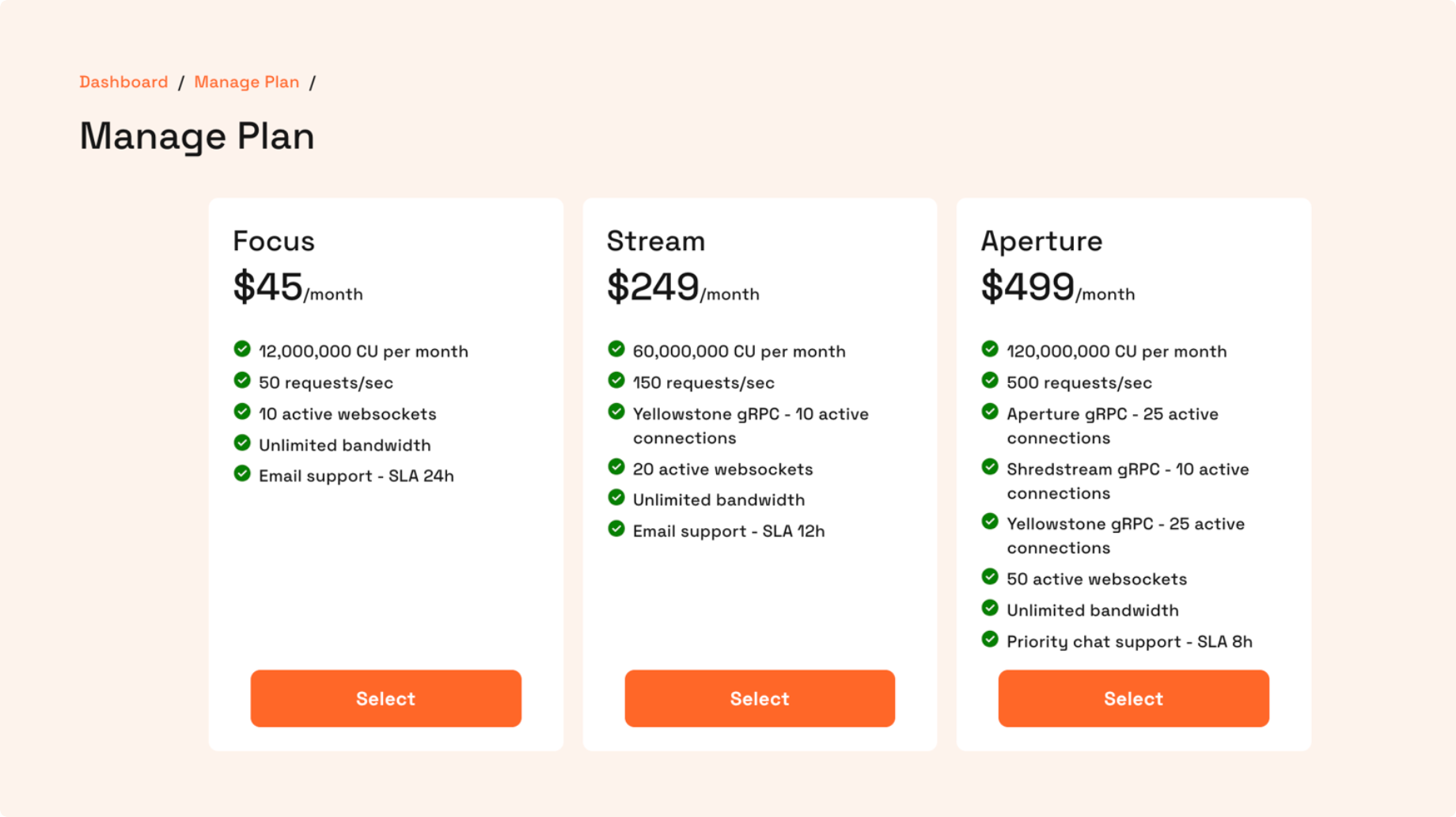
Bare-metal dedicated nodes start at $2,200/month. Jito tips, bloXroute API fees, and co-location costs add to that. For teams at early stages, RPC Fast SaaS plans—starting at $0 for Start, $45 for Focus, $249 for Stream, and $499 for Aperture with gRPC Shredstream—provide access to the same infrastructure stack without the dedicated node commitment.
Competition is compressing margins
The average arbitrage profit of $1.58 reflects a market with hundreds of agents competing for the same opportunities. As more teams deploy better infrastructure, the edge from latency alone narrows. The durable advantage shifts toward model quality—better opportunity scoring, smarter tip sizing, faster strategy adaptation.
Private mempools create asymmetric access
After Jito suspended its public mempool in March 2024, private mempools emerged to fill the gap. These give select participants earlier transaction visibility than the public Shredstream feed. Teams without access to these networks operate at a structural disadvantage on certain strategy types. This is a known and unresolved tension in Solana's MEV ecosystem.
Validator behavior is not uniform
The Helius MEV report documents that some validators run sandwich bots or participate in private mempools that reorder transactions for their own benefit. Your agent's transactions are not guaranteed neutral treatment by every block producer. Monitoring which validators are producing blocks and their historical behavior is a legitimate risk management practice.
Regulatory and reputational exposure varies by strategy
Arbitrage and liquidation are broadly considered beneficial to market efficiency. Sandwich attacks extract value directly from retail users and are increasingly targeted by protocol-level countermeasures, validator blacklists, and community pressure. Building on sandwich strategies carries reputational and longevity risk that arbitrage and liquidation do not.
Summing up
Your MEV agent's strategy is only as good as the infrastructure it runs on. If the data arrives late, the decision is wrong before the model runs. If the transaction lands slowly, the slot is gone before the signature confirms.
See what sub-20ms Solana data streaming looks like for your MEV stack
Launch RPC SaaS for free.jpg)


.jpg)


