SOLANA RPC COMMUNITY
Built for Solana builders.Run by operators.
Join builders running HFT bots, DEX tools, and AI agents on Solana.
Join Discord

Special offers

Live support

No spam

SOLANA RPC COMMUNITY
Built for Solana builders.Run by operators.
Join builders running HFT bots, DEX tools, and AI agents on Solana.
Join DiscordSpecial offers
Live support
No spam
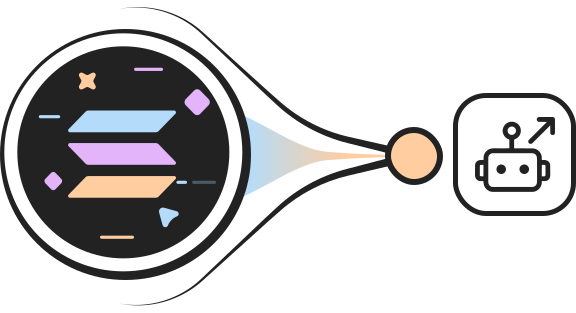
Solana RPC for trading bots, built for automated execution that has to survive contact with production, engineered to replace polling with streaming, flag transactions that will not execute, and deliver the rest through Beam.
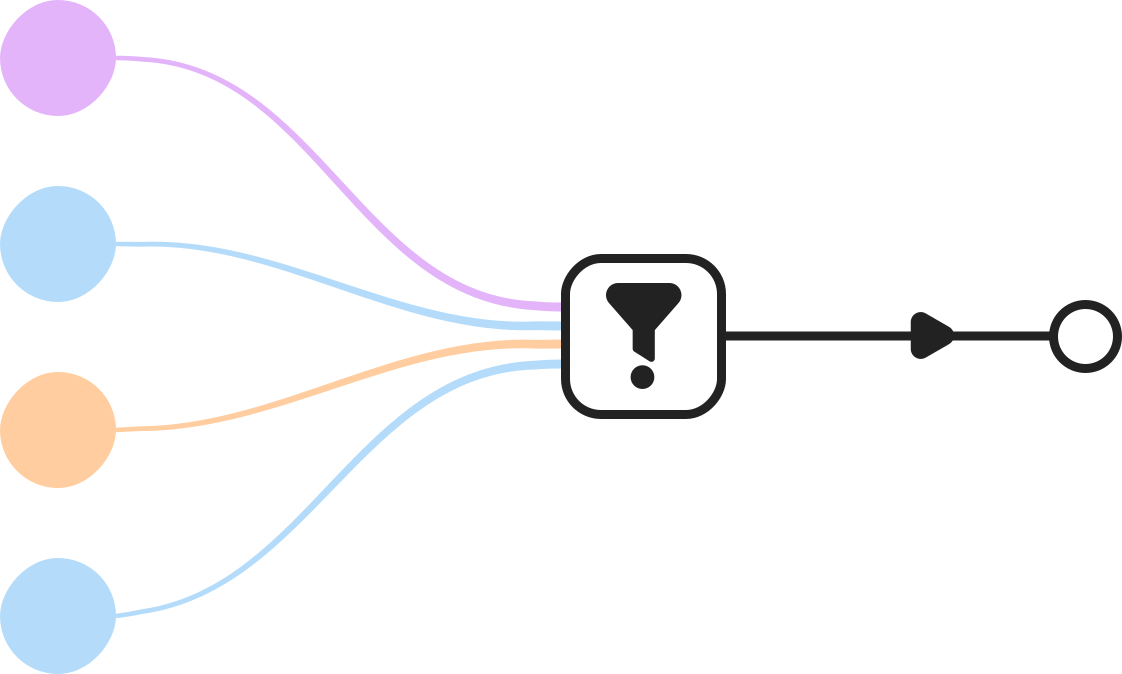
Unlike generic RPC polling or delayed WebSocket feeds, Aperture TxStream taps into native raw shred ingestion and streams decoded, filterable transactions over one production-ready gRPC interface.

Aperture TxStream, our own gRPC protocol

197–231 µs median lead over shredded streams

Batches of up to 64 transactions, with an index field to restore order

Decoded instructions with lookup tables already resolved

Predicted execution results attached to the stream (~95% accuracy)

Beam delivery, fastest or MEV-protected routing

1

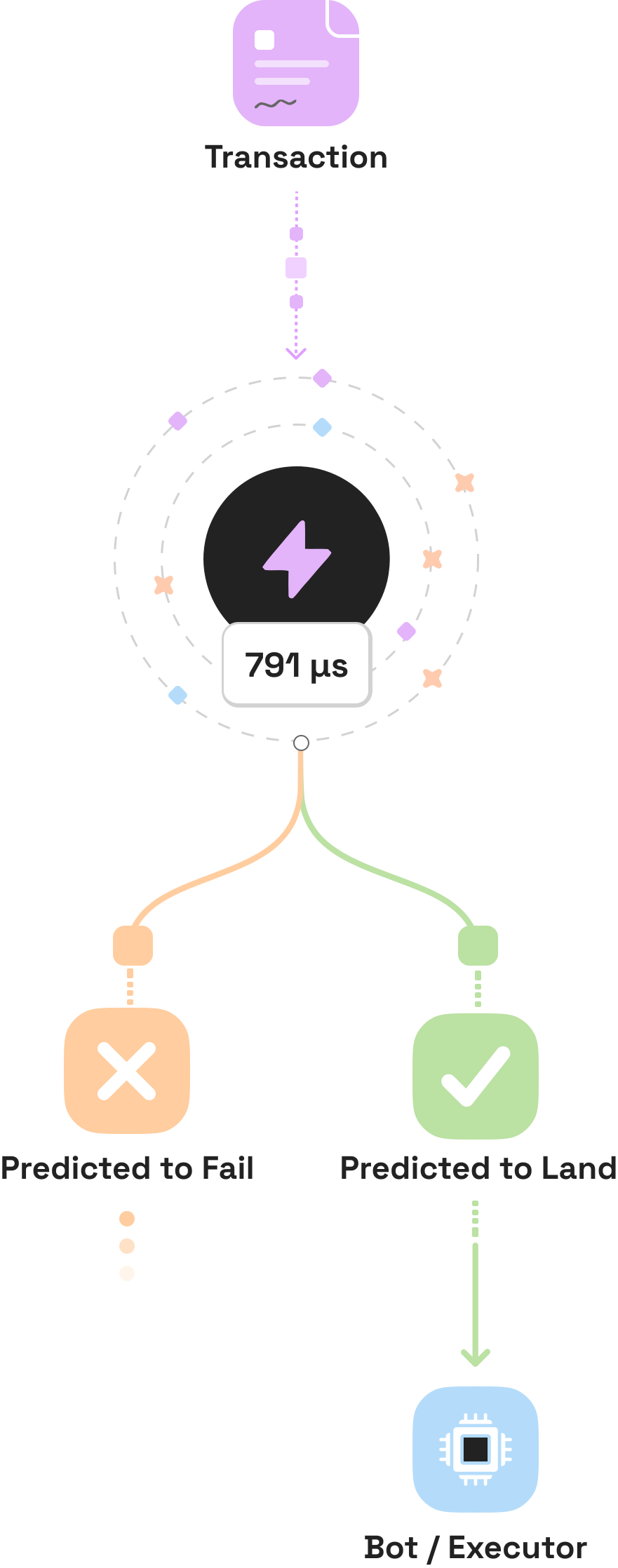
A transaction enters the shred pipeline — before the block exists
2

Stream reconstructs and decodes it server-side
3
The prediction is attached at 791 µs for full payload, 832 µs for signatures only
4

The result lands in your stream as a flag: will execute or will fail
5
You submit what survives through Beam and confirm with a standard call

vs Jito ShredStream, signatures only
77.6%
of races — TxStream first
vs Jito ShredStream, full payload
75.6%
of races — TxStream first
vs Yellowstone gRPC
99.97%
of races — TxStream first


2.svg)
.svg)
LEAD SOLANA. OWN THE TRADE
Ready to move off the endpoint that rate-limits you?
Access tuned RPC, gRPC, and trading-grade streams from day one.
FAQ
An RPC endpoint is the API connection between your sniper bot and the Solana blockchain. For sniping specifically, a dedicated endpoint gives you the ultra-low latency needed to detect new token launches, monitor pending transaction flow, and land buy orders milliseconds ahead of competitors. On a memecoin launch, those milliseconds are usually the entire difference between profit and loss.
Solana produces a block roughly every 400ms, and on a fast-moving launch even a 100ms delay can mean missing the opportunity outright. A fast endpoint gets transaction data to your bot and your transaction out to the network before other traders. Public nodes add latency at every step of that path, and that latency comes directly out of profitability.
A public endpoint is free but shared with thousands of other users, which makes it slow, unreliable during congestion, and entirely without priority. A dedicated endpoint is private to your bot: guaranteed low latency in the 40 to 100ms range, priority execution, a 99.9% uptime SLA, and direct support when something breaks.
For anything beyond testing, dedicated is not optional.
Sub-40ms average latency on Solana transactions, which is among the fastest available. Public endpoints typically average between 500ms and over two seconds. In a launch scenario that gap decides whether you buy before the price impact or after it.
It means watching pending transactions before they land in a block. For a sniper that is how you detect new liquidity pools, token launches and whale trades as they happen rather than after the fact. Reacting within milliseconds is the whole basis of sniping, and you cannot react to something you have not seen yet.
Technically yes, practically no. General-purpose endpoints are built for ordinary blockchain queries, not high-speed trading: no priority routing, no mempool access, no dedicated bandwidth. Your bot will run, but it will be late, miss opportunities, and burn fees on failed transactions.
Pricing is tiered, from a free tier suitable for testing through paid plans that scale by requests per second, up to custom enterprise pricing for high-volume operations. Weighed against what a single missed snipe costs, the payback is usually immediate.
Yes, and for sniping they are essential. WebSocket pushes updates to your bot the moment they occur, instead of your bot repeatedly asking whether anything has changed. That removes a polling cycle from every reaction and cuts response time meaningfully.
99.9%, backed by an SLA. In practical terms that is around 44 minutes of downtime per month, so your bot is not sitting out a launch window because of infrastructure failure.
Yes, within your plan's rate limit. A mid-tier plan at around 100 requests per second comfortably supports two to three active snipers. Beyond that, either move up a tier or split across multiple API keys, which also gives you cleaner isolation between strategies.
No. RPC Fast is a read-only endpoint and never has access to your keys. Your bot queries data and submits transactions that it signed itself locally; the signing never leaves your machine. All traffic runs over HTTPS, and your funds stay entirely under your control.
Sign up, create an API key, and replace your bot's endpoint URL with https://sol.rpcfast.com/your_api_key. Standard Solana JSON-RPC methods work unchanged, so an existing bot needs no code rewrite. Test with small trades before scaling up. Full documentation and code examples are in the docs.
Anything that can make an HTTP POST request. In practice that covers web3.js, Anchor and the Phantom SDK on the JavaScript and TypeScript side; solders and solana.py in Python; solana-sdk in Rust; and standard HTTP clients in Go, Java or C#. Your existing code works as-is once the endpoint URL changes.
No, it is Solana-specific by design. Every layer of the infrastructure, from the nodes to the networking and routing, is tuned for Solana's architecture. For other chains you would need a different provider. That specialization is precisely what produces the performance.
Email support on all tiers, a Discord community for peer help, and priority channels for enterprise customers. There is also a real-time uptime dashboard, full API documentation and tutorials, and notifications when network changes affect you. Enterprise customers get dedicated engineers for issues that are actively costing them trades.


.jpg)